
Neurosurgeon in Quezon City
Plain answers about brain and spine surgery.
I'm Dr. Louie Gayao, a Neurosurgeon in Quezon City. I operate on the brain and spine of adults and children, and I train neurosurgery residents. Here I explain the conditions I treat and answer the questions my patients and residents ask the most.
Book a consultation Refer a patient
Clinic: Tue & Thu 2:00 PM, Lung Center of the Philippines · Wed 2:00 PM, Philippine Children's Medical Center

Dr. Louie Gayao, NeurosurgeonFellow, Academy of Filipino NeurosurgeonsDiplomate, Philippine Board of Neurological Surgery
Articles for patients and families
Read about your condition before your consultation, so you know what to ask when you visit.
 Types of Stroke
What Causes a Stroke? The Risk Factors You Can Change
Read the article →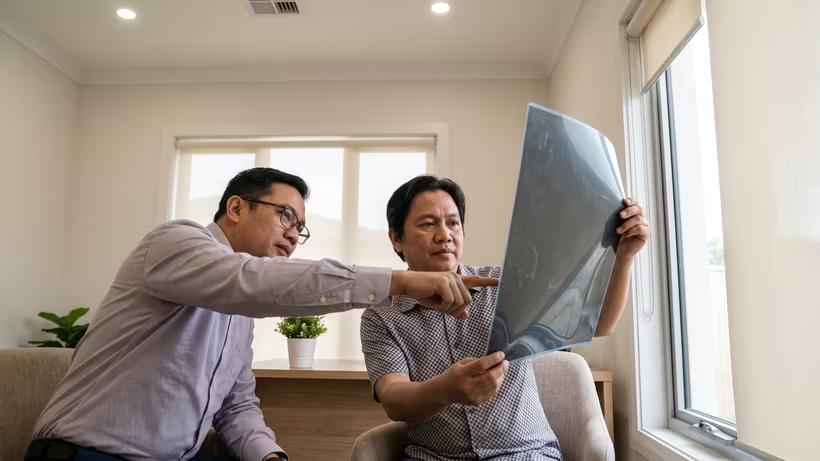 Meningioma Brain Tumor
What Is a Meningioma? A Brain Tumor, Usually Not Cancer
Read the article → When to See a Neurosurgeon
Neurosurgeon vs Neurologist: Which One Do You See First?
Read the article → Chronic Subdural Hematoma
What Is a Chronic Subdural Hematoma? Why Elderly Get It
Read the article → Baby Soft Spot Fontanelle
Soft spot on Baby’s head: Fontanelle, when does it close?
Read the article → Acute Subdural Hematoma
Motorcycle Accident Head Injury: First Hours in the ER
Read the article →- Practising general NeurosurgeonBrain and spine of adults and children
- Training officerNeurosurgery residency, East Avenue Medical Center
- Trained at UP–PGHNeurosurgery residency, Philippine General Hospital
- Ten hospital affiliationsAcross Metro Manila
What I treat
All conditions in Patient Resources →


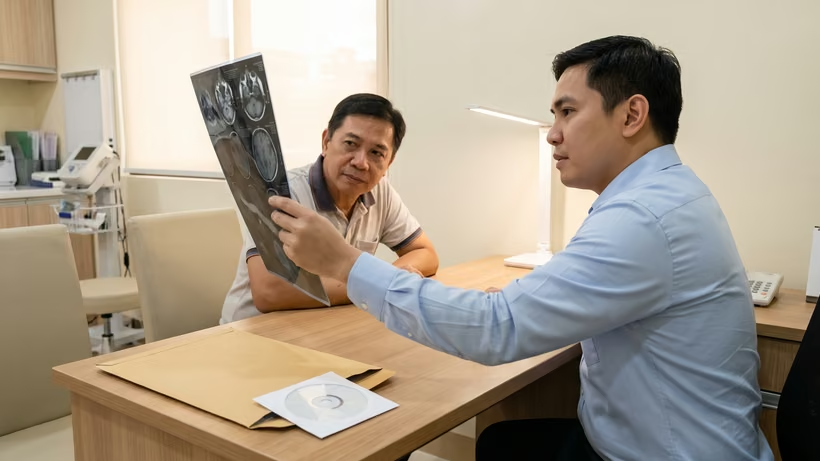
For clinicians
When to refer, and how
No one can know all of medicine, and some questions need a specialist's view. I write these for general clinicians. Read, ask me anything that isn't clear, and refer when you're unsure. An early referral is never wasted.
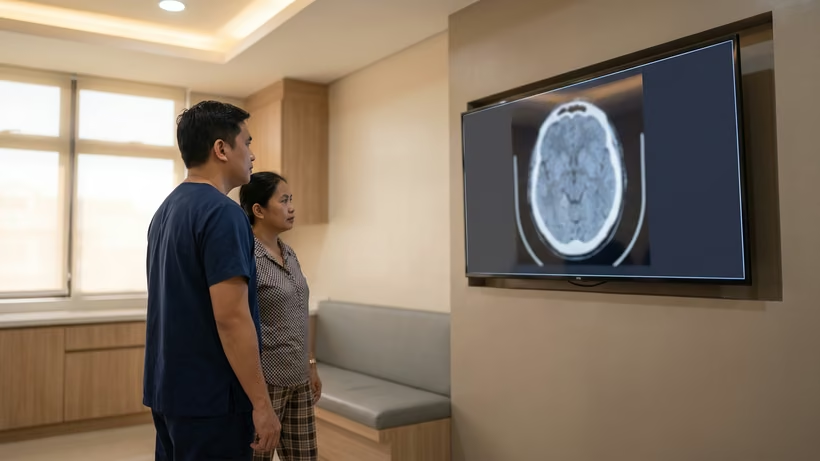 Acute Subdural Hematoma
What Is Midline Shift on a CT Scan? Why Surgeons Act
Read the article → Chronic Subdural Hematoma
Chronic Subdural Hematoma or Dementia? How to Tell
Read the article →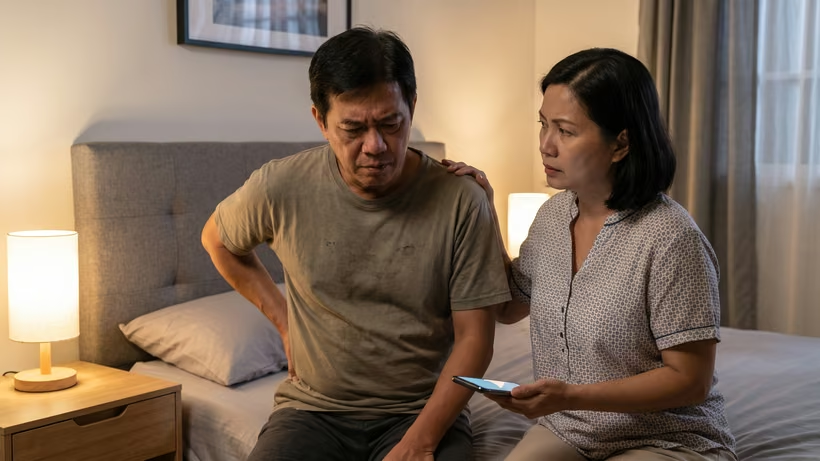 Slipped Disc
Can’t Pee With Back Pain? Why the Next 48 Hours Matter
Read the article →Referring a case?
Send a short clinical summary and the imaging report. I'll reach out to your patient to book a consultation and, once I've seen them, let you know the plan.
For unstable or acutely deteriorating patients: Send them to the nearest emergency room.
Neurosurgery clinics in Quezon City
Brain and spine surgery for adults and children. During consultation, I review your case with you and recommend the treatment options.