
Aneurysm clipping and coiling both seal a brain aneurysm, a bulge on an artery in the brain, so blood no longer enters it. Clipping closes it from outside the artery, and coiling fills it from inside. Pooled ten-year trial results show no significant difference in outcome. In the Barrow trial, clipped aneurysms stayed closed more often.
Open surgery, or through the groin?
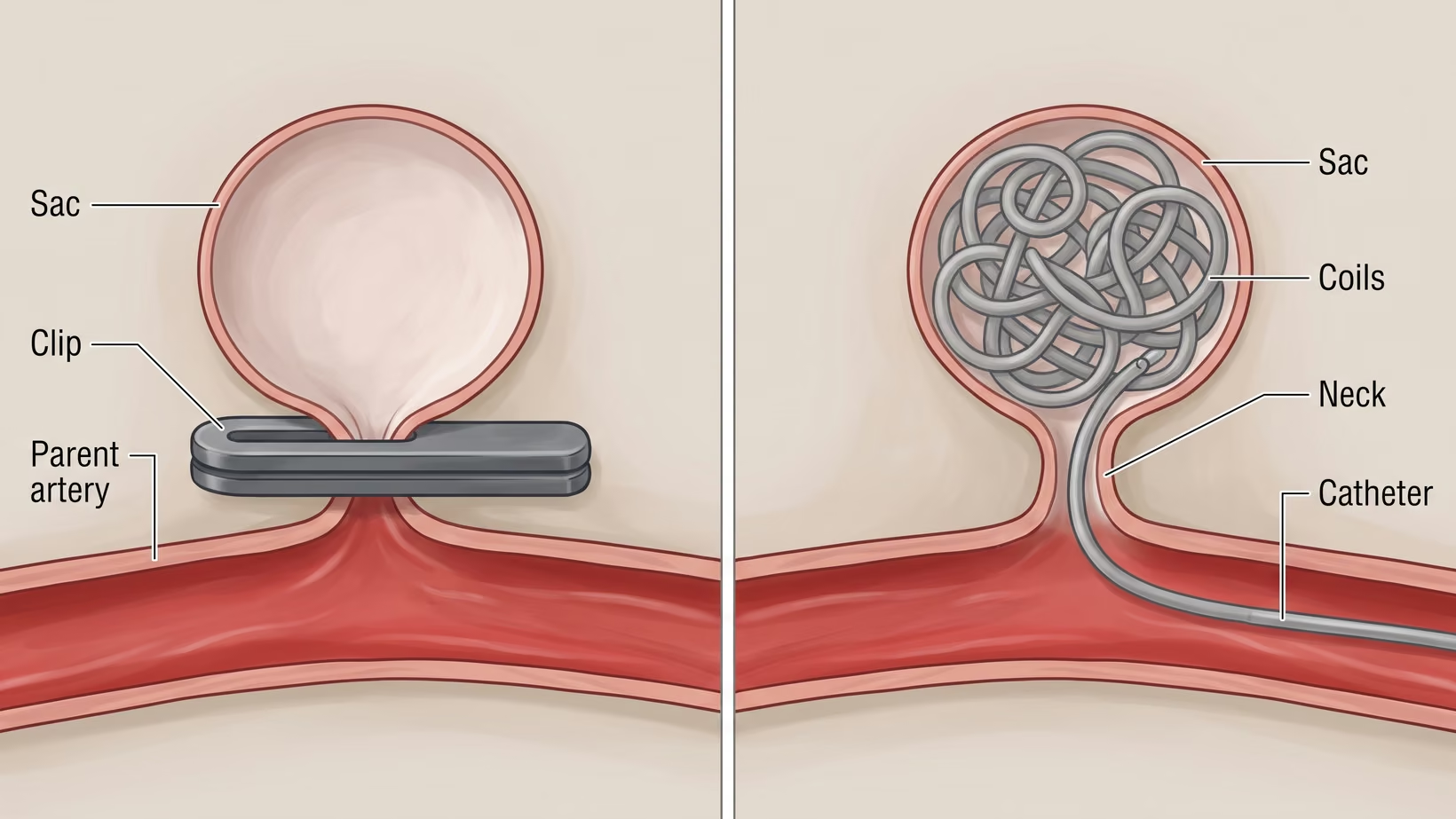
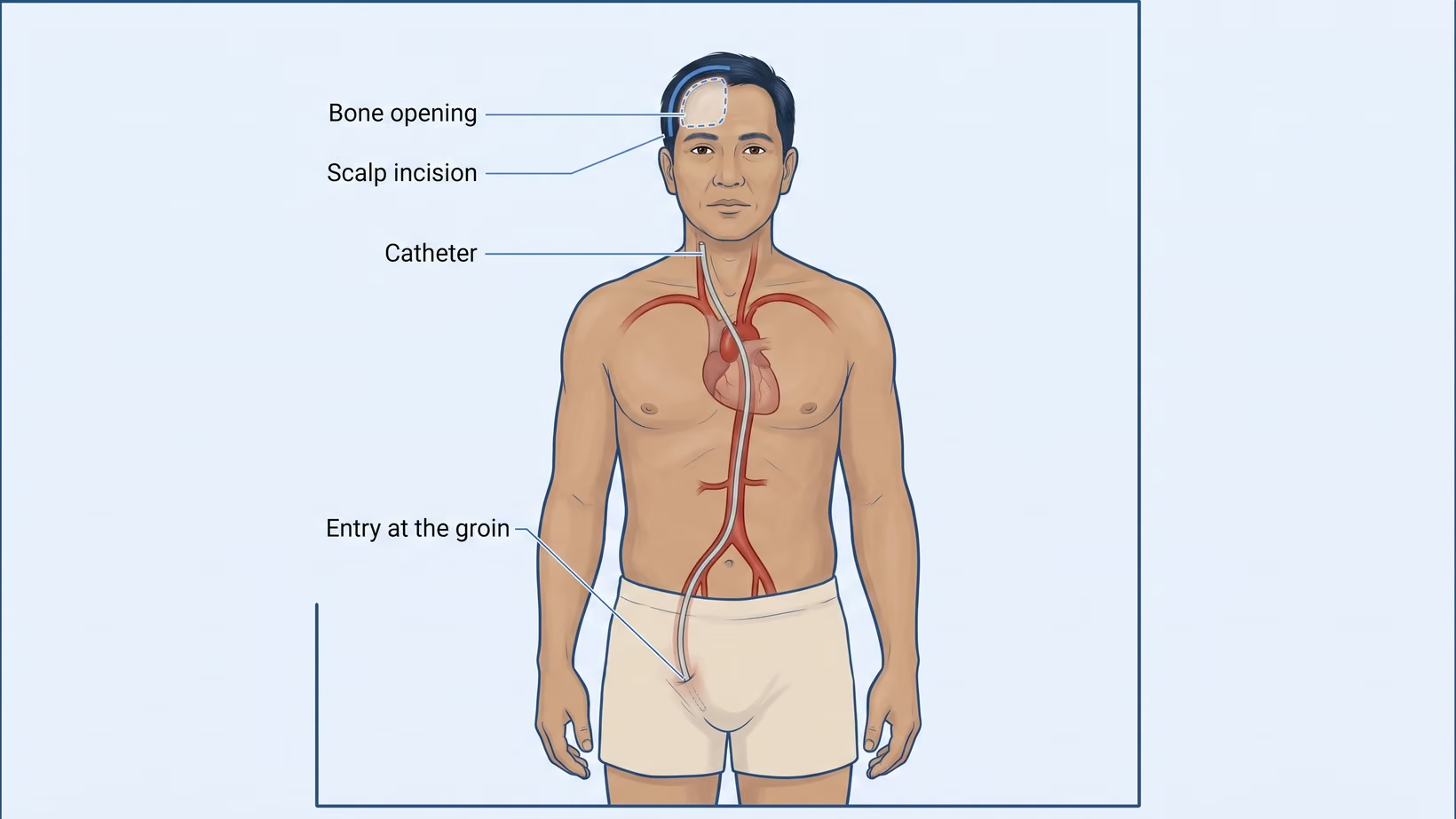
Clipping is open surgery. Through an opening in the skull, the surgeon places a small clip across the neck of the aneurysm, the narrow part where the sac joins the artery. Coiling goes through the groin or the wrist. A thin tube is passed up an artery, and soft platinum coils are packed into the sac until no blood flows through it.
Both take the aneurysm out of the circulation, and they are two of the three ways an aneurysm can be sealed off. I perform clipping. I do not perform coiling, so where coiling suits an aneurysm better, the coiling is done by an endovascular specialist.
When to get seen now, and what to bring
Any sign of a bleed is an emergency, whether or not your aneurysm has already been treated. The place for it is an emergency room, not the clinic. Left untreated after a bleed, about 30 in 100 patients admitted to hospital bleed again within the first month. That is why the sac is sealed without waiting.
Seek care now
Warning signs: go to the emergency room now
- A sudden severe headache that reaches full force within seconds, unlike any headache you have had before
- That headache together with vomiting, a stiff neck, or light hurting your eyes
- Becoming drowsy or confused, or being hard to wake
- A seizure
- New double vision, a drooping eyelid, or one pupil larger than the other
- New weakness or numbness on one side, or speech that has changed
Do not wait for the clinic or a booked appointment. Go to the nearest emergency room that has a CT scanner.
Bring and ask
What to bring to the neurosurgery consult
Without any of the warning signs, the next step is a consult with a neurosurgeon, booked soon and not left for months. You can book a consultation yourself, or your doctor can refer you. Bring:
- The referral note from the doctor who found the aneurysm
- The actual CT or MRI plates, and the imaging files on a CD or a USB, requested from the radiology department together with the printed report
- The angiogram report and images, if one has already been done
- A written list of all your medicines, naming any blood thinner (anticoagulant)
- Your blood pressure readings, if you have been taking them
- One person to listen with you
The visit ends with a plan: more imaging, watching and measuring again, or a repair booked for a date.
You may see me for this consult at my clinic at the Lung Center of the Philippines, Room 1101, Quezon Avenue, Quezon City, on Tuesday and Thursday from 2 PM. Where travel to Quezon City is hard for you, an online consult with me is another way, booked on the consultation page.
Questions to ask before you agree to either operation
Write the answers down.
- Is my aneurysm suitable for both operations, or only one, and why
- If both are possible, what makes you prefer one of them for me
- How likely is it that the aneurysm stays closed after each one
- How often would I need a scan afterwards, and how likely is a second treatment
- Which imaging will be done after the repair, and who arranges it
- Who performs the operation, and who takes care of me afterwards
What is aneurysm clipping?
Aneurysm clipping closes the aneurysm from outside the artery. You are asleep under general anesthesia. The surgeon works through an opening in the skull and places a small metal spring clip across the neck of the sac. Blood keeps flowing along the artery and no longer enters the bulge.
What happens during aneurysm clip surgery
Under a microscope, the surgeon follows the artery to the aneurysm, separates the sac from the brain and nerves beside it, and closes the clip across the neck.
Craniotomy clipping: what the opening involves
A craniotomy is an opening made in the skull bone. The scalp is cut along a line that hair mostly covers. A piece of bone is lifted out to give the surgeon a view of the artery, and at the end that same piece is replaced and fixed.
What is coiling of an aneurysm?
Coiling of an aneurysm fills it from inside the artery, so no opening is made in the skull. A thin tube is passed into an artery at the groin or the wrist and guided up to the brain. Soft platinum coils are pushed through the tube into the sac until blood no longer flows through it.
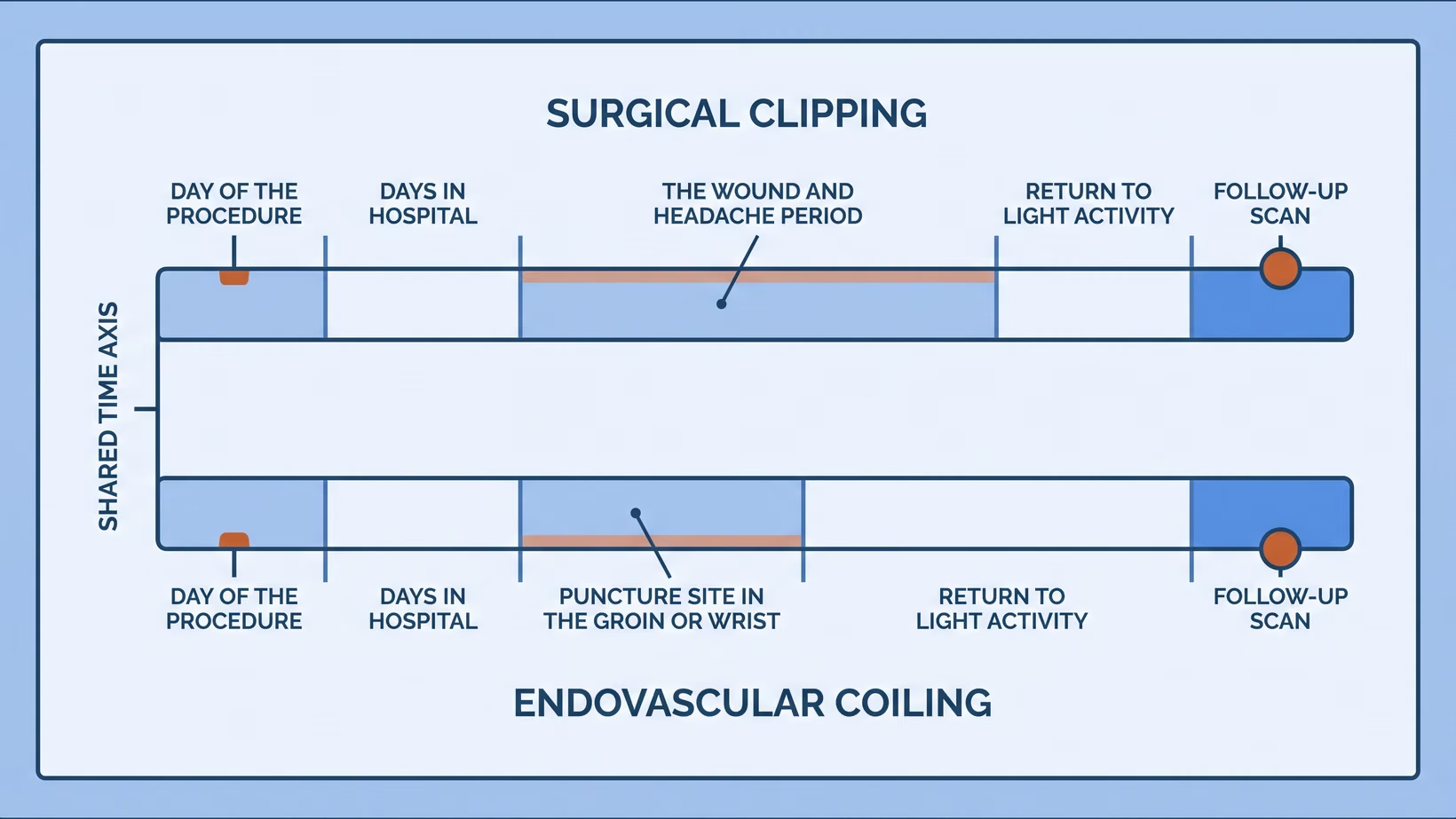
X-ray pictures of the vessels show the way, the same kind taken during a brain angiogram for an aneurysm. Blood clots around the coils, and the lining of the artery grows across the neck. The coils stay in the body, and afterwards you care for a puncture site instead of a wound on the head.
Which one suits my aneurysm?
Which one suits your aneurysm depends on where it sits, its shape and neck, your age, and whether the bleed formed a clot. Where it suits only one of the two, the anatomy decides, and there is one option rather than two. Where it suits both, the long-term results are close, and how long the repair must last becomes part of the choice.
Whether to treat an unruptured aneurysm at all is a separate decision, made on the aneurysm and on your age and health.
Where it sits: front, side or back of the brain
For a ruptured aneurysm at the front of the brain, in a patient in good condition whose aneurysm suits both operations, either is an acceptable option over the long run. For a ruptured aneurysm at the back of the brain that can be coiled, coiling is recommended. That rests on a large difference measured in very few patients, so treat it as a direction rather than a settled figure.
Aneurysms on the middle cerebral artery, the main artery to the side of the brain, are a group where clipping does well. Two randomized trials compared the repairs there. For aneurysms that had not bled, the treatment failed in 3 of 42 clipped patients and in 13 of 48 coiled patients.
For aneurysms on this artery that had bled, 7 of 38 clipped patients and 8 of 33 coiled patients were dead or dependent at one year. These are small numbers, so they show a direction, not a final answer.
Shape and neck: why a wide-necked aneurysm is harder to coil
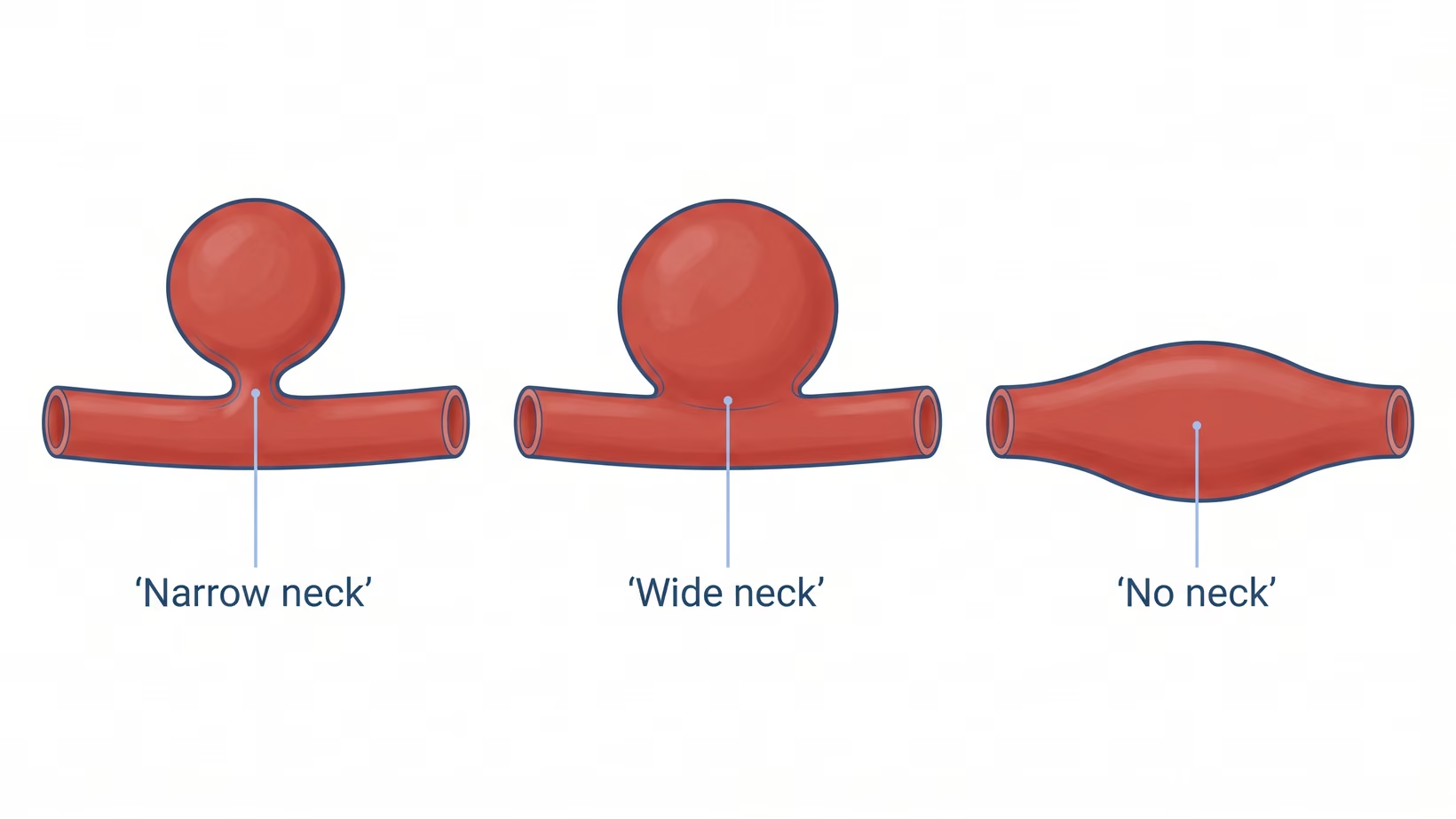
Coils stay inside a sac that has a narrow neck. Where the neck is wide, the coils have little holding them in, and something has to be placed inside the artery to keep them in the sac. A fusiform aneurysm, meaning one where the artery is widened along its length, has no neck to clip at all.
For a ruptured wide-necked aneurysm that suits neither clipping nor plain coiling, a device that holds the coils in or diverts flow past the sac is a reasonable choice. These devices carry a higher risk of complications, so they should not be used where ordinary clipping or coiling is possible.
Age, general health, and any blood or swelling
In patients under 40, clipping may be preferred, because the repair is expected to last longer. In patients over 70 with a ruptured aneurysm, neither operation has been shown to be the better one.
If the bleed has formed a large clot within the brain and the patient is drowsy because of it, the clot is removed in an emergency open operation. The aneurysm can be clipped through the same opening. Your other illnesses and your medicines are part of the same decision.
Why coiling is often chosen after a rupture
Coiling is often chosen after a rupture because of one large trial, ISAT. It found a better result at one year after coiling, in patients whose aneurysm both teams agreed could be treated either way. That result is often applied to patients the trial did not study.
The patients in ISAT were mostly in good condition, with small aneurysms at the front of the brain. The doctors running its successor trial wrote that its result is commonly extended to patients it did not study, and to devices that did not exist at the time. For patients who arrive in poor condition there is no reliable trial evidence either way, and their treatment is decided case by case.
Whichever repair is chosen, the sac has to be closed quickly. Guidelines say the repair should be done as early as it safely can be, preferably within 24 hours of the bleed.
What each one means for recovery time
Coiling has a shorter wound recovery, with no scalp cut and no opening in the bone. Clipping adds a scalp wound and a bone flap that take weeks to settle. After a bleed, the bleed itself and the days in intensive care set the pace of recovery, not the choice of repair.
Among patients who had all had a bleed, seizures afterwards were less common after coiling than after clipping. Ask the center how they plan the stay and the weeks of recovery after clipping for you.
Will I need a second operation later?
You may need a second operation if the aneurysm was not closed completely the first time or has refilled. This is much more common after coiling. In the Barrow trial, 2 of 241 clipped aneurysms and 23 of 115 coiled aneurysms needed treating again after the first hospital stay.
At ten years in that trial, 50 of 54 clipped aneurysms checked on imaging were completely closed, against 5 of 23 coiled aneurysms. A pooled analysis of the long-term trials also found more retreatment after coiling.
An aneurysm left incompletely closed carries a substantially higher risk of bleeding again and of needing more treatment. If any of the warning signs above appear, go to the nearest emergency room now, even after a repair.
Imaging is done around the time of the repair and again later. It looks for a part of the sac that has refilled, a regrowth, or a new aneurysm. The guideline sets no interval, so the schedule comes from the treating center. Keep every follow-up scan the center books.
What the ISAT trial means for you
ISAT is the largest trial to compare the two repairs. It enrolled 2,143 patients at 42 neurosurgical centers and assigned each to coiling or clipping at random. One year later, 250 of 1,063 coiled patients were dead or needed help with daily living, against 326 of 1,055 clipped patients.
Every patient had already bled, and every aneurysm had been judged suitable for either operation. They were treated between 1994 and 2002, mainly in the United Kingdom and Europe, with the devices of that time. The counts apply to that group. They are not figures for an aneurysm that has not bled, for an aneurysm only one repair suits, or for the Philippines.
What the long-term ISAT results actually show
The long-term results show that the gap between the two repairs narrows over time. At ten years in the United Kingdom part of ISAT, 674 of 809 coiled patients and 657 of 835 clipped patients were alive.
Of the 1,003 patients who returned a questionnaire, 82 in 100 coiled and 78 in 100 clipped patients were living independently. That difference was small enough that it may not be a real difference. Counting death and dependence together, coiling still came out ahead.
The Barrow trial in the United States took every patient with a ruptured aneurysm, not only those who suited both. Over ten years it found no significant difference between the groups in poor outcome or in deaths. Of the patients assigned to coiling, 64 of 178 were switched to clipping.
A 2022 pooled analysis of the two trials with ten-year results found no significant difference in good outcome, in deaths or in bleeding again. Coiling needed more retreatment. Over the long run, the guideline calls both operations reasonable choices for a ruptured aneurysm at the front of the brain that suits either one.
Which treatment is available where you are
Not every hospital can do both. Coiling needs an angiography suite and a team trained in it. Clipping needs an operating room, a microscope and a surgeon who performs this operation.
For a planned operation, my main hospitals are the Lung Center of the Philippines and the National Kidney and Transplant Institute, both in Quezon City. Philippine figures for how many hospitals can treat a brain aneurysm with each repair are not available.
What a referring doctor should send, and what to expect back
A referring doctor should send the imaging and the clinical state together, to a center where the aneurysm is judged by surgical and endovascular specialists. Expect back a report on the method used and on how completely the aneurysm was closed. After a bleed the referral is an emergency one, because the repair is best done within 24 hours of the bleed.
What to send with the patient, and what imaging the center needs
Send the plain CT and any CT angiogram as files on a disc or a USB with the printed reports, not as photographs of a screen. After a bleed, do not hold the transfer for the files: send the patient and the files after.
Send the time the headache started, the conscious level and any deficit then and now, the blood pressure, the medicines including any blood thinner, the clotting and renal results, and the number of the relative who decides.
What comes back, and who follows the patient afterwards
The reply should name the method and state whether the aneurysm was closed completely or only in part. The plan should name who orders the next scan. Day to day care returns to the primary doctor.
Cost and PhilHealth: what to ask and who to ask
The cost of clipping or coiling depends on the center, on the implants used and on how long the stay is, so no peso figure is given here. For a planned repair, ask the hospital billing section and the medical social services office for the figures in writing before the admission. After a bleed, do not delay the repair to settle the bill: go to the emergency room first, and the medical social services office can help with the cost there.
Ask whether the case rate is separate from the intensive care days and from the implants, which items in the bill for brain aneurysm surgery are not covered, and what deposit is needed. Clips and coils are implants, often billed as a separate item. A coiled aneurysm that needs treating again adds the cost of another procedure.
Frequently asked questions
Is coiling safer than clipping?
Coiling is not safer than clipping as a general statement. In one trial of patients who suited both, coiling had a better result at one year. Over ten years, a pooled analysis of the two trials with ten-year results found no significant difference in good outcome or deaths. In the Barrow trial, a clipped aneurysm stayed closed more often.
Do a clip or coil set off metal detectors or stop an MRI?
Ask the team that placed it, and tell the radiology department before any scan. The implant is recorded in the operative notes and on your device card: keep that card and show it before a scan or at a security check.
Can a coiled aneurysm be clipped later, or the reverse?
Yes. If imaging shows that part of it has refilled or regrown, it can be treated again, and the method is chosen the same way as the first time.
How long does each operation take?
It varies with the aneurysm and where it sits, so ask the operating team for their estimate.
Will the clip or the coils ever have to come out?
The clip and the coils are both placed to stay in the body. Where an aneurysm refills, more treatment is added at the same place instead of removing them. That extra treatment is needed more often after coiling than after clipping.
Who decides, the neurosurgeon or the interventional radiologist?
The neurosurgeon and the interventional radiologist, the specialist who treats from inside the arteries, decide together. Guidelines say the aneurysm should be judged by specialists with both endovascular and surgical expertise. They weigh the risks and the benefits of each method for that aneurysm and that patient.
See sources
- Hoh BL and others, for the American Heart Association/American Stroke Association writing group. 2023 Guideline for the Management of Patients With Aneurysmal Subarachnoid Hemorrhage. Stroke. 2023. PMID 37212182.
- Molyneux AJ and others, ISAT collaborative group. International subarachnoid aneurysm trial (ISAT) of neurosurgical clipping versus endovascular coiling in 2143 patients with ruptured intracranial aneurysms: a randomised comparison of effects on survival, dependency, seizures, rebleeding, subgroups, and aneurysm occlusion. Lancet. 2005. PMID 16139655.
- Molyneux AJ and others. The durability of endovascular coiling versus neurosurgical clipping of ruptured cerebral aneurysms: 18 year follow-up of the UK cohort of the International Subarachnoid Aneurysm Trial (ISAT). Lancet. 2015. PMID 25465111.
- Spetzler RF and others. Ten-year analysis of saccular aneurysms in the Barrow Ruptured Aneurysm Trial. Journal of Neurosurgery. 2019. PMID 30849758.
- Rabelo NN and others. Long-term outcomes of ruptured saccular intracranial aneurysm clipping versus coiling: systematic review and meta-analysis of randomized controlled trials. Neurological Sciences. 2022. PMID 35359214.
- Darsaut TE and others. Surgical or endovascular management of middle cerebral artery aneurysms: a randomized comparison. World Neurosurgery. 2021. PMID 33556601.
- Darsaut TE and others. International Subarachnoid Aneurysm Trial – ISAT part II: study protocol for a randomized controlled trial. Trials. 2013. PMID 23714335.
- Lindgren A and others, Cochrane Stroke Group. Endovascular coiling versus neurosurgical clipping for people with aneurysmal subarachnoid haemorrhage. Cochrane Database of Systematic Reviews. 2018. PMID 30110521.