
Recovery after brain aneurysm clipping, surgery that closes a bulge on a brain artery, takes weeks: usually a few days in the hospital after a planned clip, or two weeks or more after a bleed. The wound and heaviest tiredness usually take six to 12 weeks. A sudden severe headache, seizure or new weakness needs the nearest emergency room now.
What does aneurysm clipping recovery look like, week by week?
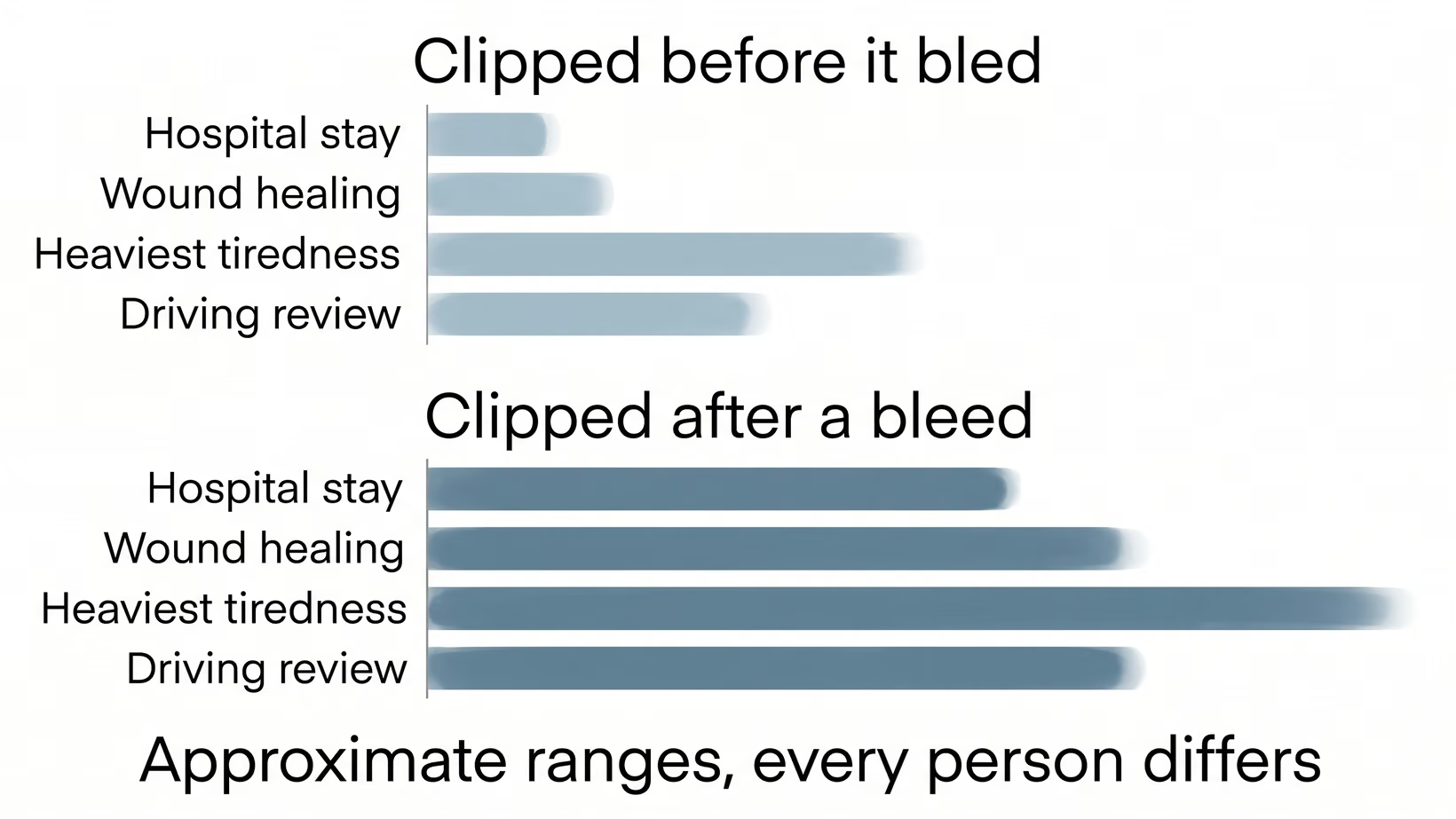
Aneurysm clipping recovery has four parts that run at different speeds. The wound closes in about two weeks. The bone knits over months. The tiredness usually lifts over six to 12 weeks. The brain itself takes the longest, and after a bleed the full picture takes months.
In the first week you are in the hospital. You are woken for checks, your head aches, and you start walking when the team allows it. In the second to the sixth week you are at home, the stitches or staples that close the wound are removed, and you sleep far more than you expect to.
By six to 12 weeks most people who had a planned clip feel like themselves for most of the day. Heavy work, driving and long travel are decided at the clinic.
After a ruptured aneurysm, recovery is slower. One year after a ruptured aneurysm was clipped, about 32 in 100 people in the trials taken together, most of whom were in good clinical condition, had died or needed help with daily activities. This figure describes large groups of people. Ask your team what it means for you.
Ruptured or unruptured: why recovery timelines differ
Two people recover on different timelines because their starting points differ, even though the operation is the same. If your aneurysm was clipped before it ever bled, what you recover from is the surgery. If it bled first, blood had already spread over the surface of the brain, and that injury is the larger part of what you recover from.
The operation is done once an aneurysm has bled because, left untreated, about 30 of every 100 people who reach the hospital bleed again within the first month. If yours had bled, read what the first year looks like after a ruptured aneurysm.
How long will I be in the hospital after clipping?
The hospital stay after clipping is usually a few days after a planned clip for an aneurysm that had not bled. After a bleed it is usually about two weeks or more. The first two weeks after a bleed are the period the team needs to watch you in person. Ask your surgeon for their estimate for you.
After a bleed you are kept where your checks can be repeated through the night and a scan can be done within minutes. Your own number depends on how you woke up, whether a drain was needed, and how steady your checks are.
Why the second week matters when the aneurysm had already bled
After a bleed, blood flow in parts of the brain can drop in the days that follow, because the arteries can narrow in the second week after a bleed. That is a common reason recovery goes badly, which is why discharge is rarely offered before two weeks.
A medicine is given routinely in the first weeks after a bleed. In pooled trials of this group of medicines, people who were given one were less likely to have a poor outcome: about one extra person in every 20 treated avoided one, and the tablet form used today did at least as well. Your treating team sets the medicine and how long you take it. Do not stop it or change the dose on your own, and tell the team if it troubles you.
Seek care now
Signs after you get home that mean going back to hospital now
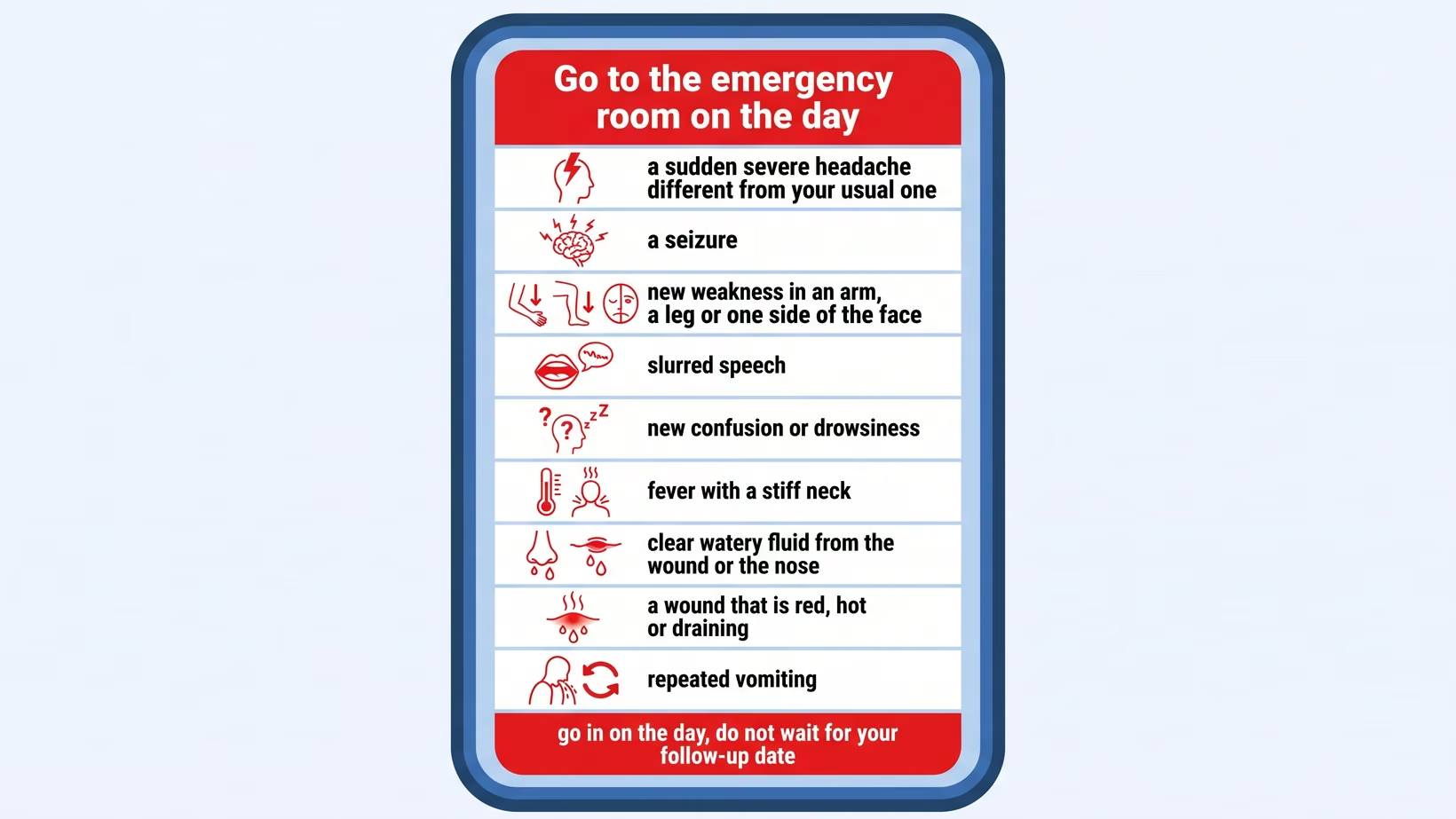
Go to the nearest emergency room now for any of the signs below after clipping. Do not wait for your follow-up date. A seizure is one of these signs: a seizure can happen after a ruptured aneurysm is clipped, and in the trial that compared the two operations seizures were more common after clipping than after coiling.
- A sudden severe headache that is different from the headache you have had since surgery
- A seizure, or shaking or stiffening you cannot control
- New weakness or numbness in an arm, a leg, or one side of the face
- Speech that has become slurred, or words you cannot find
- New confusion, or getting drowsy and hard to wake
- Fever together with a stiff neck
- Clear watery fluid leaking from the wound or from your nose. This is cerebrospinal fluid, the fluid that surrounds the brain
- A wound that is spreading red, hot or swollen, or draining pus
- Vomiting again and again, with or without headache
Bring and ask
What to bring and what to say when you go back in
Say in your first sentence that you had a brain aneurysm clipped, and give the date of the operation. That one sentence changes which scan is ordered and how fast.
- Your discharge summary and your operative record
- The medicines you were sent home with, in their boxes
- Your CT or MRI plates and the disc, if you were given them
- The name of your surgeon and the hospital where you were operated on
- A note of when the new sign started, and what you were doing
The wound and the bone flap: what is under the skin now
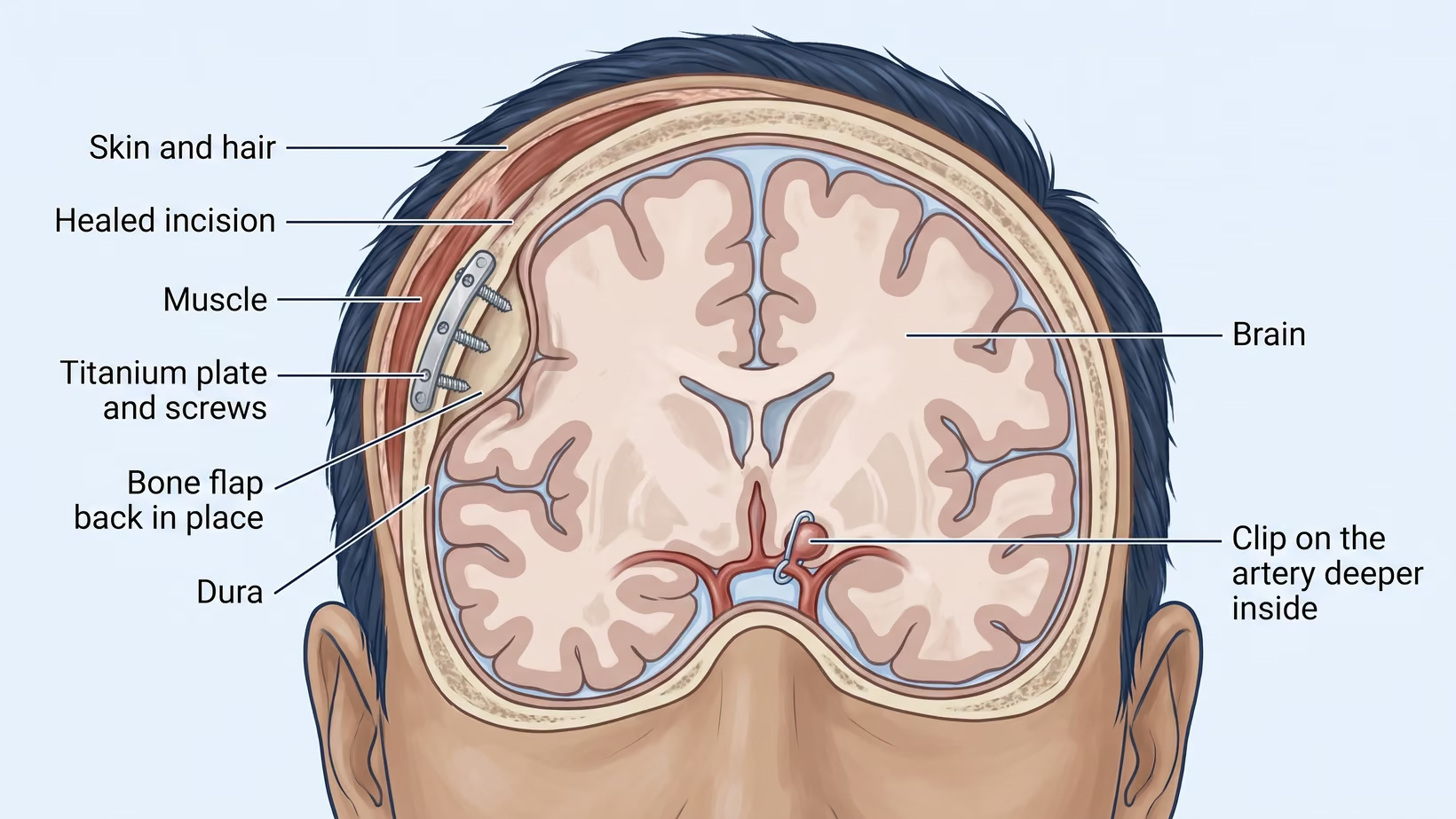
Under the skin after clipping, your skull is closed. The bone flap, the piece of skull lifted to reach the aneurysm, was put back with small titanium plates and screws, as in any craniotomy, an operation that opens the skull. It knits to the skull over months. The clip sits deeper, on the artery.
Washing, staples or sutures, and how the wound should look
Follow the washing instructions on your discharge sheet. The staples or stitches are usually removed one to two weeks after surgery.
A healing wound is a thin pink line that may be itchy and numb, with mild swelling or bruising toward the eye in the first two weeks. Spreading redness, heat, pus, a gap or clear fluid belong in the warning list above.
A dip, a ridge or a numb patch where the bone flap is
Many people can feel a slight dip, a ridge, or a plate or screw under the skin where the bone flap sits. This is normal. It does not mean something has shifted. A soft swelling that is new or growing is different: show it to your team.
A patch of scalp behind the wound is often numb, because small scalp nerves were cut. It usually shrinks over months. Chewing can ache for several weeks, because the muscle at the temple was moved to reach the bone.
Headache after clipping: how long, and which kind is different?
Headache after clipping for a bleed around the brain is common and often lasts for months, but it usually gets less severe. Headache can persist for years after a hemorrhagic stroke, which includes a bleed in or around the brain. A sudden severe headache unlike the one you have been living with means going to the nearest emergency room now.
A dull, steady ache around the wound, worse when you are tired and better when you rest, is the ordinary headache after a brain aneurysm. A headache that comes with repeated vomiting, new confusion or drowsiness is not the ordinary one: it is one of the warning signs listed above, so go to the nearest emergency room now.
When does the hair grow back over the scar?
Hair starts to grow back along the incision within a few weeks, and the shaved area is usually covered again by about three to six months. Only a narrow strip is shaved in most clipping operations. The scar stays as a thin pale line that usually hides inside the hair, though a thin bald line directly over it is possible.
Do not use hair dye or hot styling on the area until your team says you may. Use a hat or umbrella outdoors, because a fresh scar darkens in strong sun.
Rehabilitation after clipping: who is on the team
Rehabilitation after clipping is a team, and which members you need depends on what the bleed or the surgery affected. After a planned clip many people need none of it. After a bleed, most people see at least one. Ask for the referral before discharge, because the first appointment takes time to get.
A physical therapist works on walking, balance and strength. An occupational therapist works on daily tasks such as dressing, cooking and desk work. A speech therapist works on speaking and safe swallowing. A neuropsychologist tests memory and attention. A rehabilitation physician writes the plan.
Back to work after clipping: how soon, and what kind of work?
Going back to work after clipping has no fixed date. It depends on the kind of work, your afternoon tiredness, and your clinic clearing you. After a planned clip, desk work in a few weeks is a common pattern. After a bleed it is often months, and sometimes the role has to change.
Plan your return to work after an aneurysm in steps: half days first, then full days, then the full load. Night shifts usually come back last, because broken sleep makes the tiredness and headache worse. Heavy lifting and work at height need your surgeon’s specific clearance.
For work abroad, the fit-to-work examiner will want your operative record, discharge summary and latest scan. Get certified copies early.
After aneurysm clipping: driving, exercise, flying, alcohol, sex
Life after aneurysm clipping comes back in steps: walking first, then housework, then exercise, then driving and travel. Your surgeon’s instruction for you comes first. Straining and a blow to the head are the two things to avoid while the bone is knitting.
Driving waits until your vision, reaction time and neck movement are back and your clinic clears you. If you have had a seizure, driving is a legal question as well as a medical one. Running, gym, contact sport and swimming come later, with clearance. Flying is usually allowed once the wound is healed and you have been cleared.
Sex usually resumes when you feel able, usually two to four weeks after a planned clip, and later after a bleed. Your surgeon will tell you yours.
Long-term effects of aneurysm clipping: what can persist
Most people who recover well in the first year after aneurysm clipping stay well. What persists, when something does, is usually tiredness, headache, a numb patch of scalp, or changes in memory and concentration rather than weakness. After a ruptured aneurysm, the long view is measured in years.
In the UK cohort of the International Subarachnoid Aneurysm Trial, 657 of 835 people whose aneurysm was clipped were alive ten years later, and 78 in 100 of those who returned a questionnaire at ten years were living independently.
Memory, concentration and the fatigue that outlasts the wound
Fatigue after a stroke, the kind that a night of sleep does not fix, affects about half of survivors, and a bleed around the brain is one kind of stroke. Names go, a conversation in a noisy room becomes hard work, and two tasks at once stop being possible. These memory and concentration problems are real, and a neuropsychologist can measure them.
Are aneurysm clips permanent?
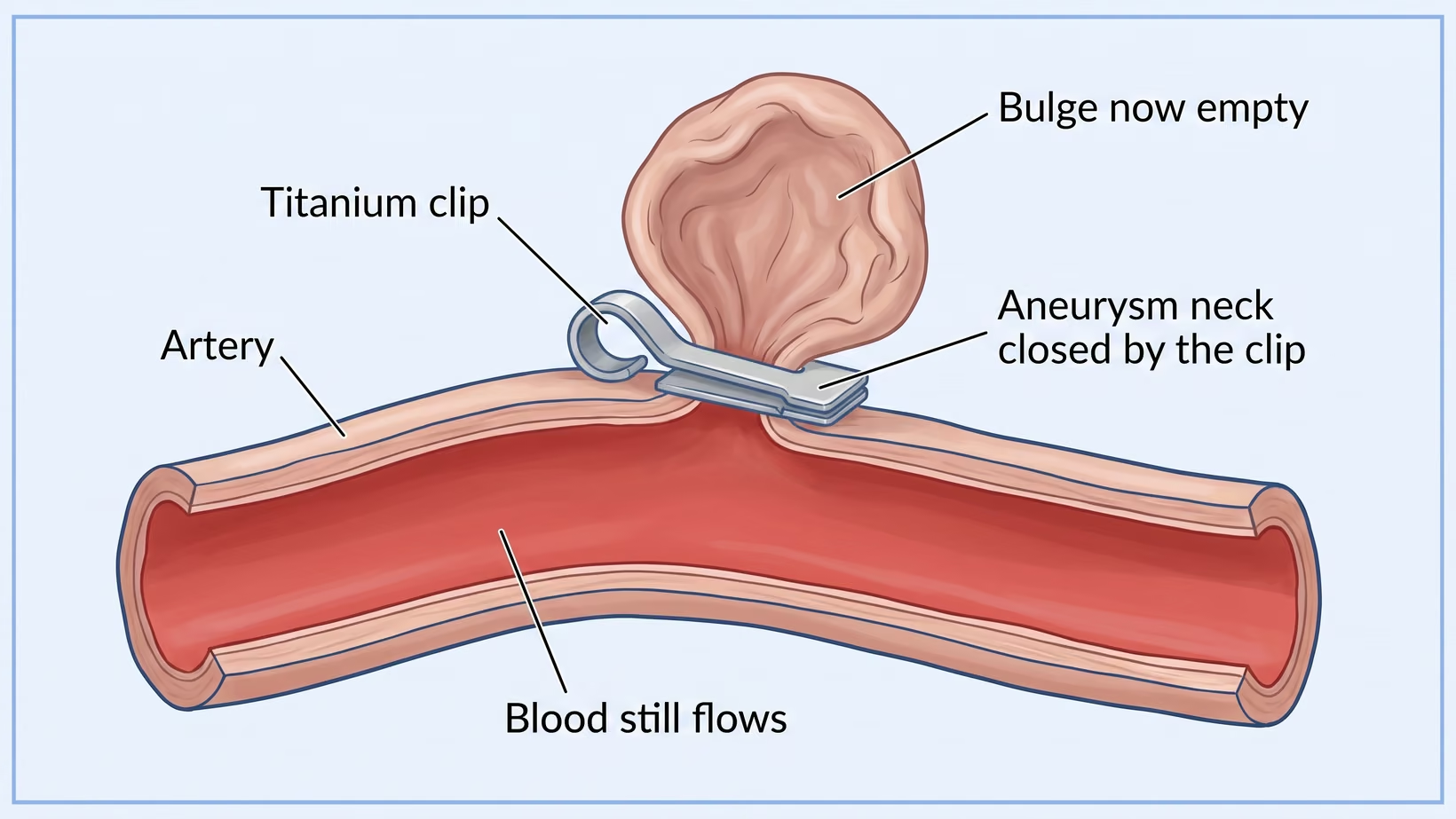
Yes, aneurysm clips are meant to stay in place for life. A clip is not normally taken out or replaced. It is a small metal spring clip, usually titanium, closed across the neck of the aneurysm, the narrow part where the bulge joins the artery. Blood no longer fills the bulge.
Bleeding again from an aneurysm that has been clipped is uncommon, and it is less common after clipping than after coiling. In the trial that followed these patients longest, 657 of 835 people whose aneurysm was clipped were alive 10 years later.
Follow-up scans after clipping: what they look for, and when
A follow-up scan checks whether the clipped aneurysm is still closed, and whether a new aneurysm has formed somewhere else. The timing is set by your surgeon and your center, so take the date from your discharge sheet.
Among 1644 people followed for 10 years or more after clipping or coiling, 33 had another bleed after the first year. Keep the scan you were given at discharge. The next scan is read against it.
Is the clip safe in an MRI?
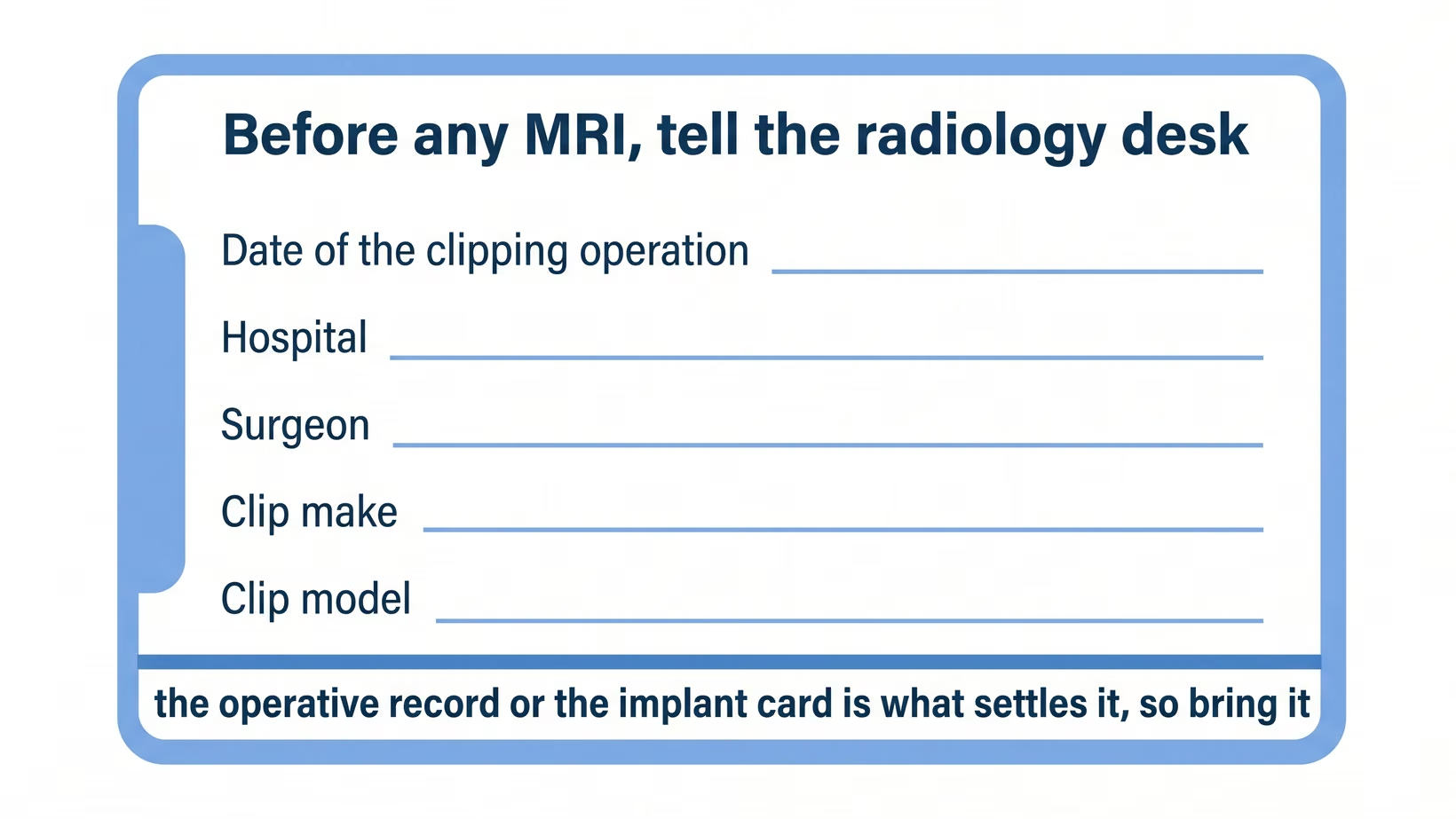
Whether an aneurysm clip is safe in an MRI depends on which clip was used. Most people who have been clipped do get MRI scans afterwards. The make and model are in your operative record and on your implant card, and the radiology staff check them against the manufacturer’s information before they scan you. Do not assume.
Keep photos of your operative record and implant card on your phone, because paper gets lost.
Aneurysm clips and MRI: what to tell the radiology staff
Tell them that you had a brain aneurysm clipped, the date, the hospital, the surgeon, and the make and model of the clip. Hand over the operative record or implant card.
Say it at booking and again on the day, because a different person may scan you. Without the record, the radiologist may ask your surgeon’s office for it, or use a CT scan instead.
What recovery costs, and what to ask about PhilHealth
The costs of recovery after clipping are separate from the cost of the operation: the remaining hospital days, the follow-up scan, rehabilitation, the medicines you go home on, and transport to each clinic visit. These differ by hospital and change over time, so ask the billing section what PhilHealth covers.
Ask what has already been applied, what your remaining share is, and which follow-up items you pay out of pocket. Ask again before each scan and before rehabilitation, because coverage is applied per admission and per item. Bring the member’s PhilHealth number, contribution record, a valid ID and the claim forms, and keep copies. PhilHealth case rates for surgery set what is covered.
What to do now
The next step after aneurysm clipping
Keep the follow-up date on your discharge sheet with your neurosurgeon, the surgeon who operated on you. If you have no follow-up yet, you may see me, or your doctor can refer you to me.
- At my clinic: Lung Center of the Philippines, Room 1101, Quezon Avenue, Quezon City, Tuesday and Thursday from 2 PM
- Online, if the trip is not practical: book on the consultation page
- Bring your discharge summary, your operative record and implant card, your scan plates and disc
- Bring the medicines you were sent home with, in their boxes
Frequently asked questions
Is clipping a cure, or can the aneurysm come back?
Clipping closes that one aneurysm, and bleeding again from a clipped aneurysm is uncommon. A sudden severe headache that is different from your usual one still means going to the nearest emergency room now. It does not stop a new aneurysm forming somewhere else, which is why a follow-up scan is arranged and why blood pressure and smoking still matter.
How long before I can be left alone at home?
Usually, somebody should be with you for the first one to two weeks at home after clipping, mainly because of unsteadiness, medicines and the risk of a seizure. Your surgeon will tell you yours, and plan a longer period if you had a bleed or a seizure.
Can I fly after aneurysm clipping?
Flying after aneurysm clipping is usually allowed once the wound is healed and your clinic has cleared you, which for most people is several weeks after surgery. Ask your airline whether they want a medical clearance letter, and ask for it at the clinic visit before you book.
Will I need to take medicine for life after clipping?
The clip itself needs no medicine. Many people do stay on treatment for blood pressure, and some stay on a seizure medicine for a period. Your treating doctor decides both and reviews them at your follow-up. Do not stop either one on your own.
Why is clipping recovery longer than coiling recovery?
Recovery from clipping takes longer because clipping reaches the aneurysm through the skull, so there is a scalp wound, a bone flap and a moved muscle to heal. Coiling reaches it through an artery in the groin or the wrist, so there is no head wound to heal.
See sources
- Lindgren A, Vergouwen MDI, van der Schaaf I, Algra A, Wermer M, Clarke MJ, Rinkel GJE. Endovascular coiling versus neurosurgical clipping for people with aneurysmal subarachnoid haemorrhage. Cochrane Database of Systematic Reviews, 2018. PMID 30110521. doi 10.1002/14651858.CD003085.pub3
- Molyneux AJ et al, ISAT collaborative group. International subarachnoid aneurysm trial (ISAT) of neurosurgical clipping versus endovascular coiling in 2143 patients with ruptured intracranial aneurysms. The Lancet, 2005. PMID 16139655. doi 10.1016/S0140-6736(05)67214-5
- Molyneux AJ et al, ISAT collaborative group (UK cohort). The durability of endovascular coiling versus neurosurgical clipping of ruptured cerebral aneurysms: 18 year follow-up of the UK cohort of the International Subarachnoid Aneurysm Trial (ISAT). The Lancet, 2015. PMID 25465111. doi 10.1016/S0140-6736(14)60975-2
- Headache after hemorrhagic stroke: A systematic review and meta-analysis. Headache, 2025. PMID 41332107. doi 10.1111/head.70008
- Alghamdi I, Ariti C, Williams A, Wood E, Hewitt J. Prevalence of fatigue after stroke: A systematic review and meta-analysis. European Stroke Journal, 2021. PMID 35342803. doi 10.1177/23969873211047681
- Dorhout Mees SM, Rinkel GJE, Feigin VL, Algra A, van den Bergh WM, Vermeulen M, van Gijn J. Calcium antagonists for aneurysmal subarachnoid haemorrhage. Cochrane Database of Systematic Reviews, 2007. PMID 17636626. doi 10.1002/14651858.CD000277.pub3