
Brain tumor surgery can cause bleeding, infection, seizures, stroke, and new weakness, speech or memory problems. In studies of glioma, a brain tumor, most patients had no new severe lasting problem. After surgery, new weakness, confusion or a seizure means going to the hospital now, or the nearest emergency room if that hospital is far.
How dangerous is brain tumor surgery?
Brain tumor surgery is a major operation. In the published studies of glioma surgery, most patients were not left with a new severe lasting problem. How dangerous it is for you depends on where the tumor sits and on how well you are before the operation. Your own surgeon can give you a risk number that fits your case.
What raises your risk and what lowers it
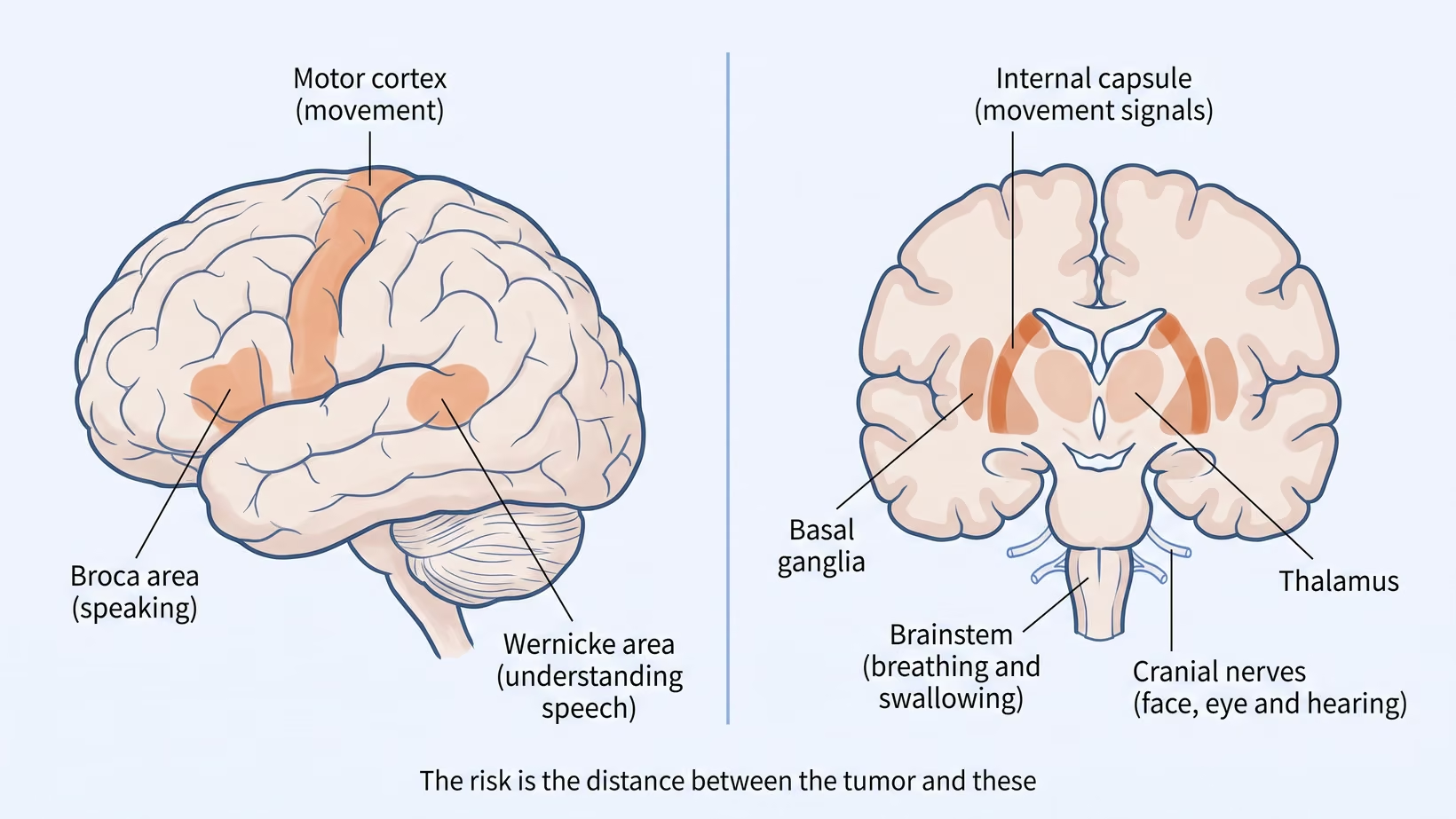
Risk rises when the tumor sits close to the parts of the brain that carry movement, speech, sight, swallowing and breathing. It rises when the operation has to be done as an emergency. It rises when you already have heart, lung, kidney or clotting problems.
Risk falls when the operation is planned, when your other illnesses have been treated first, and when the team can map the brain while they work.
What side effects are normal after brain tumor surgery?
A sore head, deep tiredness and swelling around the wound are expected in the first weeks. They settle slowly. A headache that keeps getting worse, comes with vomiting or drowsiness, or a swelling that grows, turns hot or leaks, is not part of this: see the signs below. When the opening is at the side of the head, chewing can ache, and the eyelid on that side can swell and bruise.
Tiredness is the part patients least expect. Many need to sleep in the afternoon for several weeks.
Most patients are helped out of bed the day after surgery. Your surgeon sets the day you go home and the dates for driving, work and heavy lifting, which are part of how long recovery after brain surgery takes.
Seek care now
Which symptoms after surgery mean going back to the hospital now
Go to the hospital now, not later in the day, for new weakness, new confusion or difficulty waking the patient, a seizure, or a hard headache with vomiting. New trouble speaking or seeing also means going now. If the hospital that operated is far, go to the nearest emergency room. Go back the same day for a wound that is hot, open or leaking, or for clear watery fluid from the wound or the nose. Do not wait for the next clinic appointment.
The signs that need a hospital now or the same day
- Go now: new or worsening weakness or numbness in an arm, a leg or the face
- Go now: new confusion, or difficulty waking the patient
- Go now: a seizure, meaning a fit with shaking or loss of awareness
- Go now: a hard headache with vomiting
- Go now: new difficulty speaking, or new loss of vision
- Go the same day: fever with a wound that is hot, red or leaking
- Go the same day: the wound opening
- Go the same day: clear watery fluid leaking from the wound, or dripping from the nose
Who to go back to, and what to bring
If the hospital that operated is near, go back there and ask for the neurosurgery service by name. If it is far, or the patient is hard to wake or is having a seizure, go to the nearest hospital with an emergency room and ask them to call the team that operated.
Bring the operative record, the discharge summary and the last scan, on disc if you have it. Those three papers save hours and save a repeat scan.
Bleeding and infection: the two risks every consent form names
Bleeding into the operation site and infection of the wound are the two complications every consent form lists. Both are uncommon, both are watched for, and both have a treatment. Blood can collect in the space where the tumor was removed. That is what the first night in hospital is watching for.
Bleeding into the operation site
The nurses check your pupils, your speech and your grip often. If anything changes, a scan is repeated the same hour. A small number of patients have to go back to the operating room to remove the clot.
Wound infection and meningitis
A wound infection after brain tumor surgery happens in about four of every 100 patients within the first month, and in about six in 100 by three months. It is more common after surgery at the back of the head, at about 10 in 100. A long operation, and radiation given to the head before, both make it more likely.
The antibiotic given before the skin is opened lowers the chance of a deep wound infection. Pooled trials show it also cuts the risk of meningitis, which is infection of the lining around the brain, by about half.
Can you have seizures after brain tumor surgery?
A seizure can happen after brain tumor surgery. The ward watches for it, and any seizure after you go home is a reason to go to the hospital now. There is no reliable count to give you, because the published figures change with the tumor and with the part of the brain it sits in.
If you have already had a seizure, you will usually be on an antiseizure medicine, and it is continued through the operation. If you have never had one, starting it is not automatic. Never stop a medicine you are already on without asking the doctor who started it.
Weakness or speech loss after surgery: does it come back?
Some patients wake with a weak arm or leg, or with trouble finding words. Much of that improves over the weeks, and a smaller share stays. Loss caused by swelling usually improves as the swelling settles. Loss caused by injury to the brain tissue or its blood supply is more likely to last, though some of it can still improve.
How often a severe problem stays
Mapping means passing a small current over the surface of the brain to find the spots that move a hand or stop speech, so those spots are left alone.
In glioma surgery, a severe problem still present at follow-up is reported in about three to four of every 100 patients when the surgeon maps the brain, and in about eight in every 100 when mapping is not used. Those counts are for glioma only, and from observational studies (studies that follow patients without choosing their treatment), so mapping is linked to the better result rather than proven to cause it.
Mapping is for tumors near the areas for movement or speech. Ask your surgeon whether it applies to yours.
Rehabilitation if a deficit stays
Physical therapy, occupational therapy and speech therapy start in hospital while the patient is still admitted. The work continues at home for months, and the family carries most of it. Ask before discharge who arranges rehabilitation after a brain injury in the Philippines and what it will cost.
Memory loss after brain tumor surgery
Memory and concentration can be worse after brain tumor surgery. There is no reliable count for how many patients are left with lasting memory trouble, and the operation is one of several possible causes. The tumor, radiation that may follow, the antiseizure medicine, broken sleep and low mood all affect memory too.
The common complaint is day-to-day forgetting, worst in the first weeks. Tell the surgeon at the next visit rather than waiting to see whether it passes, because several of the other causes can be treated. Confusion or drowsiness that comes on suddenly is different: it means going back to the hospital now.
Personality changes after brain tumor surgery
A change in temper, drive or judgment can follow surgery on the front of the brain. Families usually notice it before the patient does. The front part of the brain holds drive, patience, judgment and social behavior. A tumor there, or an operation there, can change how a person reacts without changing their memory or their speech.
Write down what you see, with dates, and bring that to the clinic. Swelling, tiredness, the medicine and grief can each cause it, and each is handled differently. A change that comes on over hours, or comes with drowsiness, confusion or a new weakness, means going back to the hospital now.
Stroke during brain tumor surgery: why it happens
A stroke during brain tumor surgery means a blood vessel feeding normal brain is injured or closes, so that area of brain is damaged. It can happen, and it is uncommon. Tumors grow against and around arteries and veins, and the ones that feed normal brain have to be kept open.
The loss matches the part of the brain that was damaged: weakness down one side, loss of speech, loss of part of the field of vision, or trouble swallowing. It is usually there as soon as the patient wakes, and a scan confirms it. Rehabilitation then starts early, as after any other stroke.
What is the risk of death during brain tumor surgery?
Death during or soon after brain tumor surgery is uncommon in a planned operation on a patient who is otherwise well. There is no single number for it and no published Philippine figure. The figures from abroad pool patients of every age, tumor and level of illness, so they do not describe one person.
Ask your surgeon for their own figure, for your tumor, in that hospital, and ask how many of these operations they do in a year.
The risk is higher in an emergency operation, because the brain is already under pressure and there is no time to check and correct your blood pressure, heart, clotting and medicines first. It is higher again when the tumor is pressing on the brainstem, which controls breathing and the heartbeat.
Risks by tumor location, and why the same operation differs
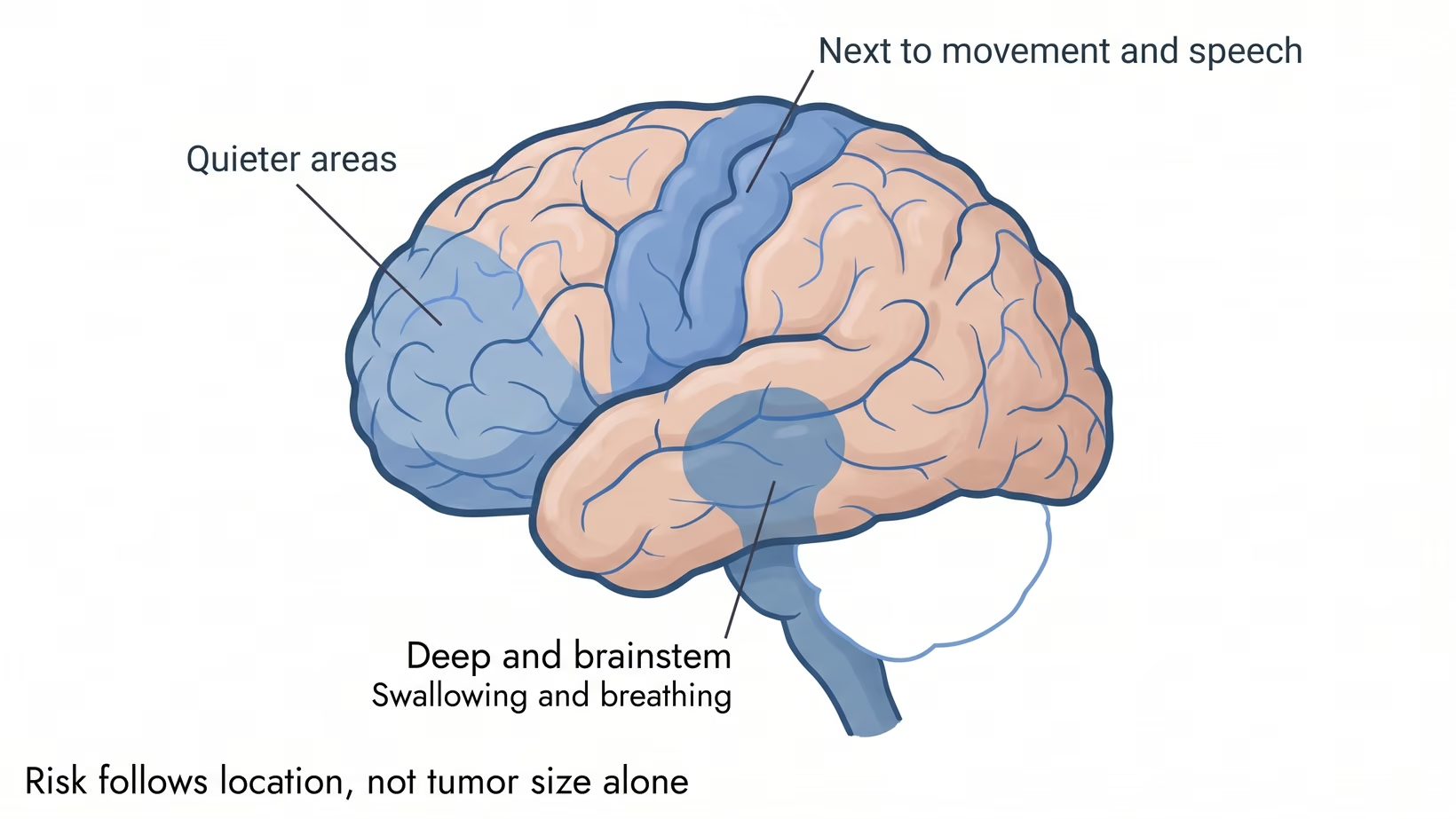
Where the tumor sits is one of the biggest things that sets the risk, often more than how big it is. A tumor touching the areas for movement and speech can still be removed. The surgeon stops at the point where taking more would cost you function, which is why part of a tumor is sometimes left behind on purpose.
Deep, midline and brainstem tumors
Deep in the center of the brain, every movement signal to the body runs in a narrow bundle, so a small injury causes a large loss. At the brainstem, breathing, swallowing, eye movement and being awake are packed into a few centimeters of tissue. Surgery there is often planned from the start to remove only part of the tumor.
Skull base tumors and the nerves of the face, eye and hearing
The skull base is the floor the brain rests on, and the nerves to the eye, face, hearing and swallowing pass through it. Surgery there can leave a weak face, double vision, loss of hearing on one side, or a hoarse voice with choking on drinks.
It can also leave a leak of the clear fluid that surrounds the brain. That is why clear fluid dripping from the nose after surgery is a reason to go back the same day.
When a referral to neurosurgery is urgent
A falling level of consciousness, or a new weakness, numbness or trouble speaking on one side, means going to the nearest emergency room now. A headache that is worse lying down and comes with vomiting means being seen by a doctor today. Swelling of the optic disc at the back of the eye also makes a referral urgent.
The anesthesia risk in the elderly
Age by itself does not rule out brain tumor surgery in an older patient. The heart, the lungs, the kidneys, the other illnesses and how independent the patient was before the tumor are what decide it. The anesthesia doctor asks about memory, hearing, eyesight, alcohol and every medicine, including the ones bought without a prescription.
Blood thinners, which are medicines that stop clots from forming, have to be managed and timed before a date can be set. Do not stop one yourself; ask the doctor who prescribed it and your surgeon. Confusion in the days after an operation is a recognized complication. Families should not treat it as the patient being difficult. Tell the nurses the hour it starts. Familiar faces, glasses, hearing aids, daylight and sleep at night all help.
How the surgical team lowers these risks
The risk you are quoted is not fixed. Several things the team does before and during the operation change it, and you can ask whether each is available where you are being treated. A navigation system shows the surgeon where the instrument tip is against the tumor.
For a tumor in a speech or movement area, part of the operation can be done with you awake, so the team can test your speech and your hand while they work.
The consent conversation: what the surgeon has to tell you
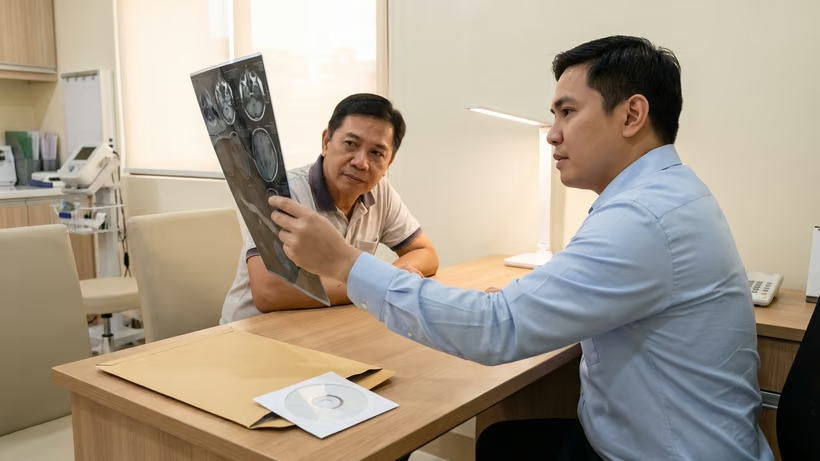
Consent is a conversation, and the form is only its record. The surgeon has to tell you what is planned, what can go wrong, how likely each problem is in your case, and what happens if nothing is done. If the form was handed to you by someone who could not answer your questions, ask to see the surgeon before you sign.
You can withdraw consent at any point before the operation.
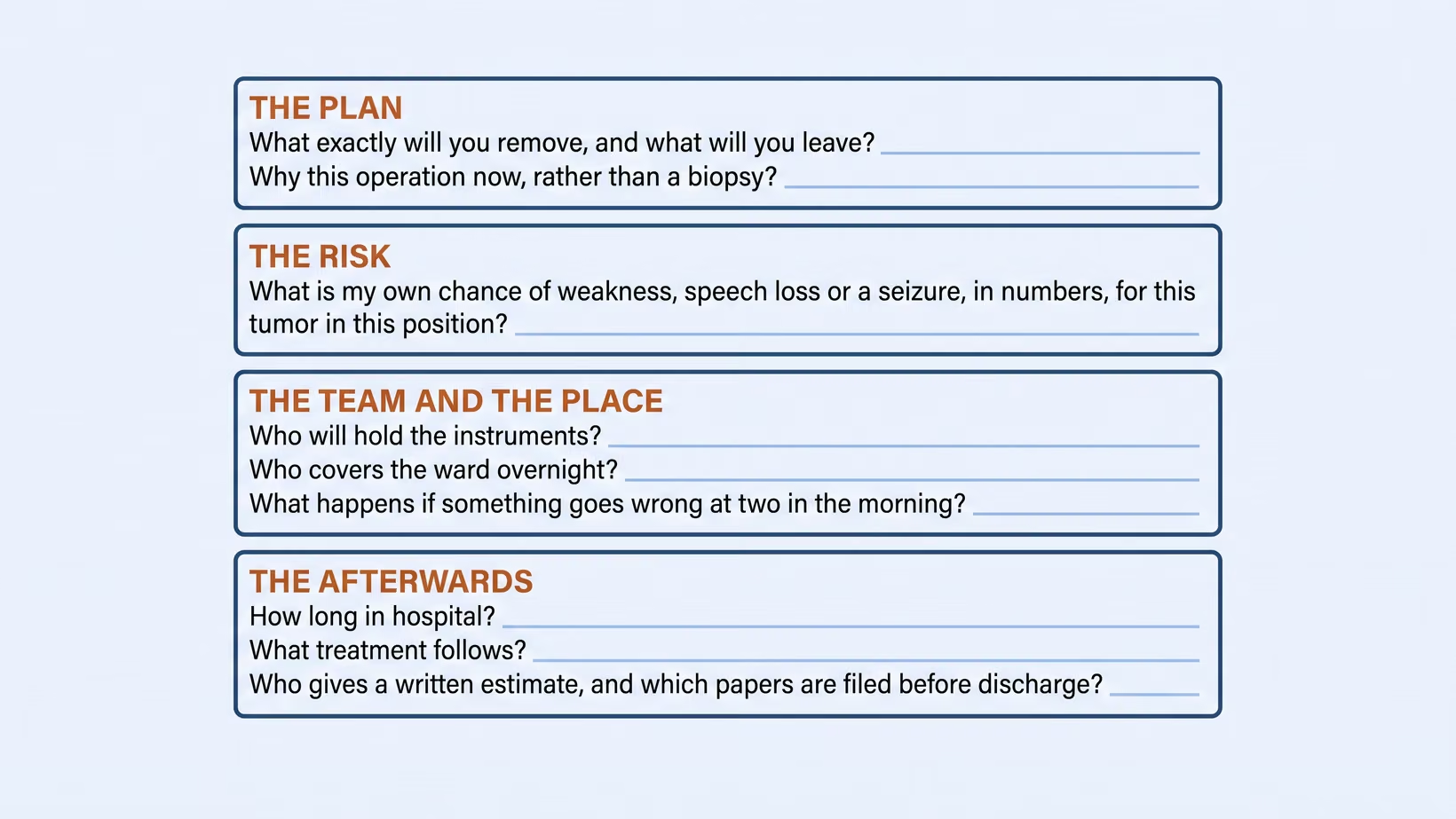
Settle four things before you sign. What exactly will be removed, and what will be left. What your own risk of weakness, speech loss or a seizure is, given where your tumor sits. Who will perform the operation. What the plan is if something goes wrong overnight.
Ask for the answers as counts, such as one in 100, rather than as words like low or small.
Asking for a second opinion before brain surgery is normal, and surgeons expect it on an operation of this size. Ask for a copy of your scans and of the plan to take with you.
You may also come to me for that second opinion. My clinic days and the online consult are listed below.
Bring and ask
What the family should ask before signing
Bring these questions written down, and write the answers next to them. The family member who will do the care at home should be in the room. Ask about cost before the date is set rather than on the day.
Questions about the operation itself
- What exactly will you remove, and what will you leave behind?
- Why this operation now, rather than a biopsy (a small sample of the tumor taken to name it) or waiting and scanning again?
- How long will the operation take, and how long will the patient be in intensive care?
Questions about what happens if it goes badly
- What is the chance of a new weakness or speech problem, in numbers, for this tumor in this position?
- Who decides to go back to the operating room at two in the morning, and how quickly can that happen?
- If the patient cannot speak for themselves, who do you ask?
Questions about cost and coverage, and who to ask them
- Who in this hospital can give a written estimate before the date is set?
- What is covered, what is not, and which papers have to be filed before discharge?
Ask the hospital billing section and the medical social worker. Quotes vary widely, and what brain tumor surgery costs in the Philippines explains why.
What to do now
Who to see before the operation, and what to bring
Do these before you sign the consent form.
- See the surgeon who will operate
- Bring your scans on disc, these questions written down, and the family member who will do the care at home
- Ask billing for a written estimate before the date is set
- You can book a consultation, or your doctor can refer you
- To see me, come to my clinic at the Lung Center of the Philippines, Room 1101, Quezon Avenue, Quezon City, on Tuesday or Thursday from 2 PM
- If the trip is not practical for you, book an online consult with me on the consultation page
Frequently asked questions
Is awake brain surgery more dangerous than being asleep?
Awake brain surgery was not more dangerous than being asleep in the studies so far. For a glioma in a speech or movement area, it gave broadly similar results, with less nausea afterwards and a hospital stay about two days shorter. It is offered to patients who are able to cooperate.
How soon will I know if there is a deficit?
You will know within hours whether there is a deficit, meaning a new loss such as weakness or trouble speaking. The team checks your speech, your grip and your leg strength as soon as you wake. Anything found then is followed over the next weeks to see how much of it was swelling.
Can I refuse surgery and choose radiation instead?
You can refuse brain tumor surgery, as you can refuse any operation. Whether radiation alone is a reasonable choice depends on what the tumor is. For many tumors, the tissue has to be sampled or removed before anyone knows that. Ask your surgeon what happens if nothing is done.
See sources
- De Witt Hamer PC, Robles SG, Zwinderman AH, Duffau H, Berger MS. Impact of intraoperative stimulation brain mapping on glioma surgery outcome: a meta-analysis. Journal of Clinical Oncology, 2012. PMID 22529254. doi:10.1200/JCO.2011.38.4818
- Stummer W, Pichlmeier U, Meinel T, Wiestler OD, Zanella F, Reulen HJ, for the ALA-Glioma Study Group. Fluorescence-guided surgery with 5-aminolevulinic acid for resection of malignant glioma: a randomised controlled multicentre phase III trial. The Lancet Oncology, 2006. PMID 16648043. doi:10.1016/S1470-2045(06)70665-9
- Lee L, Borbas B, et al. Incidence and risk factors of surgical site infection after cranial surgery for patients with brain tumors: a systematic review and meta-analysis. World Neurosurgery, 2024. doi:10.1016/j.wneu.2024.02.133
- Barker FG 2nd. Efficacy of prophylactic antibiotics against meningitis after craniotomy: a meta-analysis. Neurosurgery, 2007. doi:10.1227/01.NEU.0000255425.31797.23
- Chen CC, Rennert RC, Olson JJ. Congress of Neurological Surgeons systematic review and evidence-based guidelines on the role of prophylactic anticonvulsants in the treatment of adults with metastatic brain tumors. Neurosurgery, 2019. doi:10.1093/neuros/nyy545
- Hanna C, Lawrie TA, et al. Treatment of newly diagnosed glioblastoma in the elderly: a network meta-analysis. Cochrane Database of Systematic Reviews, 2020. doi:10.1002/14651858.CD013261.pub2
- Lu VM, Phan K, Rovin RA. Comparison of operative outcomes of eloquent glioma resection performed under awake versus general anesthesia: a systematic review and meta-analysis. Clinical Neurology and Neurosurgery, 2018. doi:10.1016/j.clineuro.2018.04.011
- Aldecoa C, Bettelli G, Bilotta F, Sanders RD, et al, for the European Society of Anaesthesiology. European Society of Anaesthesiology evidence-based and consensus-based guideline on postoperative delirium. European Journal of Anaesthesiology, 2017. PMID 28187050. doi:10.1097/EJA.0000000000000594