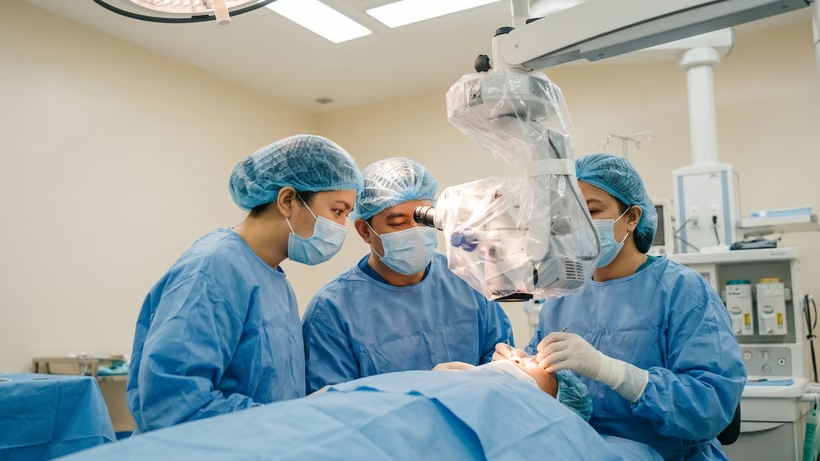

An inoperable brain tumor is one that cannot be removed safely, because of where it sits or because the patient is too unwell for surgery. It does not mean nothing can be done. A biopsy (a small tumor sample), radiation, medicines and comfort care remain. Survival depends mostly on the tumor type, and a second opinion is reasonable.
What does inoperable mean for a brain tumor?
Inoperable means a surgeon has judged that removing the tumor would cause more harm than good. The reason is usually where the tumor is or how well the patient is. It is a statement about the operation. It is not a statement that treatment has ended.
For the most common tumors that start in the adult brain, called gliomas, the European guideline sets one aim for surgery. The surgeon removes as much tumor as is safely possible without harming how the brain works.
The same guideline says that avoiding new permanent damage matters more than how much tumor is taken out. New damage can take away a person’s independence and quality of life. It can also delay or prevent the next treatment.
That is why a surgeon may decide against an operation. When removal is not safe, the guideline says a stereotactic biopsy should be done instead. In a stereotactic biopsy, the surgeon takes a small sample of the tumor with a needle guided by the scans.
Inoperable means the tumor is not safe to remove. Other treatments are still possible.
Inoperable brain tumors in children
Children can also have a brain tumor that cannot be removed. Parents often ask about brainstem glioma, a tumor in the part of the brain that joins it to the spinal cord. The studies in this article were done in adults, so their figures do not apply to a child. I treat brain tumors in children at the Philippine Children’s Medical Center (PCMC), Quezon City.
Seek care now
Warning signs that need care now
A person with a brain tumor can have a new headache or a seizure. Some signs mean going to the nearest hospital emergency room now, with someone else driving. Others need an urgent appointment with your doctor. Do not drive yourself.
Go to the nearest hospital emergency room now, with someone else driving, if the person suddenly becomes less alert, or has a sudden change in vision or speech.
Go to the nearest hospital emergency room now, with someone else driving, if there is a headache and the person:
- has had a seizure (fit)
- has numbness or weakness in the body or face
- has a headache that started suddenly and is extremely painful
- has had a head injury in the last 3 months, for example from a fall or accident
- finds it hard to speak, balance, walk or remember things
- is drowsy or confused
- has lost vision
- has a rash that does not fade when a glass is rolled over it
- has a very high temperature or a stiff neck, or bright lights bother them
Go to the nearest hospital emergency room now, with someone else driving, for a seizure that:
- is the first one
- lasts longer than usual for that person, or longer than 5 minutes if you do not know how long their seizures usually last
- is not followed by the usual recovery
- is followed by another seizure without recovery in between
- is the third or more in 24 hours
If your doctor gave you a seizure plan, follow it.
If none of the signs above is present, ask for an urgent appointment with your doctor for a headache:
- with vision or eye problems
- that starts or gets worse with coughing, sneezing, bending down or exercise
- with vomiting
Why does location make a brain tumor inoperable?
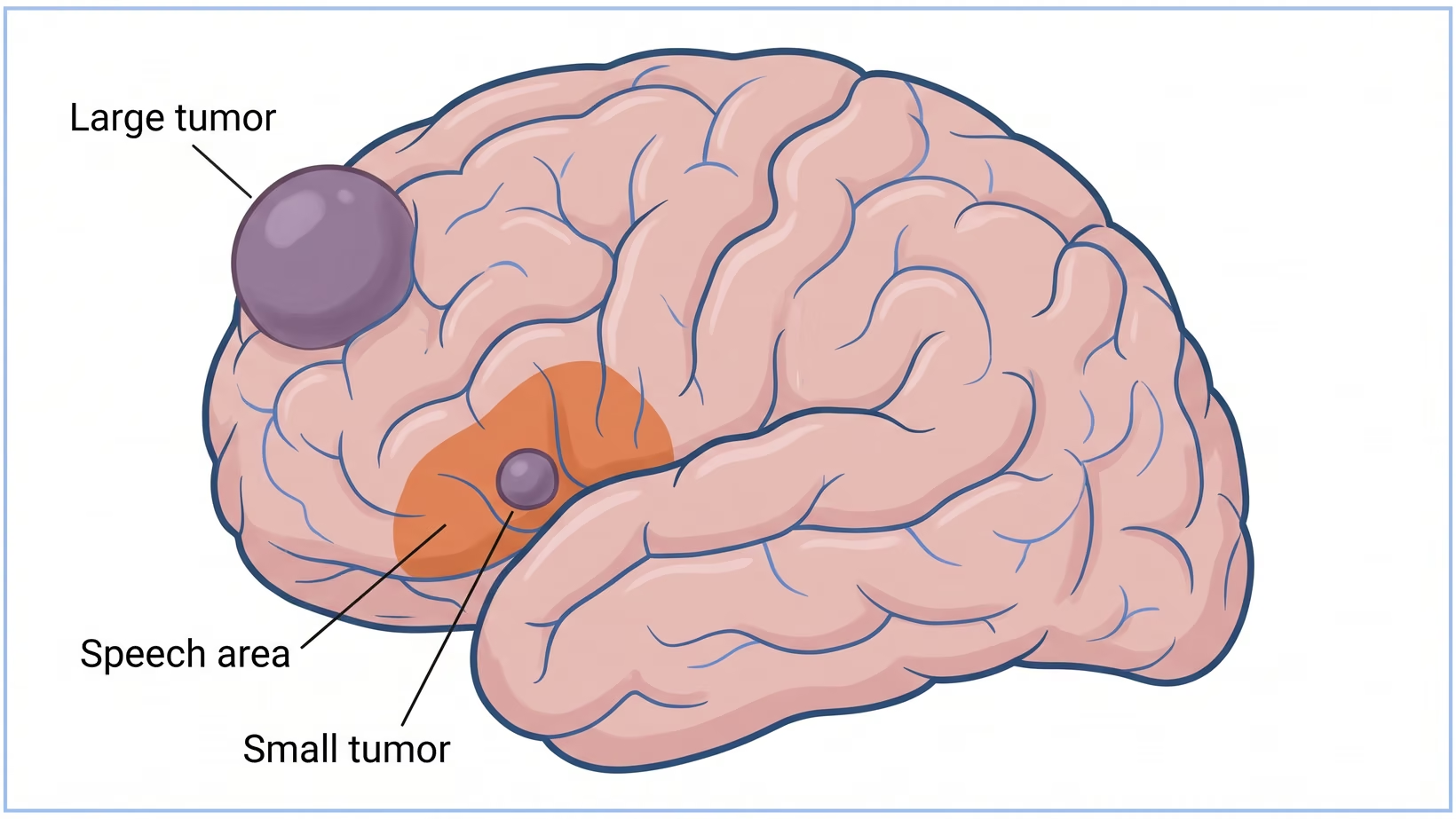
Location matters because the aim of surgery is to remove tumor without harming how the brain works. The European glioma guideline names the tumor’s location, and the patient’s condition, as reasons removal may not be safe. Size alone does not decide it.
Some parts of the brain do work a person cannot lose without harm, such as speech and thinking. Surgeons call these eloquent areas. A tumor that sits in or beside one of them is harder to remove without causing new damage.
The guideline describes tools that help. These include brain mapping while the patient is awake and under local anesthesia, which checks speech and thinking during the operation. They also include monitoring of the nerves and muscles.
The guideline says these tools make it easier to remove tumors in eloquent areas. They do not make every tumor removable. Knowing how awake brain surgery works helps you understand why two surgeons may answer the same scan differently.
The patient’s condition is the other half. A person who is very weak or has other serious illnesses may not be safe to operate on, even when the tumor itself could be reached.
What treatment is left: biopsy only or radiation?
When surgery is not possible, the first step is often a biopsy to name the tumor. Radiation, and for some tumors chemotherapy (cancer medicines), can follow. Comfort care runs beside all of these. The tumor type decides which of them fits, so the first step is knowing what the tumor is.
A biopsy: why a small sample still matters
A biopsy matters because treatment for a glioma is decided from the tissue. The European guideline says treatment decisions are made from the tissue diagnosis, including tests on the tumor’s genes.
The guideline says a stereotactic biopsy has a low risk of complications and is highly accurate in naming the tumor. It gives no number for that risk.
The guideline says doctors should avoid choosing comfort care alone without a tissue diagnosis. There are exceptions. One is when the biopsy itself would be too risky. Another is when the outlook is likely to be very poor, such as in a person with many other illnesses and fast decline.
A diagnosis still helps when no more tumor treatment is planned. The guideline says it helps doctors counsel the patient and the family. Learning what a brain tumor biopsy involves can make the wait for the result easier to plan around.
Radiation and radiosurgery
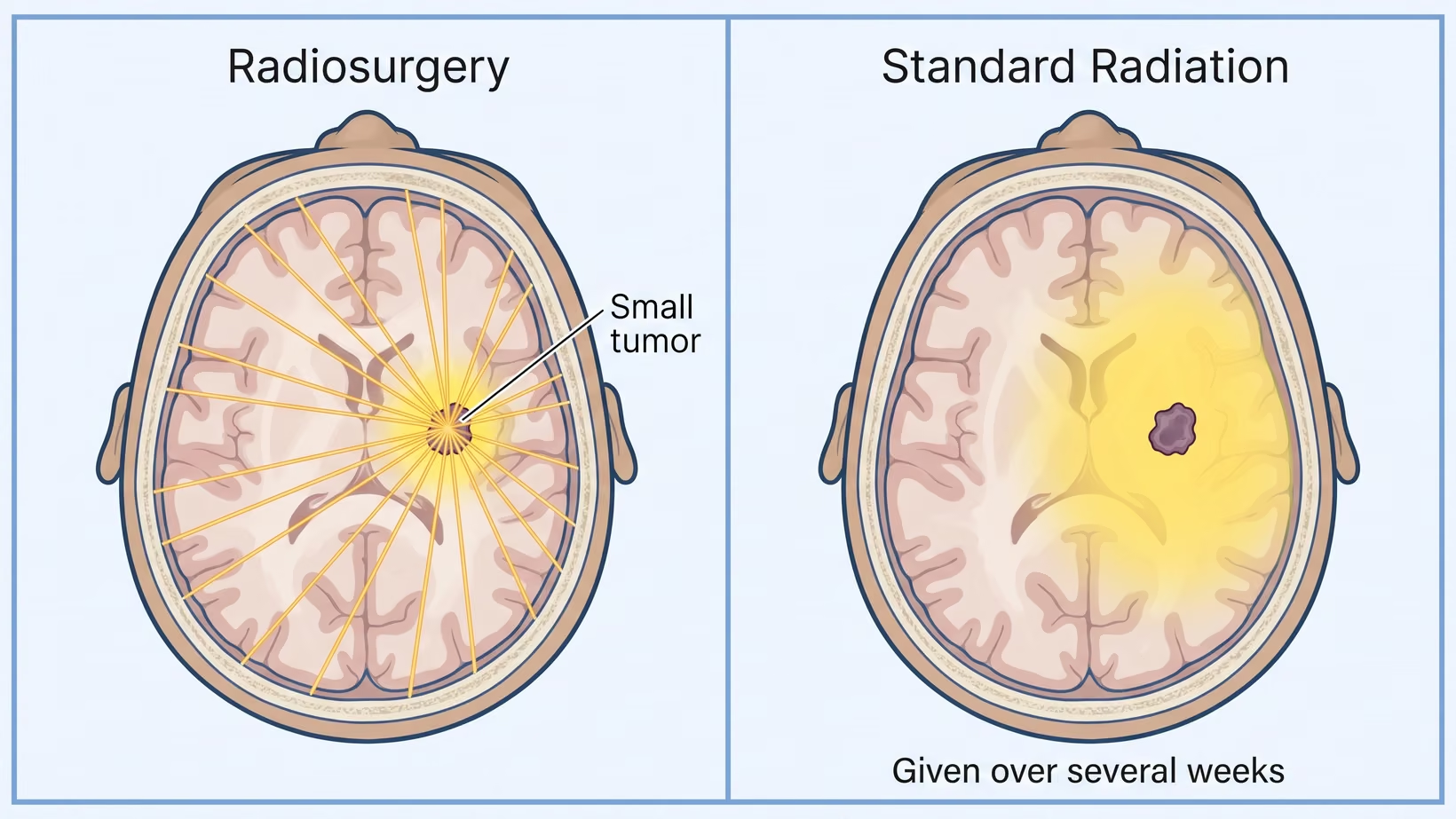
Radiation can treat a tumor that cannot be removed. Which kind is used depends on the tumor type and size. Radiosurgery aims many beams at one small target. A standard course of radiation is given in many smaller sessions over several weeks.
For a meningioma, a tumor that grows from the covering of the brain, the European guideline calls radiosurgery an established alternative to surgery in selected cases. These are small tumors in older or very sick patients.
For meningiomas 3 cm across or smaller, control of the tumor after radiosurgery was comparable to complete removal. For meningiomas that cannot be removed safely, the guideline supports a standard course of radiation, on weaker evidence.
For cancer that has spread to the brain, the American guideline says radiosurgery alone should be offered for one to four tumors that were not removed. This excludes small-cell cancer.
Distance matters in the Philippines. A 2026 study of Luzon found that about 2 in 3 people there live within a 60-minute drive of any radiation center. Counting only public centers, it is just under 1 in 2 (49.6 percent).
Chemotherapy given with radiation
Chemotherapy given with radiation can lengthen life for some gliomas. The tumor type and the patient’s age decide which plan is used.
In a trial of 562 people aged 65 or older with glioblastoma, a type of glioma, a shorter radiation course was given with or without the chemotherapy medicine temozolomide. Half of those given both lived longer than 9.3 months. Half of those given radiation alone lived longer than 7.6 months. Quality of life was similar in the two groups.
Your oncologist, the cancer doctor, decides on the medicine and the plan.
A second opinion on an inoperable brain tumor
A second opinion on an inoperable brain tumor is a normal request. It means another neurosurgeon looks at the same scans and reports. Surgeons can differ in the tools they use and how they weigh the risks. Asking does not offend the first doctor.
Access is uneven in the Philippines. A 2024 study found one neurosurgeon for every 600,000 Filipinos as of January 2023. About 1 in 5 Filipinos had no access to a full-time neurosurgeon. Where only one neurosurgeon serves an area, patients with brain tumors may wait longer for a planned operation.
Bring these to the second opinion:
- the MRI and CT brain scan images on a disc, not only the printed films
- the radiology reports and any biopsy report
- a list of every medicine the patient takes
Ask these questions:
- What makes this tumor inoperable: where it is, or the patient’s condition?
- Can a biopsy be done to name the tumor?
- Is radiation, or radiosurgery, an option?
- Would a different approach to surgery change the answer?
If you want a neurosurgeon to look at the scans again, you may see me at my clinic at the Lung Center of the Philippines on Tuesday or Thursday from 2 PM. If travel is not practical, book an online consult on the consultation page. When an operation is possible, I operate on adults at the Lung Center and at the National Kidney and Transplant Institute (NKTI).
Comfort care when a tumor cannot be removed
Comfort care, also called palliative care, eases symptoms and supports the patient and the family. It does not wait for the last days. The European guideline for adult gliomas calls for an early palliative care approach, given beside other treatment.
The guideline gives two reasons. A glioma limits life, and it causes symptoms as the brain’s work declines. The aim of palliative care is to reduce those symptoms and improve quality of life for patients and their carers, especially near the end of life.
For cancer that has spread to the brain, an American guideline recommends steroid medicines for temporary relief. They ease symptoms caused by swelling and raised pressure inside the skull.
Your doctor sets the steroid dose and how it is lowered. Do not change it on your own. The same guideline says doctors should lower steroids as fast as the patient can tolerate, because long use has side effects.
Comfort care also covers the practical side. This includes pain, sleep, eating and how the family copes with care at home. Knowing what happens in the last weeks helps a family plan before a crisis.
How long can a person live with an inoperable tumor?
How long a person lives with an inoperable brain tumor depends mostly on the tumor type. A slow-growing glioma can be lived with for years. In the trials, glioblastoma survival is counted in months to a few years. There is no single figure for “inoperable” tumors as one group.
The figures below come from trials. A trial reports the median, the point where half the people lived longer and half lived shorter. A median is not a prediction for one person. Your own doctor can explain what applies to you.
Slow-growing (low-grade) tumors
A low-grade glioma grows slowly and can be lived with for years. The European guideline reports the RTOG 9802 trial in adults with high-risk grade 2 gliomas. The group included people aged 18 to 39 who had only part of the tumor removed or only a biopsy, and people aged 40 or more.
Adding chemotherapy to radiation lengthened median survival from 7.8 years to 13.3 years.
Glioblastoma
Survival with glioblastoma is counted in months in the main trial. In the main glioblastoma trial, 573 adults with a median age of 56 had radiation with or without temozolomide. Half of those given both lived longer than 14.6 months, and half given radiation alone, longer than 12.1 months.
At two years, about 27 in 100 were alive with both treatments, against about 10 in 100 with radiation alone. In that trial, 84 in 100 had surgery to remove part of the tumor first, so these figures do not describe a tumor that could not be operated on. Learning how to read glioblastoma survival numbers helps you put them in context.
Cancer that has spread to the brain
For cancer that has spread to the brain from elsewhere, survival depends on the original cancer and on how well the person is. Doctors weigh how many brain tumors there are and whether cancer medicines are still an option.
For people with cancer that has spread to the brain who can do very little for themselves, the American guideline’s expert panel agreed that radiation will not bring benefit within a meaningful time.
What can the family do when a tumor cannot be operated on?
The family can learn the warning signs, keep good records, and ask for comfort care early. They can also share the work of care. The European guideline counts the quality of life of carers, not only the patient, as an aim of palliative care.
Steps that help most families:
- Learn the warning signs above, and know the nearest hospital emergency room.
- Keep a diary of headaches, seizures and changes in speech or strength.
- Keep the scan discs, reports and medicine list together in one folder.
- Agree on who stays with the patient as bantay, and take turns.
- Talk early about what the patient wants, while they can still say it.
- Ask the doctor for comfort care to start now, beside treatment.
Look after the carer too. A carer who sleeps, eats and takes breaks can keep going for longer. Ask relatives to take shifts before you are worn out.
What to do now
What to do now
Your next step depends on what is happening today.
- A sudden change in alertness, vision or speech, or a warning sign from the emergency list or the seizure list: go to the nearest hospital emergency room now, with someone else driving.
- Otherwise, a headache with vision problems, vomiting, or pain made worse by coughing or bending: ask for an urgent appointment with your doctor.
- To ask whether the tumor is truly inoperable: see a neurosurgeon soon, without waiting for a routine visit.
- Bring the MRI and CT images on a disc, the radiology and biopsy reports, and a list of medicines.
- For an adult: my clinic is at the Lung Center of the Philippines, Tuesday and Thursday from 2 PM, or book an online consult on the consultation page.
- For a child: my clinic is at PCMC, Wednesday from 2 PM.
- Doctors can refer a patient.
Frequently asked questions
Can an inoperable brain tumor still be biopsied?
An inoperable brain tumor can often still be biopsied. For adult gliomas that cannot be removed safely, the European guideline says a stereotactic biopsy should be done. A needle takes a small sample through a small opening. The exceptions are when the biopsy itself is too risky or the outlook is very poor.
Is an inoperable brain tumor always cancer?
An inoperable brain tumor is not always cancer. “Inoperable” describes whether a tumor can be removed safely, not what kind of tumor it is. A meningioma, a glioma and cancer spread from elsewhere can all be called inoperable. Only a tissue sample names the type.
Does radiation cure an inoperable brain tumor?
Radiation for an inoperable brain tumor can control some tumors, but no source here promises a cure. For small meningiomas, control after radiosurgery was comparable to complete removal. For glioblastoma, radiation with temozolomide lengthened median survival in a trial. What radiation can do depends on the tumor type.
Can another surgeon operate on a tumor called inoperable?
Another surgeon can sometimes operate on a tumor first called inoperable. Surgeons differ in their tools and in how they weigh the risks. The European guideline says awake brain mapping and nerve monitoring make it easier to remove tumors in eloquent areas. A second opinion lets you hear both views.
See sources
- NHS (UK National Health Service). Headaches (NHS: when to get help). NHS (nhs.uk); 2025. https://www.nhs.uk/conditions/headaches/
- NHS (nhs.uk). Epilepsy. NHS (nhs.uk); 2025. https://www.nhs.uk/conditions/epilepsy/
- Weller M, et al. EANO guidelines on the diagnosis and treatment of diffuse gliomas of adulthood. Nature Reviews Clinical Oncology; 2021. PMID 33293629; DOI 10.1038/s41571-020-00447-z
- Stupp R, et al. Radiotherapy plus concomitant and adjuvant temozolomide for glioblastoma. The New England Journal of Medicine; 2005. PMID 15758009; DOI 10.1056/nejmoa043330
- Perry JR, et al. Short-Course Radiation plus Temozolomide in Elderly Patients with Glioblastoma. The New England Journal of Medicine; 2017. PMID 28296618; DOI 10.1056/nejmoa1611977
- Vogelbaum MA, et al. Treatment for Brain Metastases: ASCO-SNO-ASTRO Guideline. Journal of Clinical Oncology; 2022. PMID 34932393; DOI 10.1200/jco.21.02314
- Goldbrunner R, et al. EANO guideline on the diagnosis and management of meningiomas. Neuro-Oncology; 2021. PMID 34181733; DOI 10.1093/neuonc/noab150
- Pace A, et al. European Association for Neuro-Oncology (EANO) guidelines for palliative care in adults with glioma. The Lancet Oncology; 2017. PMID 28593859; DOI 10.1016/s1470-2045(17)30345-5
- Chang SM, et al. Anticonvulsant Prophylaxis and Steroid Use in Adults With Metastatic Brain Tumors: ASCO and SNO Endorsement of the Congress of Neurological Surgeons Guidelines. Journal of Clinical Oncology; 2019. PMID 30883246; DOI 10.1200/jco.18.02085
- Baticulon RE, et al. The Neurosurgical Workforce of the Philippines. Neurosurgery; 2024. PMID 37931081; DOI 10.1227/neu.0000000000002630
- Zerrudo JI, et al. A high-resolution geospatial analysis of radiation therapy access in the Philippines. Ecancermedicalscience; 2026. PMID 42416229; DOI 10.3332/ecancer.2026.2113