
TB meningitis is tuberculosis (TB) infecting the meninges, the lining around the brain and spinal cord. It is a medical emergency. Drowsiness, confusion, a very painful headache or a first seizure (fit) means the emergency room now. Treatment is months of TB medicines plus steroid medicines, and sometimes surgery to drain extra fluid from the brain.
What is TB meningitis?
TB meningitis is an infection of the meninges by the germ that causes tuberculosis. The meninges are the membranes that wrap the brain and the spinal cord. TB meningitis is a form of TB outside the lungs. The infection inflames these membranes, and the inflammation can harm the brain and its nerves.
In 2024, the Philippines had about 7 in every 100 of the world’s new TB cases (6.8 percent), WHO estimates. It was one of eight countries that together had two-thirds of the world’s cases. This figure counts every form of TB, not TB meningitis alone.
TB meningitis affects adults and young children. WHO says babies and children who catch the TB germ are at higher risk of becoming sick with TB.
People living with HIV can also get TB meningitis. The British guideline says every person with suspected or proven TB should be offered an HIV test.
When to go to the hospital now
Go to the nearest hospital emergency room now, with someone else driving, if anyone shows a danger sign of meningitis, such as confusion, a very painful headache or a first seizure. TB meningitis is a medical emergency. Delay in treatment is strongly linked to death, the British guideline says, so doctors start TB medicines as soon as they suspect it.
Seek care now
Which signs mean the emergency room now?
Go to the nearest hospital emergency room now, with someone else driving.
Adults and children aged five and over:
- A very high or very low temperature, feeling hot or cold to the touch, or shivering
- A very painful headache
- Confusion, slurred speech, or not making sense
- Unusually drowsy, hard to wake, or not responding as usual
- A stiff neck and cannot look at bright lights
- A rash that does not fade when you press it
- A seizure (fit) for the first time
- Any symptom you are worried might be meningitis
Babies and children under five:
- A very high temperature: 38°C or more in babies under three months old, or 39°C or more at three to six months old
- A very low temperature, less than 36°C, or cold to the touch or shivery
- A weak, high-pitched or continuous cry
- A rash that does not fade when you press it
- Not responding as usual, not feeding, floppy, difficult to wake, or more sleepy than usual
- Any symptom you are worried might be meningitis, such as a bulging soft spot (bumbunan)
This list, from the NHS, is for meningitis of any cause, which can start suddenly. TB meningitis can build more slowly, over weeks of fever and headache. If you think a family member might have meningitis, get medical help immediately, even before a danger sign appears.
How does TB reach the brain?
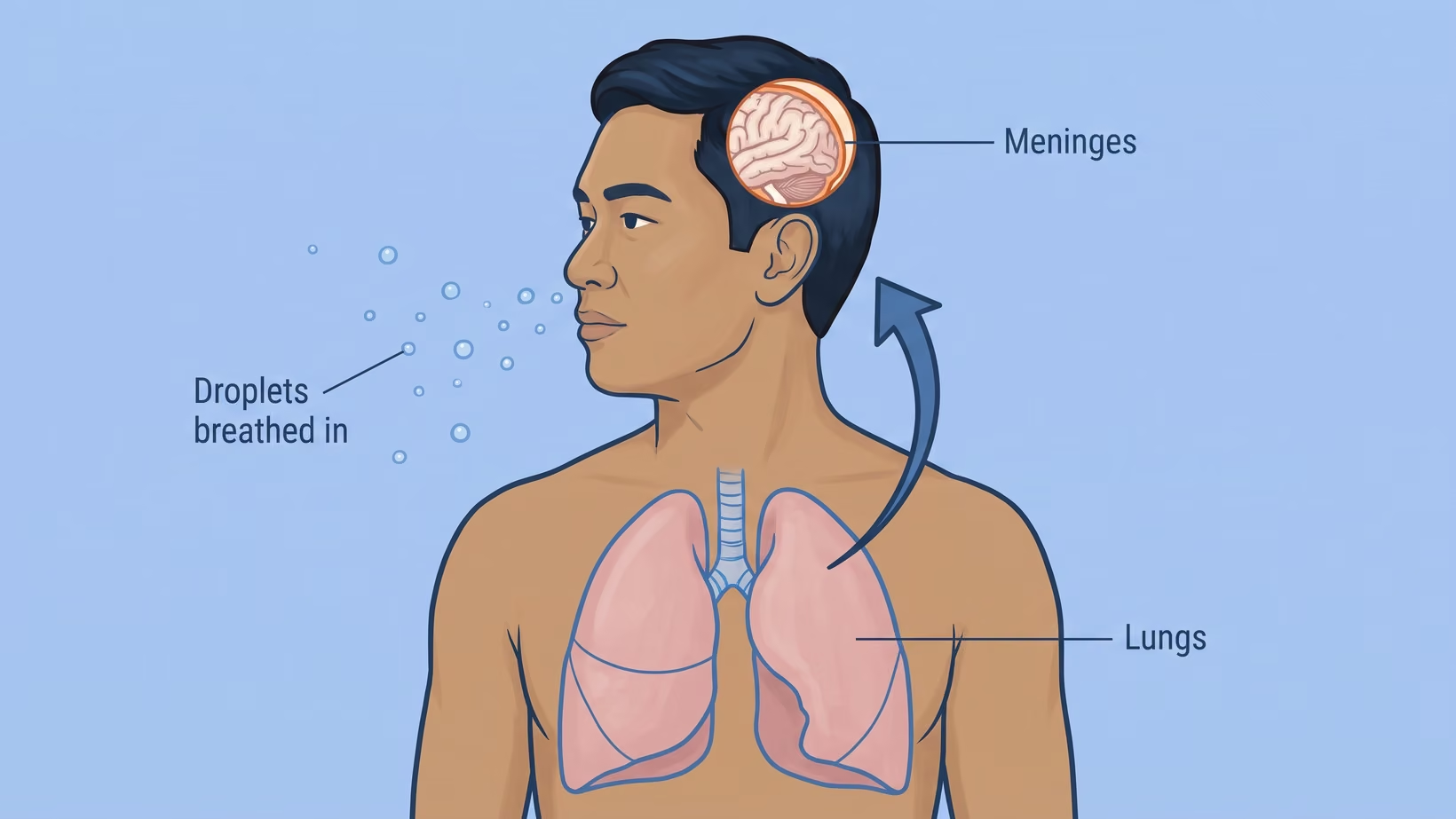
TB reaches the brain after the germ is breathed in. The TB germ spreads through the air when a person with TB coughs, sneezes or spits. It usually affects the lungs, but it can also affect the brain and spine. In the brain, it inflames the meninges.
In some people, the germ spreads from the lungs to other parts of the body, and the meninges are one of them. The inflammation then harms the brain in several ways, the Cochrane review explains.
- The pressure inside the skull can rise, with or without hydrocephalus, a build-up of fluid inside the brain.
- The nerves of sight can be damaged, and vision becomes poor.
- Other nerves that come straight from the brain, the cranial nerves, can stop working well.
- The membranes can stay inflamed (arachnoiditis).
- The blood vessels of the brain can become inflamed (vasculitis), and this leads to stroke.
What are the stages of TB meningitis?
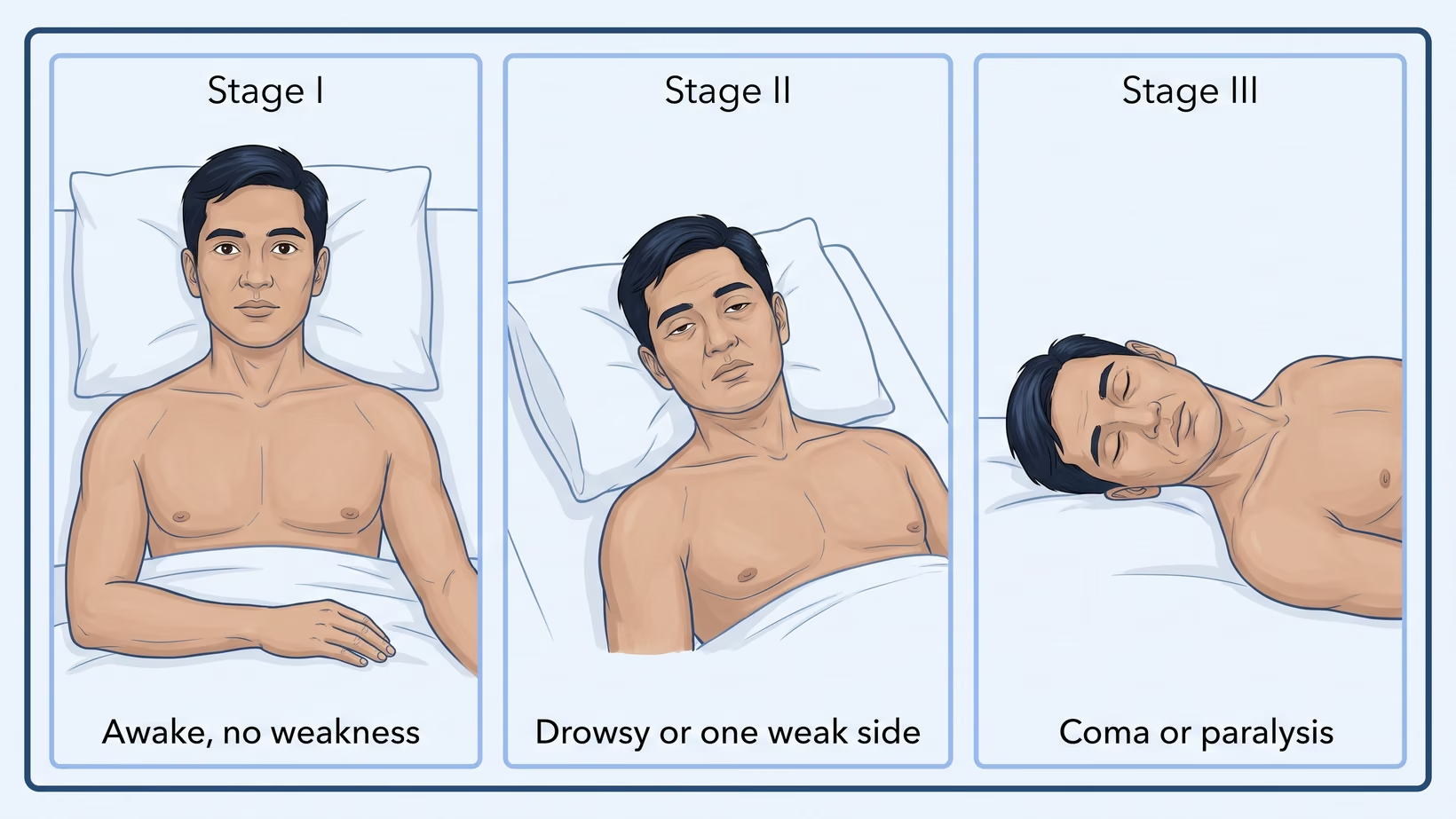
TB meningitis is graded in three stages, using the British Medical Research Council (MRC) system. The stage depends on how awake the person is and whether the brain or its nerves already show harm. Stage I is the mildest and stage III the most severe.
- Stage I (mild): the person is fully awake, with no focal neurological signs, meaning no weakness or nerve problem found on examination.
- Stage II (moderately advanced): the person is drowsy or confused but not in a coma. Or there is a moderate deficit, such as one weak cranial nerve, weakness of one side of the body (hemiparesis) or weakness of both legs (paraparesis).
- Stage III (severe): the person is in a coma. Or several cranial nerves are weak, or one side of the body or both legs are paralyzed (hemiplegia, paraplegia).
What are the chances of recovery at each stage?
Recovery from TB meningitis is linked to the stage at diagnosis. In a review of 19 studies with 1,636 children, those diagnosed at stage 3 had worse outcomes than those diagnosed earlier. Nearly half of the children, 307 of 657, were already at stage 3 when they were diagnosed.
Across all stages in the same review, about 19 in 100 children died during treatment. About 37 in 100 survived with no lasting effects on the brain or nerves. Among the children who survived, about 54 in 100 had lasting effects.
For adults, the authors of a trial of 817 patients in two hospitals in Vietnam wrote that nearly one third still die, even with early treatment and steroids. In that trial, 227 of 817 adults died within nine months. These are figures for groups. They cannot tell what will happen to one person.
Why is TB meningitis hard to diagnose?
TB meningitis is hard to diagnose because the TB germ is hard to find in the spinal fluid, and no single test catches every case. The diagnosis is best made with a lumbar puncture, in which a thin needle in the lower back takes a sample of the fluid around the brain and spinal cord.
Doctors suspect TB meningitis when this fluid shows many white cells, mostly lymphocytes (one kind of white cell), raised protein, and low sugar compared with the blood. The more fluid sent to the laboratory, the better the chance of finding the germ. If the answer is still unclear, the British guideline advises repeating the lumbar puncture.
In the review of 1,636 children, looking at the fluid under a microscope (a smear) found the germ in about 9 in 100. Growing the germ in the laboratory (a culture) found it in about 35 in 100.
Adults can have a rapid molecular test, Xpert Ultra, which looks for the germ’s genetic material. A Cochrane review gives this example. If 1,000 adults were tested and 100 of them had TB meningitis, 168 would test positive, and 79 of these would not have TB. Of the 832 who test negative, 11 would have TB. The review measured the test against culture, which itself misses some cases.
Until 2010, research studies used different definitions of TB meningitis. An international meeting of 41 experts then agreed one case definition for research. Because the tests can miss the germ, doctors do not wait for them. Early diagnosis and prompt treatment matter most for a good outcome, the Cochrane review says.
How is TB meningitis treated?
TB meningitis is treated with several TB medicines taken for many months, plus a steroid (corticosteroid) medicine, started as soon as the illness is suspected. In the British guideline, four TB medicines are given for two months, then two medicines for at least 10 more months.
The four medicines are isoniazid, rifampicin, pyrazinamide and ethambutol. The two that continue are isoniazid and rifampicin. The treating doctor sets the doses and decides any change in the TB meningitis medicines and steroids.
For children and adolescents, WHO’s 2022 guideline keeps the 12-month treatment as an option. It says a six-month intensive treatment may be used instead when drug resistance is not suspected. This is a conditional recommendation, based on evidence of very low certainty. The shorter treatment is not for children living with HIV. The treating doctor decides which course a child gets; do not stop treatment early on your own.
The British guideline gives steroids, either dexamethasone or prednisolone, to all patients with TB meningitis, whatever the stage. In the trials pooled by Cochrane, about 41 in 100 people died without steroids. With steroids, about 10 fewer in 100 died, at three to 18 months of follow-up. Steroids may have little or no effect on disability among those who survive.
A trial of 545 patients over 14 years old in Vietnam found that dexamethasone lowered the risk of death. It did not clearly lower the share of survivors with severe disability.
In a trial of 520 adults with HIV and TB meningitis in Vietnam and Indonesia, dexamethasone did not improve survival over 12 months. Deaths were 116 of 263 (about 44 in 100) with dexamethasone and 126 of 257 (about 49 in 100) with a dummy treatment (placebo). The difference could be chance. Whether a person living with HIV gets a steroid is the treating doctor’s decision. Do not stop or change any medicine on your own.
Stronger TB treatment did not lower deaths either. In a trial of 817 adults in Vietnam, higher-dose rifampicin plus levofloxacin for the first eight weeks did not save more lives. Within nine months, 113 of 408 on the stronger treatment died, and 114 of 409 on the standard treatment.
Before discharge, ask the treating doctor how the TB medicines will continue at home. In the Philippines, this can include the Department of Health TB program at your local health center.
Hydrocephalus and the shunt
Hydrocephalus is a build-up of fluid inside the brain, and in TB meningitis it can come with raised pressure inside the skull. When the fluid needs to be drained, a neurosurgeon chooses between a temporary drain, an endoscopic opening and a shunt, a tube that drains the fluid, according to the scan and the patient’s condition.
In children, the review of 1,636 children found hydrocephalus, or water on the brain, in about 86 in 100 when they first came to the hospital. This figure is for children only.
A shunt is a thin tube placed under the skin. It drains the extra fluid from a fluid space in the brain into the belly, where the body absorbs it. A valve in the tube controls the flow. Whether a patient needs a shunt for TB meningitis hydrocephalus depends on the scan and on how the patient is doing.
An endoscopic third ventriculostomy (ETV) uses an endoscope, a thin tube with a camera, to make a small opening inside the brain. The opening gives the fluid another way to flow, without a tube left in the body.
A review of five studies, with 369 children, compared ETV with a shunt for hydrocephalus from TB meningitis. It found no clear difference in success, complications, deaths or infections. The studies were few and small, so the two cannot yet be called equal.
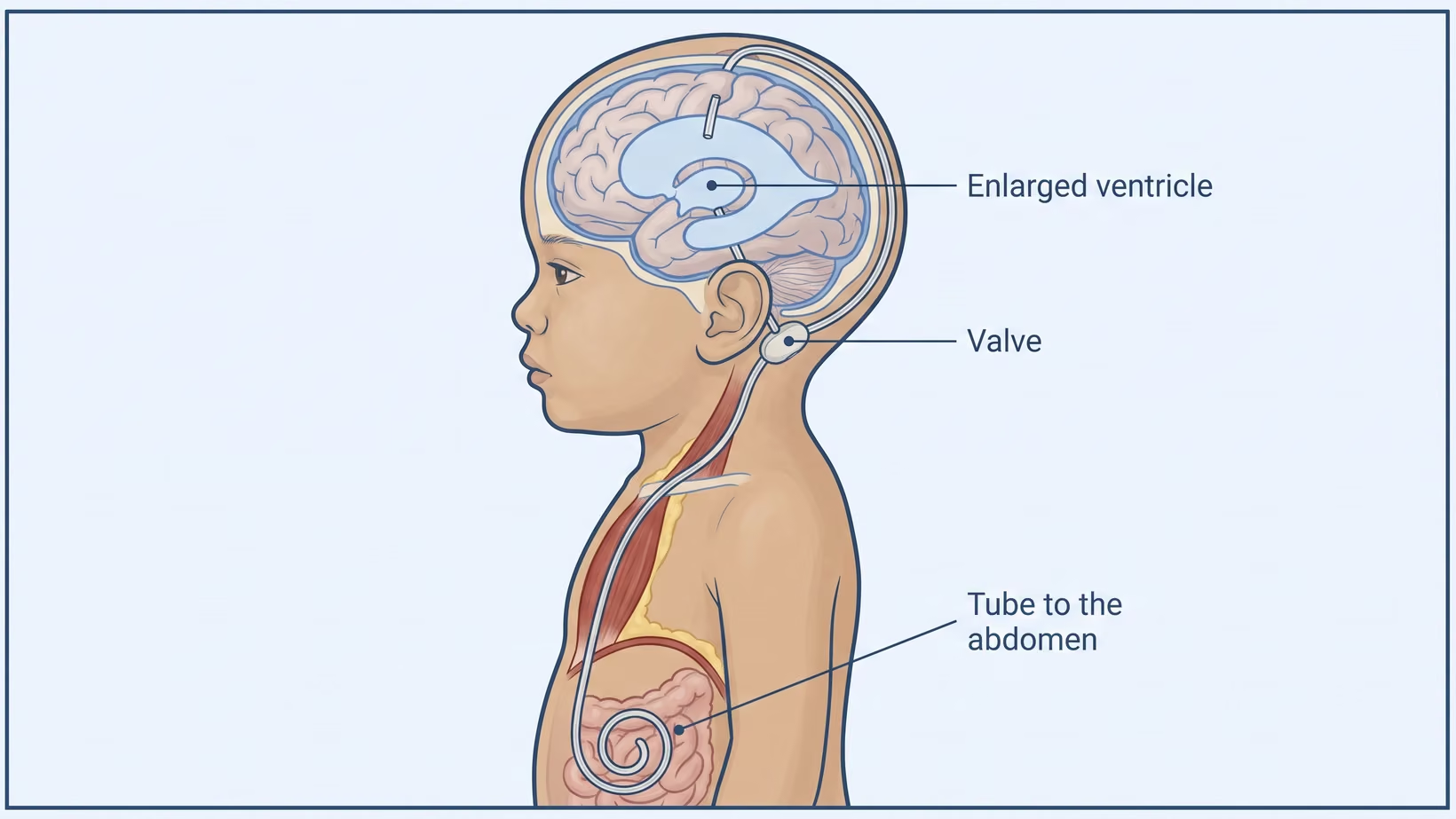
I operate on hydrocephalus from TB meningitis in children at the Philippine Children’s Medical Center (PCMC) and in adults at the Lung Center of the Philippines.
Stroke and tuberculoma in TB meningitis
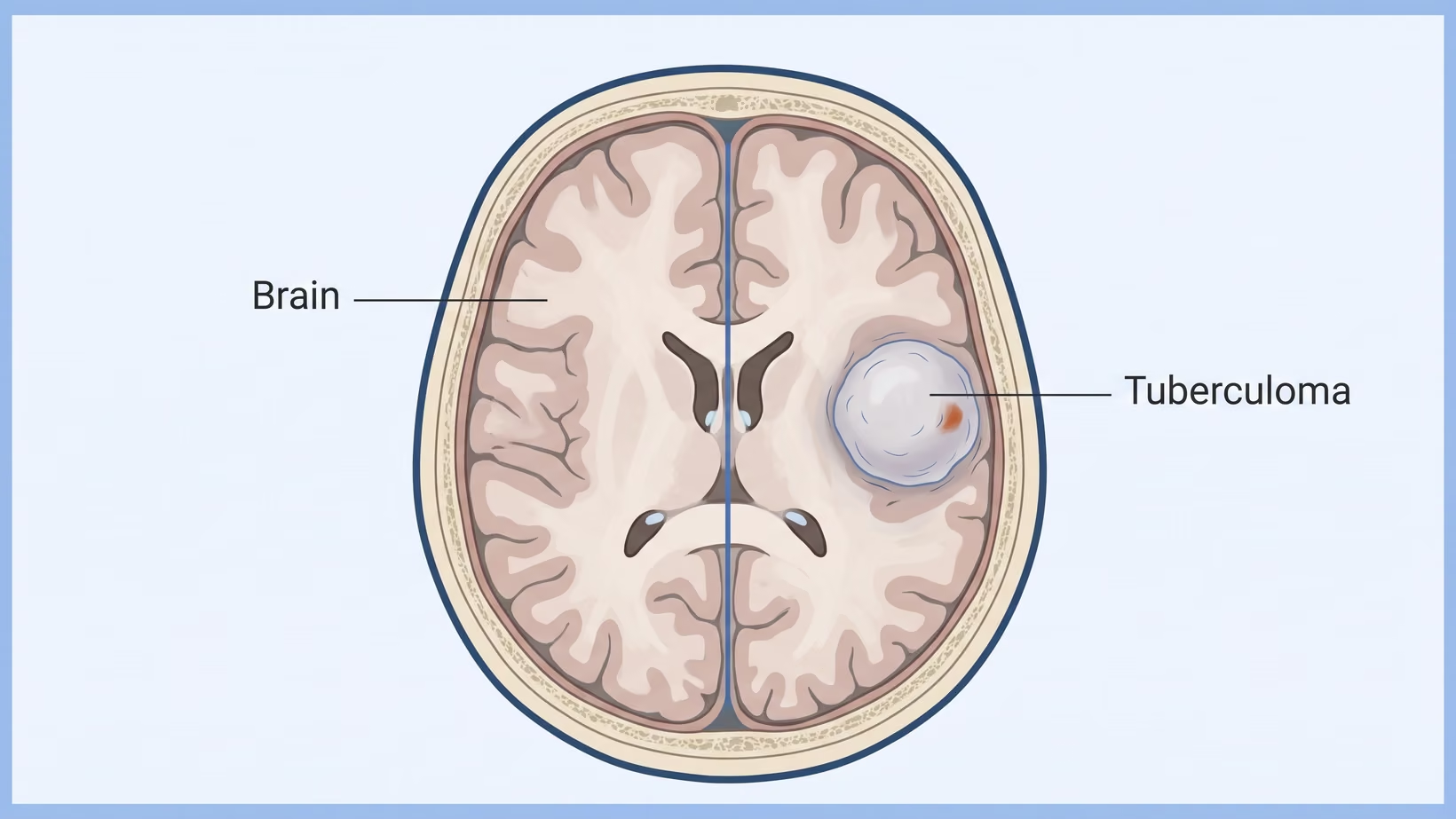
TB meningitis can cause a stroke when the blood vessels of the brain become inflamed. It can also form a tuberculoma, a TB mass inside the brain. In a review of 71 studies, about 30 in 100 patients with TB meningitis had a stroke.
In that review, the brain areas often involved were the basal ganglia and internal capsule, deep inside the brain, and the cortex, the brain’s surface.
Among the patients who had a stroke, about 22 in 100 died and about 51 in 100 had a poor outcome. These figures varied widely between studies and populations.
A tuberculoma is found on a scan, such as a CT scan or MRI. The British guideline says imaging is essential, but the picture alone does not confirm that the mass is TB.
Whenever possible, doctors try to get a tissue diagnosis. A sample is taken from the mass itself (a biopsy), or from TB elsewhere in the body. The guideline names the lung, stomach fluid, lymph nodes, liver and bone marrow as places to sample.
When does TB meningitis need a neurosurgeon?
TB meningitis needs a neurosurgeon when the scan shows hydrocephalus or the patient becomes less awake. A tuberculoma that needs a tissue sample, or new weakness with a stroke on the scan, also prompts a call. TB medicines start as soon as the illness is suspected, without waiting for laboratory confirmation.
For the referring doctor, the British guideline sets these steps. Start anti-TB treatment promptly in every patient with suspected TB meningitis. Do not wait for laboratory confirmation. Offer an HIV test to every patient with suspected or proven TB.
Children are ideally managed by a pediatrician experienced in pediatric TB, or with input from a pediatric infectious diseases unit. These triggers for a neurosurgical opinion are what prompt a call in practice. They are not a published protocol.
Bring and ask
What to send with the referral
Send these with the patient or ahead of the call.
- The CT or MRI images on a disc, with the reports
- The spinal fluid results: cells, protein, sugar, smear, culture and Xpert
- The TB medicines and the steroid, with the date each was started
- The HIV test result
- The MRC stage at the first visit, and any change since
- A list of all current medicines
What to do now
What to do next
Start with the danger signs.
- A danger sign: go to the nearest hospital emergency room now, with someone else driving. These are confusion, unusual drowsiness or being hard to wake, a very painful headache, a stiff neck and cannot look at bright lights, a first seizure, or a rash that does not fade when you press it.
- In a baby or child under five: a weak, high-pitched or continuous cry, not feeding, floppy, or difficult to wake also means the emergency room now.
- You think it might be meningitis, with no danger sign yet: get medical help immediately.
- Already in hospital, and the scan shows hydrocephalus or a tuberculoma: ask the treating doctor for a neurosurgeon’s opinion.
- Bring the scans on a disc, the reports, the spinal fluid results and a list of medicines.
- If you are near Quezon City, you may book a consultation with me. I see children at PCMC, Room 22, Quezon Avenue corner Agham Road, Diliman, on Wednesday from 2 PM.
- I see adults at the Lung Center of the Philippines, Room 1101, Quezon Avenue, Quezon City, on Tuesday and Thursday from 2 PM.
- If travel is not practical, book an online consult on the consultation page. Your doctor can also refer you to me.
Frequently asked questions
Is TB meningitis contagious?
TB meningitis is an infection inside one person’s brain coverings, but the TB germ behind it spreads through the air. It passes from people with TB when they cough, sneeze or spit. If someone at home has TB meningitis, ask the treating doctor whether the rest of the household should be checked for TB.
Does the BCG vaccine protect against TB meningitis?
The BCG vaccine has shown consistently high protection against TB meningitis in children, a review in The Lancet found. Worldwide, the infant BCG doses given in 2002 were estimated to prevent one case of TB meningitis in early childhood for every 3,435 vaccinations. The protection is not complete.
How long does TB meningitis treatment take?
TB meningitis treatment takes at least 12 months in the British guideline: four medicines for two months, then two medicines for at least 10 more months. For children and adolescents without suspected drug resistance, WHO says a six-month intensive treatment may be used instead. It is not for children living with HIV. The treating doctor decides which course a child gets.
Can TB meningitis cause hydrocephalus?
TB meningitis can cause hydrocephalus, a build-up of fluid inside the brain. In a review of children with TB meningitis, about 86 in 100 already had hydrocephalus when they first came to the hospital. At any point, unusual drowsiness, confusion, a very painful headache or a first seizure means the emergency room now.
Will my family member recover fully?
Recovery from TB meningitis differs from person to person, and no doctor can promise a full recovery. In a review of children, about 37 in 100 survived with no lasting effects on the brain or nerves. In a trial of adults, 227 of 817 died within nine months. Early diagnosis and prompt treatment matter most for a good outcome.
See sources
- Thwaites G, Fisher M, Hemingway C, et al (British Infection Society). British Infection Society guidelines for the diagnosis and treatment of tuberculosis of the central nervous system in adults and children. Journal of Infection, 2009. PMID 19643501. doi:10.1016/j.jinf.2009.06.011
- Marais S, Thwaites G, Schoeman JF, et al. Tuberculous meningitis: a uniform case definition for use in clinical research. Lancet Infectious Diseases, 2010. PMID 20822958. doi:10.1016/S1473-3099(10)70138-9
- Prasad K, Singh MB, Ryan H. Corticosteroids for managing tuberculous meningitis. Cochrane Database of Systematic Reviews, 2016. PMID 27121755. doi:10.1002/14651858.CD002244.pub4
- Thwaites GE, Nguyen DB, Nguyen HD, et al. Dexamethasone for the treatment of tuberculous meningitis in adolescents and adults. New England Journal of Medicine, 2004. PMID 15496623. doi:10.1056/NEJMoa040573
- Heemskerk AD, Bang ND, Mai NT, et al. Intensified antituberculosis therapy in adults with tuberculous meningitis. New England Journal of Medicine, 2016. PMID 26760084. doi:10.1056/NEJMoa1507062
- Kohli M, Schiller I, Dendukuri N, et al. Xpert MTB/RIF Ultra and Xpert MTB/RIF assays for extrapulmonary tuberculosis and rifampicin resistance in adults. Cochrane Database of Systematic Reviews, 2021. PMID 33448348. doi:10.1002/14651858.CD012768.pub3
- Chiang SS, Khan FA, Milstein MB, et al. Treatment outcomes of childhood tuberculous meningitis: a systematic review and meta-analysis. Lancet Infectious Diseases, 2014. PMID 25108337. doi:10.1016/S1473-3099(14)70852-7
- Donovan J, Bang ND, Imran D, et al. Adjunctive dexamethasone for tuberculous meningitis in HIV-positive adults. New England Journal of Medicine, 2023. PMID 37819954. doi:10.1056/NEJMoa2216218
- Fagundes W, Ahmed AR, Silva YP, et al. Endoscopic third ventriculostomy versus ventriculoperitoneal shunt for treating pediatric tuberculous meningitis hydrocephalus: a systematic review and meta-analysis. Journal of Neurosurgery: Pediatrics, 2025. PMID 40479834. doi:10.3171/2025.2.PEDS24441
- Sy MCC, Espiritu AI, Pascual JLR. Global frequency and clinical features of stroke in patients with tuberculous meningitis: a systematic review. JAMA Network Open, 2022. PMID 36048445. doi:10.1001/jamanetworkopen.2022.29282
- World Health Organization. WHO consolidated guidelines on tuberculosis. Module 5: management of tuberculosis in children and adolescents. 2022. ISBN 9789240046764. https://tbksp.who.int/en/node/1773
- World Health Organization. Tuberculosis: fact sheet. 2025. https://www.who.int/news-room/fact-sheets/detail/tuberculosis
- NHS. Meningitis: symptoms. 2025. https://www.nhs.uk/conditions/meningitis/symptoms/
- Trunz BB, Fine P, Dye C. Effect of BCG vaccination on childhood tuberculous meningitis and miliary tuberculosis worldwide: a meta-analysis and assessment of cost-effectiveness. Lancet, 2006. PMID 16616560. doi:10.1016/S0140-6736(06)68507-3