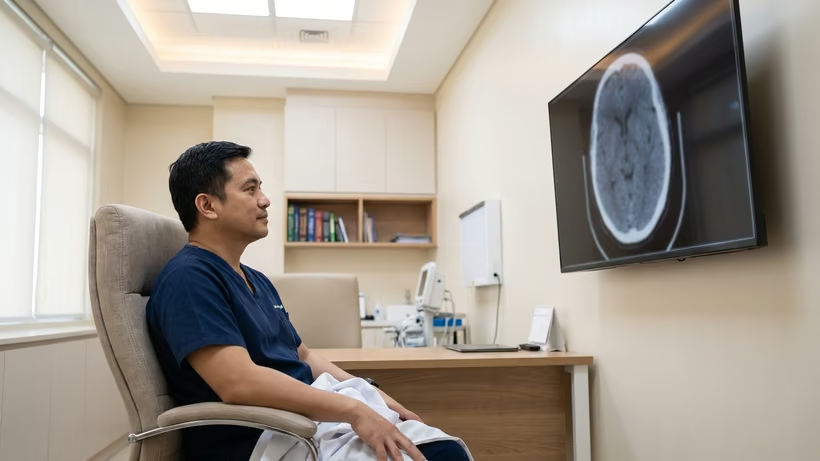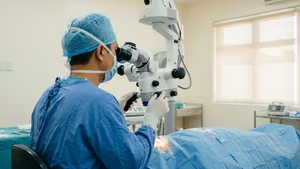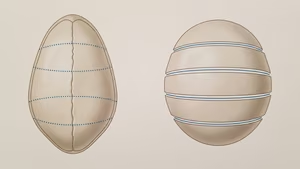

Epidural hematoma surgery is usually a craniotomy: the surgeon opens the skull and removes the clot pressing on the brain. A large clot needs surgery however awake or drowsy the person is. A person in a coma with unequal pupils needs it as soon as possible. Some small clots are watched in a neurosurgical center with repeat CT scans.
What happens in a craniotomy for an epidural hematoma?
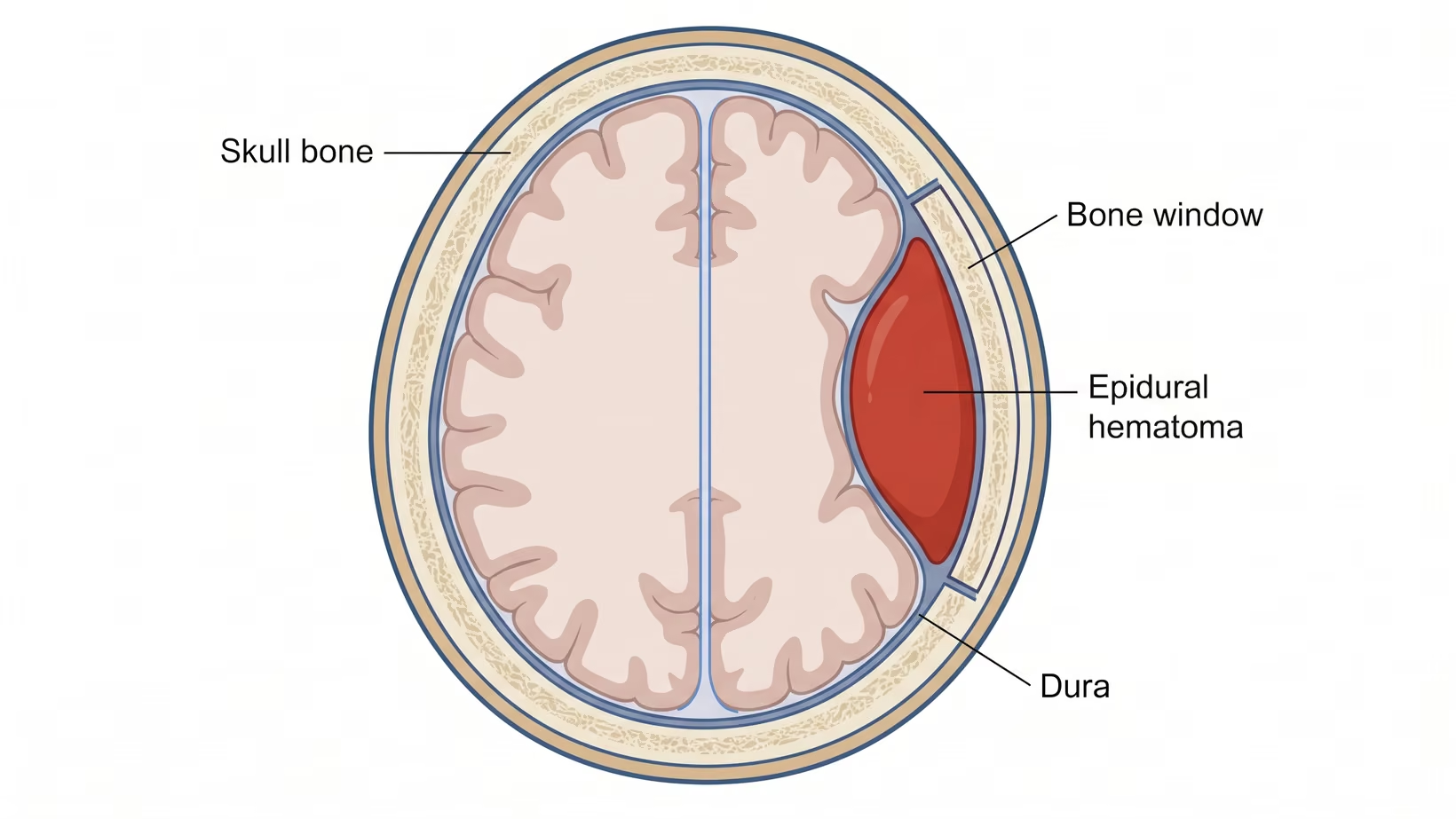
In a craniotomy for an epidural hematoma, the surgeon opens a window of skull bone over the clot and removes the blood. This takes the pressure off the brain.
An epidural hematoma is a collection of blood between the skull and the dura. The dura is the tough covering of the brain, like a thick sheet lining the inside of the skull. The blood collects outside this sheet and pushes the brain inward.
The operation is done in the operating room, with the patient fully asleep under general anesthesia. The surgeon makes a cut in the scalp over the clot. A piece of skull bone is lifted out, like a small door. The clot is removed, and the surgeon stops the bleeding that caused it.
The neurosurgeon then explains to the family how the operation went.
Why a craniotomy and not a burr hole?
A burr hole is a small round hole drilled in the skull. The Brain Trauma Foundation guideline for epidural hematoma found there was not enough data to favor one method of surgery. It also found that a craniotomy removes the clot more completely. That is why the larger opening is used.
Warning signs after a head injury: go to the ER now
Go to the nearest emergency room now, with someone else driving, if after a head injury a person cannot stay awake, has a fit, has new weakness, or has any sign in the box. This applies to adults and children. If you are the one who hit your head, do not drive yourself.
Seek care now
Signs in adults and children that cannot wait
Go to the nearest emergency room now, with someone else driving, if the person:
- Was knocked out and has not woken up
- Cannot stay awake or keep their eyes open
- Has a fit (seizure)
- Fell from a height of more than one meter, or down more than five stairs
- Has problems with their vision or hearing
- Has a black eye but did not hit their eye
- Has clear fluid coming from the ears or nose
- Is bleeding from the ears or has bruising behind the ears
- Has new numbness or weakness in any part of the body
- Has problems walking, with balance, understanding, speaking or writing
- Hit their head at high speed, such as in a road accident
- Has a head wound with something inside it, or a dent in the head
- Is a baby under 1 year old with a bruise, swelling or large cut on the head
- Behaves differently: more irritable or distracted, or losing interest in things around them
Signs in babies under 1 year
In a baby under 1 year old, a bruise, swelling or large cut on the head is a reason to go to the nearest emergency room now, with someone else driving. The other signs in the box apply to babies too, such as a fit or a change in behavior.
Feeling fine, then getting worse
A person can seem well after a head injury and become worse later. NICE, the health guideline body in England, says families should be told that some people appear to recover quickly but later have difficulties or complications. If any sign in the box appears later, go to the nearest emergency room now, with someone else driving.
Some signs are on the NHS list for urgent medical advice: vomiting, dizziness, a blood thinner or bleeding condition, alcohol or drugs at the time of the injury, or any other symptom you are worried about. For any of these, take the person to the nearest emergency room urgently, with someone else driving.
When a doctor or clinic finds vomiting, a blood thinner other than aspirin alone, or alcohol or drugs, NICE asks them to send the person to a hospital emergency department. Symptoms that last more than 2 weeks need a check-up with a doctor.
How urgent is epidural hematoma surgery?
How urgent epidural hematoma surgery is depends on the size of the clot and how awake the person is. The Brain Trauma Foundation guideline says a clot larger than 30 cm³ should be removed however awake or drowsy the person is. A person in a coma with unequal pupils should have surgery as soon as possible.
The guideline gives that last point its strongest wording: it is “strongly recommended”. A coma here means a Glasgow Coma Scale (GCS) score below 9. The GCS is the score doctors use to check how awake a person is, from 3 to 15. Unequal pupils means one black center of the eye is larger than the other.
A clot of 30 cm³ is 30 milliliters of blood, about two tablespoons. The neurosurgeon measures it on the CT scan.
Which epidural hematomas need surgery?
Under the Brain Trauma Foundation guideline, an epidural hematoma larger than 30 cm³ should be removed, whatever the GCS score. A coma with unequal pupils needs surgery as soon as possible. A clot that meets all five conditions for watching can be managed without surgery.
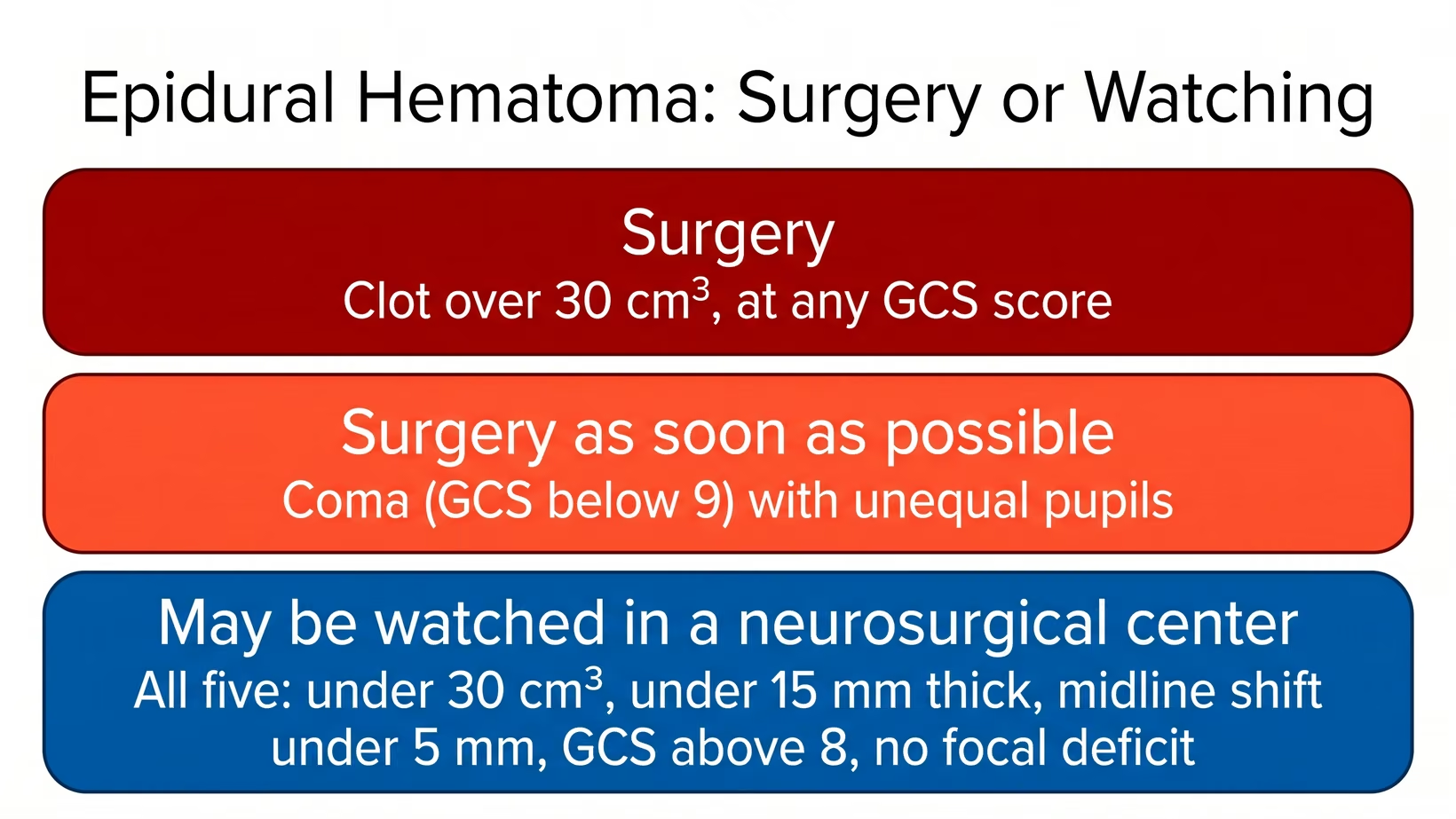
Those conditions include the thickness of the clot and the midline shift, which is how far the brain is pushed past its center line. The surgeon reads both on the CT scan. In a child, the neurosurgeon decides from the child’s own scan and examination.
When the nearest neurosurgeon is far away
When the nearest neurosurgeon is far away, the first hospital does the CT scan and arranges the transfer to a hospital with one. A survey of the Philippine workforce found one neurosurgeon for every 600,000 Filipinos, as of January 2023. It found that 1 in 5 Filipinos did not have access to a full-time neurosurgeon.
The authors wrote that this puts patients who need neurosurgery at risk for poorer outcomes. They gave the example of a child with a growing epidural hematoma in Romblon, a province with no neurosurgeon. That child would have to travel by land and sea to reach one. Ask the first hospital to send the CT images and the report with the patient.
Can a small epidural hematoma be treated without surgery?
A small epidural hematoma can be treated without surgery when it meets every condition in the Brain Trauma Foundation guideline. The person is then watched with repeat CT scans and close checks of how the brain is working, in a neurosurgical center. This is not observation at home.
All five of these must be true at the same time:
- The clot is smaller than 30 cm³.
- The clot is less than 15 mm (one and a half centimeters) thick.
- The midline shift is less than 5 mm (half a centimeter).
- The GCS score is above 8.
- There is no focal deficit, meaning no new problem in one part of the body, such as weakness of one arm.
If even one of these is not met, the guideline’s condition for watching is not met. The neurosurgeon then talks with the family about when a brain bleed needs surgery and who decides.
Epidural hematoma surgery cost in the Philippines
The cost of epidural hematoma surgery in the Philippines depends on the hospital and on what the patient needs, so this post gives no peso figure. Printed figures go out of date and differ from one hospital to the next. Ask the hospital billing office for an estimate, and ask what it includes.
Useful questions for the billing office:
- Does the estimate include the operating room, the room, and any days in the intensive care unit (ICU)?
- Does it include the CT scans, the medicines and the blood?
- Are the surgeon’s and the anesthesiologist’s fees in the estimate, or billed separately?
- How much will PhilHealth deduct, and what is left for the family?
These are the same questions to ask about what brain surgery costs in the Philippines. Ask about money while the treatment goes on, not after the bill comes.
When your budget is limited
When your budget is limited, PhilHealth and the Malasakit Center cover part of the bill. Government hospitals give charity care to families who need full help. The hospital’s medical social service is the office to ask about both. Go to them on the first day, while the patient is being treated.
Does PhilHealth cover a craniotomy for an epidural hematoma?
PhilHealth covers part of the bill for a craniotomy for an epidural hematoma. The amount it pays and what the family still owes depend on the hospital and the case. Ask the hospital’s PhilHealth desk early, on the day of admission if you can.
Questions for the PhilHealth desk:
- Is the patient covered, and is the membership up to date?
- What papers does the hospital need from the family, and by when?
- How much will PhilHealth take off this bill?
The Malasakit Center can cover part of what remains. Ask the medical social service whether the hospital has one, and what it needs from you.
Why repeat the CT scan for a small epidural hematoma?
A small epidural hematoma is scanned again because the guideline allows it to be watched only with repeat CT scans and close checks in a neurosurgical center. Each scan is read against the same conditions: the size, the thickness and the midline shift. A clot that no longer meets them is reconsidered for surgery.
The team also checks the person’s condition between scans. NICE lists signs that mean an admitted head injury patient needs urgent rechecking:
- Agitation or abnormal behavior
- A drop of 1 point in the GCS score that lasts at least 30 minutes
- A severe or worsening headache, or vomiting that does not stop
- New or changing signs, such as unequal pupils, or one side of the face or body moving less than the other
These are part of NICE’s list. When one is confirmed, NICE asks the team to consider an immediate CT scan. This list covers every admitted head injury, not only epidural hematoma.
When to refer: what the referring doctor should do
Refer a person with a head injury to a hospital emergency department when any NICE risk factor is present. Once CT shows an epidural hematoma, discuss the patient with a neurosurgeon. NICE asks for that discussion for anyone with new and surgically significant findings on imaging.
NICE’s risk factors for referral from a clinic or general practice are:
- GCS score under 15 at first check
- Any loss of consciousness, or amnesia for events before or after the injury
- Any focal neurological deficit since the injury
- Suspected complex skull fracture or penetrating injury
- Persistent headache, any vomiting or any seizure since the injury
- Previous brain surgery, or a high-energy injury
- A bleeding or clotting disorder
- A blood thinner (anticoagulant or antiplatelet), except aspirin alone
- Drug or alcohol intoxication, a safeguarding concern, or continuing concern by the doctor
NICE adds clinical judgement for vomiting in children 12 and under, and notes that amnesia cannot be checked in a child too young to talk.
Who needs a CT head scan within 1 hour
NICE asks for a CT head scan within 1 hour for people 16 and over with any of these: GCS 12 or less on first emergency department check; GCS under 15 at 2 hours; suspected open or depressed skull fracture; any sign of basal skull fracture; post-traumatic seizure; a focal deficit; more than one episode of vomiting.
For people under 16, NICE asks for a CT head scan within 1 hour with any of these:
- Suspected non-accidental injury
- Post-traumatic seizure
- GCS under 14 on first check, or pediatric GCS under 15 in a baby under 1
- GCS under 15 at 2 hours
- Suspected open or depressed fracture, or a tense fontanelle, the soft spot (bumbunan)
- Basal skull fracture signs
- A focal deficit
- Under 1 year, a bruise, swelling or cut over 5 cm
A basal skull fracture is a break at the base of the skull. Its signs include blood behind the eardrum, “panda” eyes, clear fluid from the ear or nose, and bruising behind the ear (Battle’s sign). These lists are part of NICE’s wider criteria for scanning.
When to call the neurosurgeon, whatever the scan shows
Call the neurosurgeon, whatever the imaging shows, for any of these in NICE’s list:
- Persisting coma (GCS 8 or less) after first resuscitation
- Unexplained confusion lasting more than 4 hours
- A drop in GCS after admission, especially in the motor score
- Progressive focal neurological signs
- A seizure without full recovery
- A definite or suspected penetrating injury
- A leak of cerebrospinal fluid, the clear fluid around the brain
Before the transfer, and what to send
NICE accepts that transfer is often urgent. For people 16 and over, it asks you to complete resuscitation and stabilization first, and set up full monitoring before the patient travels. Anyone with a GCS of 8 or less who needs transfer to a neuroscience unit should be intubated and ventilated.
Send with the patient, by ambulance:
- The CT images on a disc or a link, and the report
- The GCS and pupil findings, each with the time
- The list of medicines, with any blood thinner and the time of the last dose
- Other injuries found, and what was given
What to do now
Your next step after an epidural hematoma
Who to see, and how soon:
- Any sign in the warning box: the nearest emergency room now, with someone else driving.
- Vomiting, dizziness, a blood thinner, or alcohol or drugs at the injury: the nearest emergency room, urgently, with someone else driving.
- Symptoms lasting more than 2 weeks: a check-up with a doctor.
- After surgery or a watched clot: the clinic visit on the date your neurosurgeon gives.
Bring the CT scan on a disc or the images link, the reports, and a list of medicines, including any blood thinner.
I treat epidural hematoma in children at Philippine Children’s Medical Center (PCMC). For an adult who needs to be admitted soon, I admit at Capitol Medical Center, Quezon City. Where an ICU bed is needed quickly, I admit at Manila Central University (MCU) Hospital, Caloocan.
For a follow-up or a second opinion, you may book a visit at my clinic. Adults: Lung Center of the Philippines, Tuesday and Thursday from 2 PM. Children: PCMC, Wednesday from 2 PM. When travel is not practical, book an online consult on the consultation page. Doctors can refer through Refer a Patient.
Frequently asked questions
Can someone who seemed fine still need this surgery?
Yes, a person who seemed fine after a head injury can still need epidural hematoma surgery. The guideline says a clot larger than 30 cm³ should be removed at any GCS score, including in a person who is fully awake. NICE also notes that some people appear to recover quickly but later have complications.
Does a blood thinner change what happens after a head injury?
Yes, a blood thinner changes what happens after a head injury. NICE lists anticoagulant or antiplatelet treatment, except aspirin alone, as a reason for a doctor to send the person to the emergency department. Tell the doctor the name of the medicine and when the last dose was taken.
Can children have an epidural hematoma operation?
Yes, children can have an epidural hematoma operation. In a child, the neurosurgeon decides on surgery from the child’s own scan and examination. I treat epidural hematoma in children at PCMC, the government’s specialty hospital for children, where nearly every pediatric specialty is present under one roof.
Should someone stay with the person after they are sent home?
Yes, someone should stay with the person after they are sent home from the emergency room. NICE’s advice is that a responsible adult should stay with the person for the first 24 hours after the injury. If any warning sign appears, go to the nearest emergency room now, with someone else driving.
How long is recovery after epidural hematoma surgery?
Recovery after epidural hematoma surgery is different for each person, and no single timeline fits everyone. The treating neurosurgeon plans the follow-up visits and the return to work or school. Families can plan the months after discharge with what the first year after an epidural hematoma holds.
See sources
- Bullock MR, et al. Surgical management of acute epidural hematomas. Neurosurgery. 2006. PMID: 16710967.
- Baticulon RE, et al. The Neurosurgical Workforce of the Philippines. Neurosurgery. 2024. PMID: 37931081. DOI: 10.1227/neu.0000000000002630.
- National Institute for Health and Care Excellence. Head injury: assessment and early management. NICE guideline NG232. 2023. https://www.nice.org.uk/guidance/ng232/chapter/Recommendations
- NHS. Head injury and concussion. NHS website. 2025. https://www.nhs.uk/conditions/head-injury-and-concussion/