
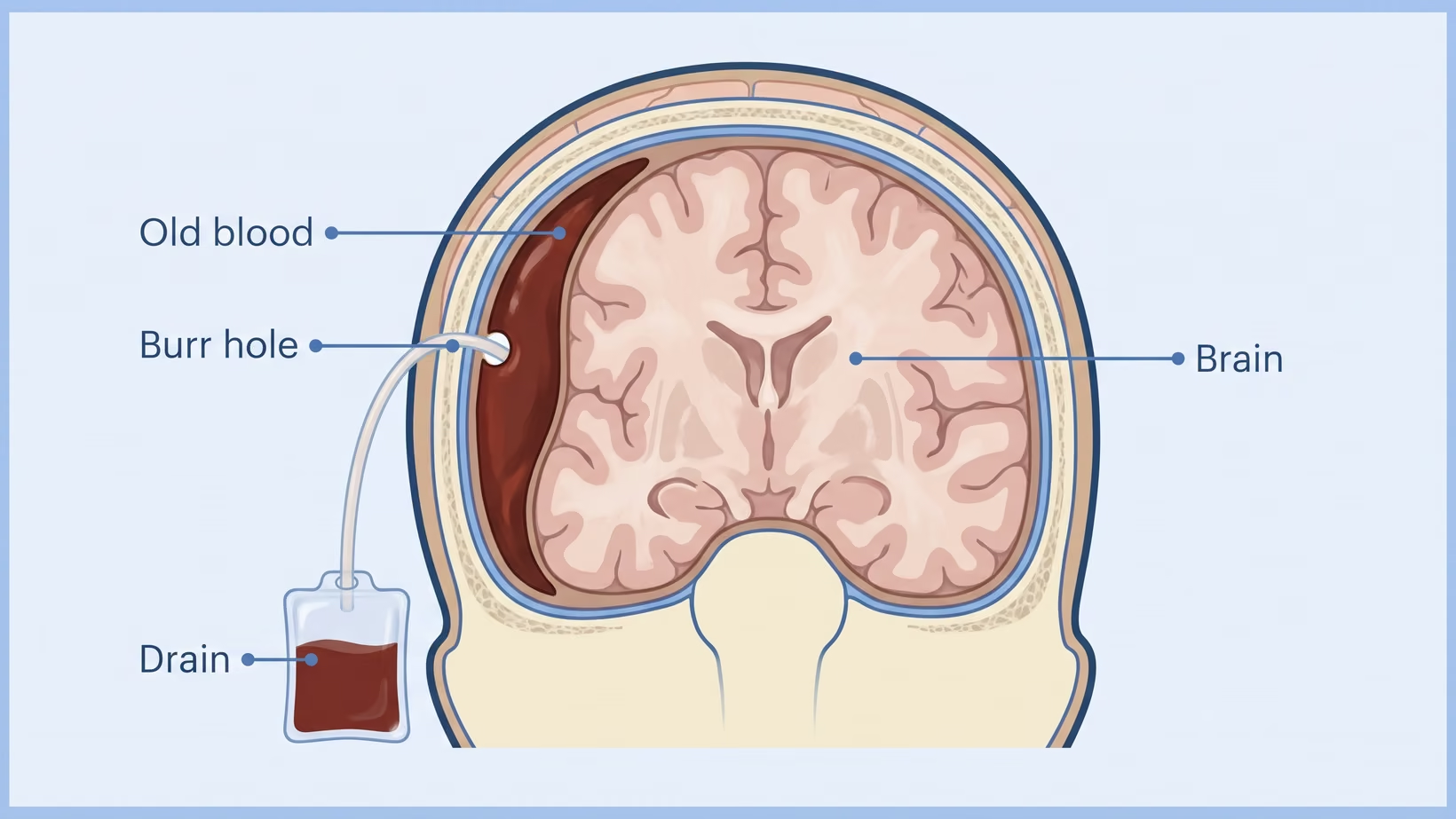
A subdural hematoma, blood collected between the brain and its outer covering, can still be operated on at 90, because age alone should not decide. Her symptoms, the blood’s pressure on the brain and her health before decide it. Trouble staying awake, a seizure or new weakness needs the emergency room now, even when no one saw a fall.
Is lola too old for brain surgery at 90?
No. Age alone does not make lola, or lolo, too old for surgery on a chronic subdural hematoma. An international group of experts agreed in 2024 that age should not be a stand-alone reason to choose between surgery and watching. Her symptoms, her scan and her health before this are what the team weighs.
A chronic subdural hematoma is the slow kind of bleed under the skull. In the past, surgeons tended to avoid operating on people over 90 because they feared the risk of death. Three small studies did not find more deaths among the elderly. The experts call those studies probably too small to be sure.
Three things decide whether surgery makes sense for her:
- Her symptoms. Mild symptoms may allow watching. Symptoms that get worse are a reason to offer surgery.
- How hard the clot presses on the brain. Surgery is recommended when the pressure threatens her life or her ability to move.
- How she lived before. A frail body has less reserve to bear an operation, so the team checks her frailty first.
Is it the slow bleed or the sudden one?
Ask the doctor which kind of subdural hematoma the scan shows, because the decision is different for each. Symptoms of the slow kind, the chronic one, can come on gradually over a few weeks. Symptoms of the sudden kind can start straight away.
An acute subdural hematoma is the sudden kind. The Brain Trauma Foundation guideline gives its size rules. An acute clot thicker than 10 mm, or one that pushes the brain more than 5 mm off center on a CT scan of the brain, should be removed. This holds whatever her level of consciousness. Once surgery is needed, it should be done as soon as possible.
Seek care now
Which signs mean an older person needs the emergency room now?
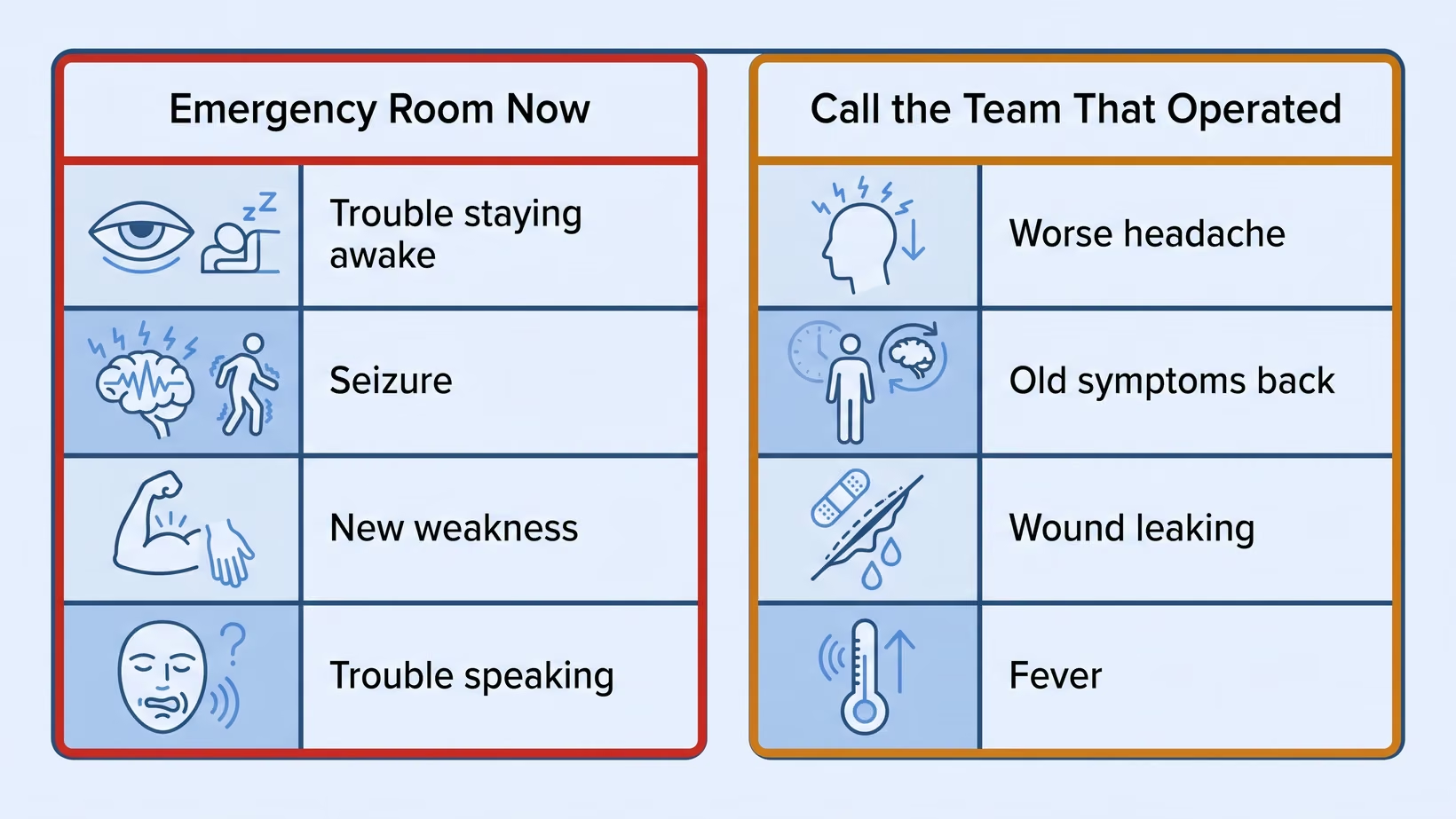
Go to the nearest hospital emergency room now, with someone else driving, if an older person who has hit their head shows any of these signs. The signs may start straight away or come on gradually over a few weeks, so a fall from weeks ago still counts. The slow kind can follow a very small bump of the head, or come with no known injury. So signs such as trouble staying awake, a seizure or new weakness still count when no one saw a fall.
Go now if she has hit her head and:
- has been knocked out and has not woken
- has trouble staying awake or keeping her eyes open
- has a fit (seizure)
- fell from higher than 1 meter, or down 5 stairs or more
- has problems with her vision or hearing
- has a black eye without a direct injury to the eye
- has clear fluid coming from her ears or nose
- is bleeding from her ears, or bruised behind her ears
- has numbness or weakness in part of her body
- has problems walking, balancing, understanding, speaking or writing
- hit her head at speed, such as in a car crash
- has a head wound with something inside it, or a dent in her head
Also go to the emergency room now if she has hit her head and:
- was knocked out but has now woken
- has vomited since the injury
- has a headache that does not go away with painkillers
- has problems with memory
- was drinking alcohol or taking drugs just before the injury
- has a bleeding disorder, or takes medicine to thin her blood
- has had brain surgery in the past
- you are worried about her and not sure what to do
This second list is part of a longer list from the NHS, the UK’s National Health Service.
After surgery for a chronic subdural hematoma, a hospital leaflet from the UK names a second, separate set of signs. For these, call the ward or the team that did the operation. If you cannot reach them, go to the nearest hospital emergency room.
- a headache that gets worse
- any of her old symptoms returning
- fluid leaking from the wound
- a fever or high temperature
New weakness of an arm or leg, new trouble speaking, trouble staying awake or a seizure after the operation is different. Those signs are on the first list: go to the nearest emergency room now.
What does the operation ask of a frail 90-year-old body?
The operation asks her body to bear anesthesia, a drain in the head and a stay in the hospital. A UK guideline defines frailty as a loss of the body’s reserve in several areas, which leaves a person less able to cope with stress such as surgery. Frailty is a known risk for problems after surgery.
Burr hole surgery: sometimes done awake, with a drain
Burr hole surgery is the operation experts recommend first for a chronic subdural hematoma. In burr hole surgery, the surgeon drains the old blood through one or two small holes in the skull. A twist drill hole is a smaller opening that can be made at the bedside.
The experts consider the twist drill more suitable for frail or elderly patients with many illnesses. Older patients have a higher risk of waking slowly, delirium (sudden confusion) and confusion around the operation. A review that pooled comparison studies found burr hole surgery under local anesthesia, with the patient awake, was linked to fewer complications.
In that review, the hospital stay was about 2 days shorter with local anesthesia. The review found no clear difference in how often the clot returned. The choice of anesthesia is made with the anesthesiologist.
A UK trial published in The Lancet tested leaving a soft tube, called a drain, after burr hole surgery in adults. The clot returned and needed draining again in 10 of 108 patients with a drain, against 26 of 107 without. At 6 months, 9 of 105 with a drain had died, against 19 of 105 without.
For a planned operation in an older adult, I operate at the Lung Center of the Philippines and the National Kidney and Transplant Institute, both in Quezon City.
What frailty scores does a surgeon use?
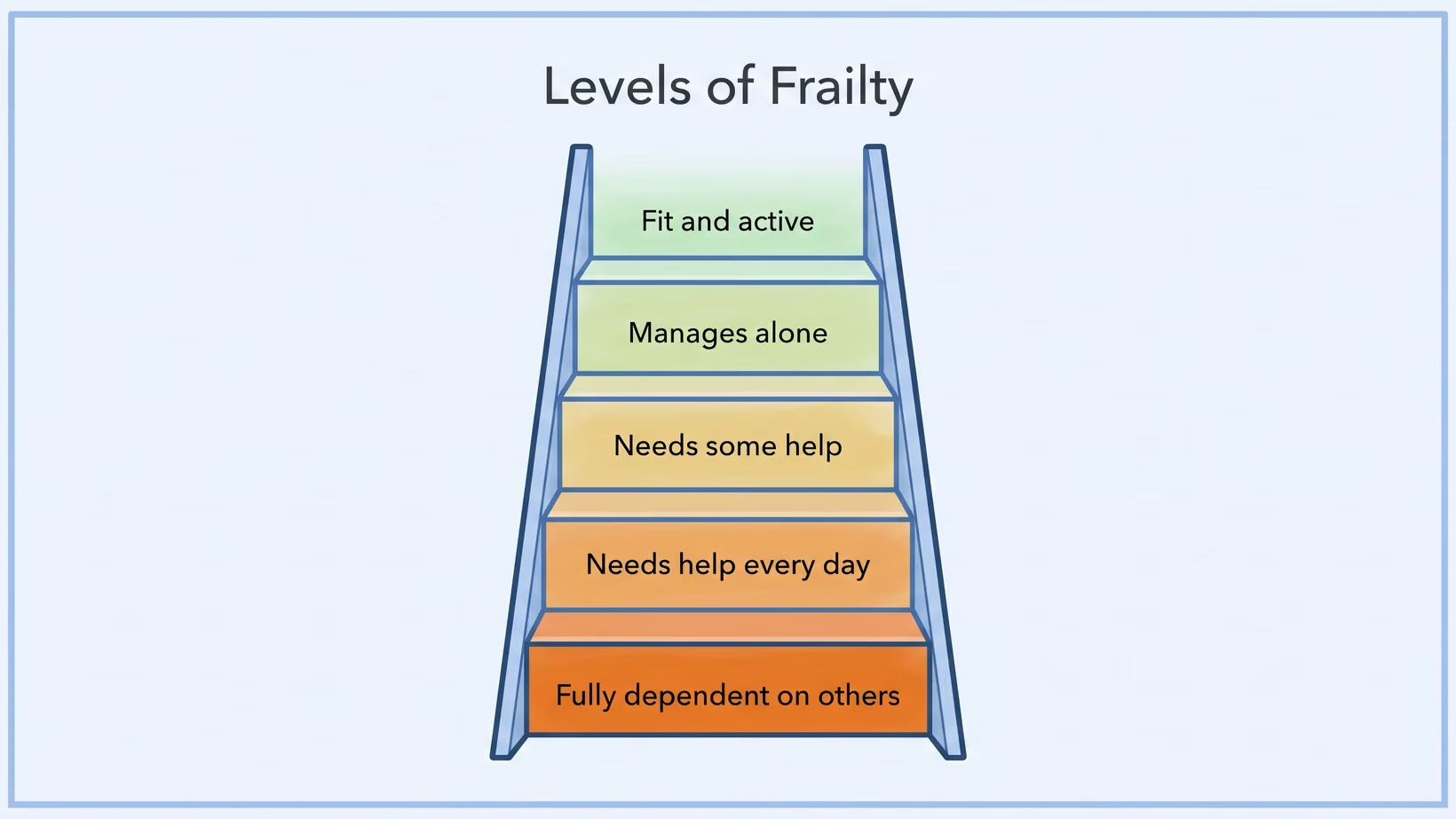
The frailty score named in surgical guidelines is the Clinical Frailty Scale. The doctor uses judgment to rate how a person manages, combining her illnesses, memory problems and disability. A UK guideline asks surgical teams to score everyone over 65 this way before surgery. A score of 5 or more is a reason to involve a frailty team.
The scale comes from a 2005 study of older people in Canada living in the community, not surgical patients. In that study, a higher score went with a higher chance of death, or of moving into a care home, within 5 years.
For your family, the score is a tool for planning and for a plain talk about what to expect. Ask the team what score they gave her, and why.
What recovery in the hospital looks like at 90
Recovery in the hospital at 90 is mostly about keeping her clear-headed and moving. Delirium, a sudden confusion, is a problem guidelines watch for closely. The UK guideline asks teams to find and reduce its risk factors, and to check frail patients for it every day.
After the old blood is drained, experts recommend raising the head of the bed and getting her up early. Ask the nurses when she may sit up and walk, and how you can help.
Can a person with dementia have brain bleed surgery?
Yes, a person with dementia can still be considered for surgery on a subdural hematoma. The UK guideline for frail patients asks the team to record memory and thinking problems before the operation. It also asks them to involve relatives and carers in the decision, and to talk about realistic hopes for recovery.
Dementia changes the questions the family and the team ask. The guideline says the talk should cover what recovery to expect for her body, her mind and her everyday life. Older patients already have a higher risk of delirium and confusion around the operation. The guideline asks that frail patients be checked for delirium every day.
New memory problems after a bump of the head are on the emergency list above. When memory gets worse over weeks, families often ask whether it is a subdural hematoma or dementia.
When she cannot decide for herself, the surgeon can usually talk with the family member she chose to speak for her. Questions the family can bring:
- How was she before this began: walking, eating, knowing us?
- What could she realistically get back after the operation?
- What happens to her memory and confusion if we wait?
- Who in the family speaks for her, and what would she have wanted?
When the family chooses not to operate on a subdural hematoma
Choosing not to operate can be a reasonable plan. Experts say watching without surgery can be offered for a chronic subdural hematoma when symptoms are mild and the clot presses little on the brain. If the symptoms get worse, surgery should be offered. Families weighing this often ask whether a subdural hematoma can heal without surgery.
Some families choose comfort care instead, even when the clot is large. That decision belongs to the family and the doctors together. The UK guideline asks that the talk before surgery include treatment without surgery, and palliative options aimed at comfort.
Families sometimes ask about steroid medicine instead. In a UK trial, a 2-week course of the steroid dexamethasone gave fewer good outcomes at 6 months than a dummy pill. About 84 in 100 patients on the steroid did well, against about 90 in 100 on the dummy pill (286 of 341, and 306 of 339).
A good outcome in that trial meant living independently, or needing some help but walking without help. Almost everyone in the trial also had an operation. So the trial could not say whether steroids help a patient avoid surgery.
The team may also mention middle meningeal artery embolization. This closes the artery that feeds the lining of the clot, working from inside a blood vessel. An endovascular specialist, a doctor who treats from inside the blood vessels, does it. A US guideline says it may become standard care for selected patients.
In one trial’s early results, it helped patients aged 75 and over who also had surgery. As a treatment on its own, it is still being tested.
If you choose to wait, keep the emergency list. Any sign on it means the nearest hospital emergency room now, with someone else driving. If you change your mind, you can still see a neurosurgeon again.
The DNR conversation before brain surgery
A DNR, or do-not-resuscitate, order is not cancelled or kept automatically when someone has surgery. The American College of Surgeons calls for “required reconsideration”. The patient, or the family member chosen to speak for her, and her doctors talk it through again before the operation.
That talk covers the new risks of the operation, her goals of treatment and how to handle a life-threatening problem. It can end in one of three ways: the DNR is put on hold during surgery and recovery, kept as it is, or changed.
Many steps of resuscitation, such as a breathing tube and a breathing machine, are also a normal part of general anesthesia. The College says the patient should be told this. The anesthesiologist is one of the doctors who will care for her, so ask that they join the talk.
On an emergency admission, the UK guideline asks the team to learn about any DNR decision. It also asks them to agree a treatment escalation plan, meaning how far treatment should go if she gets worse.
Bring these questions, and what you know about DNR orders in the Philippines, to the talk with the surgeon and the anesthesiologist:
- Will the DNR stay during the operation, or be put on hold?
- If it is put on hold, when does it start again?
- Which steps of anesthesia are also steps of resuscitation?
- If she gets worse after surgery, how far should the team go?
What to do now
Who should see her, how soon, and what to bring
Who to see depends on how she is today. Any sign on the emergency list means the nearest hospital emergency room now, with someone else driving. If her scan is done and she has none of those signs, book a consultation with a neurosurgeon soon to talk about surgery or watching.
- A sign from the emergency list: the nearest hospital emergency room now, with someone else driving.
- At the emergency room: ask for a neurosurgeon to see her, if the hospital has one.
- Scan done, no emergency sign: a consultation with a neurosurgeon soon.
- On a watch plan, symptoms getting worse: the nearest hospital emergency room now, so surgery can be offered.
If you are near Quezon City, you may see me at the Lung Center of the Philippines, Room 1101, Quezon Avenue, on Tuesday and Thursday from 2 PM. When the trip is too hard for her, an online consult is possible. Book either on the consultation page.
If she needs to be admitted soon, I can admit her at Capitol Medical Center in Quezon City. Her doctor can also refer her through the Refer a Patient page.
Bring:
- the CT scan on a disc, with its written report
- a list of all her medicines, especially any blood thinner
- a note of how she managed before: walking, eating, memory
- any DNR decision already made
When to refer an older patient with a subdural hematoma
Refer when a chronic subdural hematoma causes significant mass effect, meaning pressure on the brain that threatens life or mobility. The 2024 Copenhagen consensus recommends surgery then, with or without neurological signs. Conservative management, meaning watching, can be offered for mild symptoms and insignificant mass effect, with surgery offered if symptoms worsen.
The consensus calls a hematoma thicker than 1 cm, or a midline shift over 5 mm, a generally accepted cut-off for surgery. Midline shift means the brain is pushed off center. Age should not be a stand-alone factor in the decision.
For an acute subdural hematoma, the Brain Trauma Foundation recommends evacuation for a clot over 10 mm thick or a shift over 5 mm. This applies regardless of the Glasgow Coma Scale score. Once indicated, surgery should be done as soon as possible.
The consensus panel did not agree on whether to revert antithrombotic treatment, meaning blood thinners, before acute surgery for a chronic subdural hematoma. It notes that reversal may raise the risk of thrombosis, a blood clot in a vessel, particularly in older patients.
Urgency follows the emergency list: a sign on it means the nearest emergency room now. Transfer by ambulance between hospitals is fine. For a patient who needs an ICU bed quickly, MCU Hospital in Caloocan almost always has one available.
Send, through the Refer a Patient page:
- the CT images on a disc, with the report
- the medicine list, with the last dose of any blood thinner, anticoagulant or antiplatelet
- her baseline function and Clinical Frailty Scale score
- her other illnesses, how severe they are and how they are managed
- any advance decision or DNR order
Frequently asked questions
Can the subdural hematoma come back after surgery?
Yes, a chronic subdural hematoma can return after surgery and need draining again. In a UK trial published in The Lancet, this happened in about 9 in 100 adults who had a drain left in. It happened in about 24 in 100 without a drain (10 of 108, and 26 of 107).
Will she be awake during the operation?
She may be awake, because burr hole surgery for a subdural hematoma can be done under local anesthesia. In a review of comparison studies, local anesthesia was linked to fewer complications and a shorter stay. The review found no clear difference in how often the clot returned. The choice is made with the anesthesiologist.
Should she stop her blood thinner?
Stopping or reversing a blood thinner is a decision for her treating doctors. For a chronic subdural hematoma that needs urgent surgery, experts have not agreed on whether to reverse it before the operation. They note that reversal can raise the risk of blood clots in older patients. If she takes one and has hit her head, go to the emergency room now.
Can steroid tablets shrink the clot instead?
In a UK trial, the steroid dexamethasone for a chronic subdural hematoma gave fewer good outcomes than a dummy pill. At 6 months, about 84 in 100 did well on the steroid, against about 90 in 100 on the dummy pill. Almost all patients also had surgery.
See sources
- Hansen JT et al. Management of chronic subdural hematoma: a consensus statement from the 2024 Copenhagen joint iCORIC/DACSUHS symposium. Acta neurochirurgica. 2026. PMID 41981236; doi:10.1007/s00701-026-06854-y
- NHS website (UK National Health Service). Subdural haematoma. 2025. https://www.nhs.uk/conditions/subdural-haematoma/
- University Hospital Southampton NHS Foundation Trust. After evacuation of a chronic subdural haematoma (patient information factsheet). https://www.uhs.nhs.uk/Media/UHS-website-2019/Patientinformation/Brain-and-spine/After-evacuation-of-a-chronic-subdural-haematoma-1987-PIL.pdf
- American College of Surgeons. Statement on Advance Directives by Patients: “Do Not Resuscitate” in the Operating Room. American College of Surgeons (Committee on Ethics; approved by the Board of Regents). 2014. https://www.facs.org/about-acs/statements/advance-directives-by-patients-do-not-resuscitate-in-the-operating-room/
- Centre for Perioperative Care and British Geriatrics Society. Guideline for Perioperative Care for People Living with Frailty Undergoing Elective and Emergency Surgery. 2021. https://cpoc.org.uk/sites/cpoc/files/documents/2021-09/CPOC-BGS-Frailty-Guideline-2021.pdf
- Rockwood K et al. A global clinical measure of fitness and frailty in elderly people. CMAJ : Canadian Medical Association journal = journal de l’Association medicale canadienne. 2005. PMID 16129869; doi:10.1503/cmaj.050051
- Santarius T et al. Use of drains versus no drains after burr-hole evacuation of chronic subdural haematoma: a randomised controlled trial. Lancet (London, England). 2009. PMID 19782872; doi:10.1016/s0140-6736(09)61115-6
- Weber CF et al. Burr hole evacuation of chronic subdural hematoma in general versus local anesthesia: a systematic review and meta-analysis. Acta neurochirurgica. 2025. PMID 40056228; doi:10.1007/s00701-025-06475-x
- Hutchinson PJ et al. Trial of Dexamethasone for Chronic Subdural Hematoma. The New England journal of medicine. 2020. PMID 33326713; doi:10.1056/nejmoa2020473
- Siddiq F et al. Consensus Statement on Middle Meningeal Artery Embolization in Chronic Subdural Hematoma Treatment: A Guideline from the Society of Vascular and Interventional Neurology Guidelines and Practice Standards Committee. Stroke (Hoboken, N.J.). 2025. PMID 41608698; doi:10.1161/svin.125.001814
- Bullock MR et al. Surgical management of acute subdural hematomas. Neurosurgery. 2006. PMID 16710968