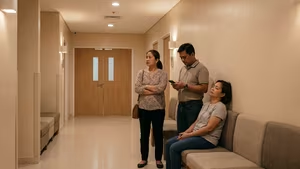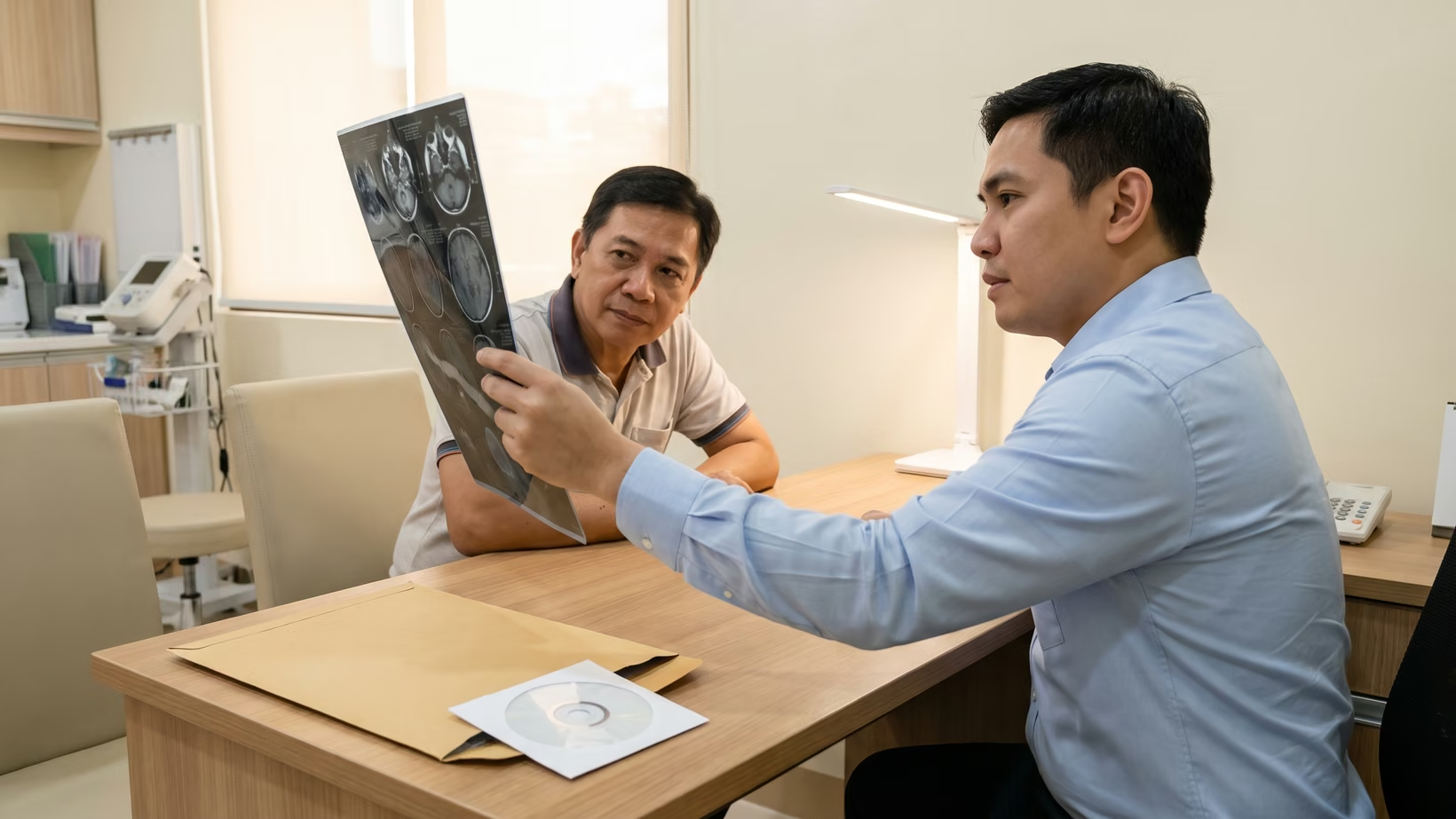

A brain tumor is treated by a team, and you see a neurosurgeon, the brain surgeon, first. The neurosurgeon decides whether the growth needs an operation, a tissue sample, or repeat scans. An oncologist, the cancer doctor, joins once the tumor is named.
Neurosurgeon, neurologist or oncologist first?
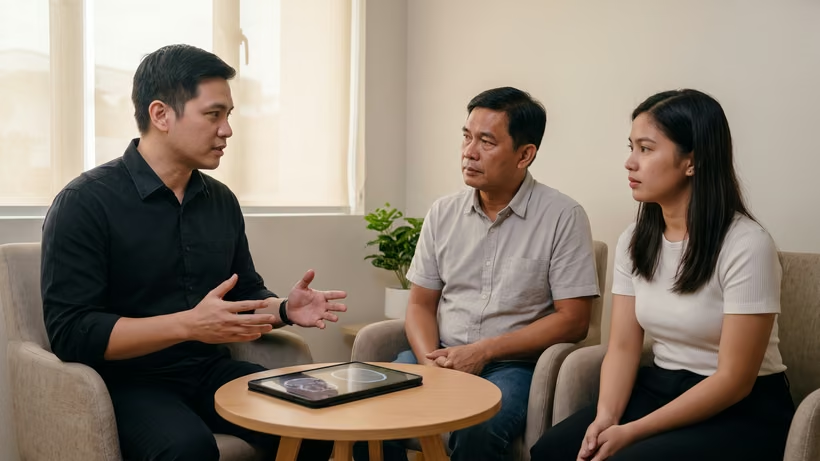
See a neurosurgeon first. A neurosurgeon is the doctor trained to operate on the brain, and the first decisions about a brain tumor are surgical ones: whether to take a sample of tissue, whether to remove the growth, and whether it is safer to watch it with repeat scans.
Ask for a referral to a named neurosurgeon in a hospital that does brain surgery. Bring the scan report with you.
If you would like me to see you, I see adults with a brain tumor at my clinic at the Lung Center of the Philippines in Quezon City. If you live too far to travel, I can also see you in an online consult.
A neurologist is a doctor who treats brain and nerve disease without operating. A neurologist can order the scan, control seizures and treat headaches, and many patients reach a neurosurgeon through a neurologist. An oncologist is a cancer doctor, and those decisions come later, because they depend on what the tissue shows.
What does a brain tumor doctor actually do?
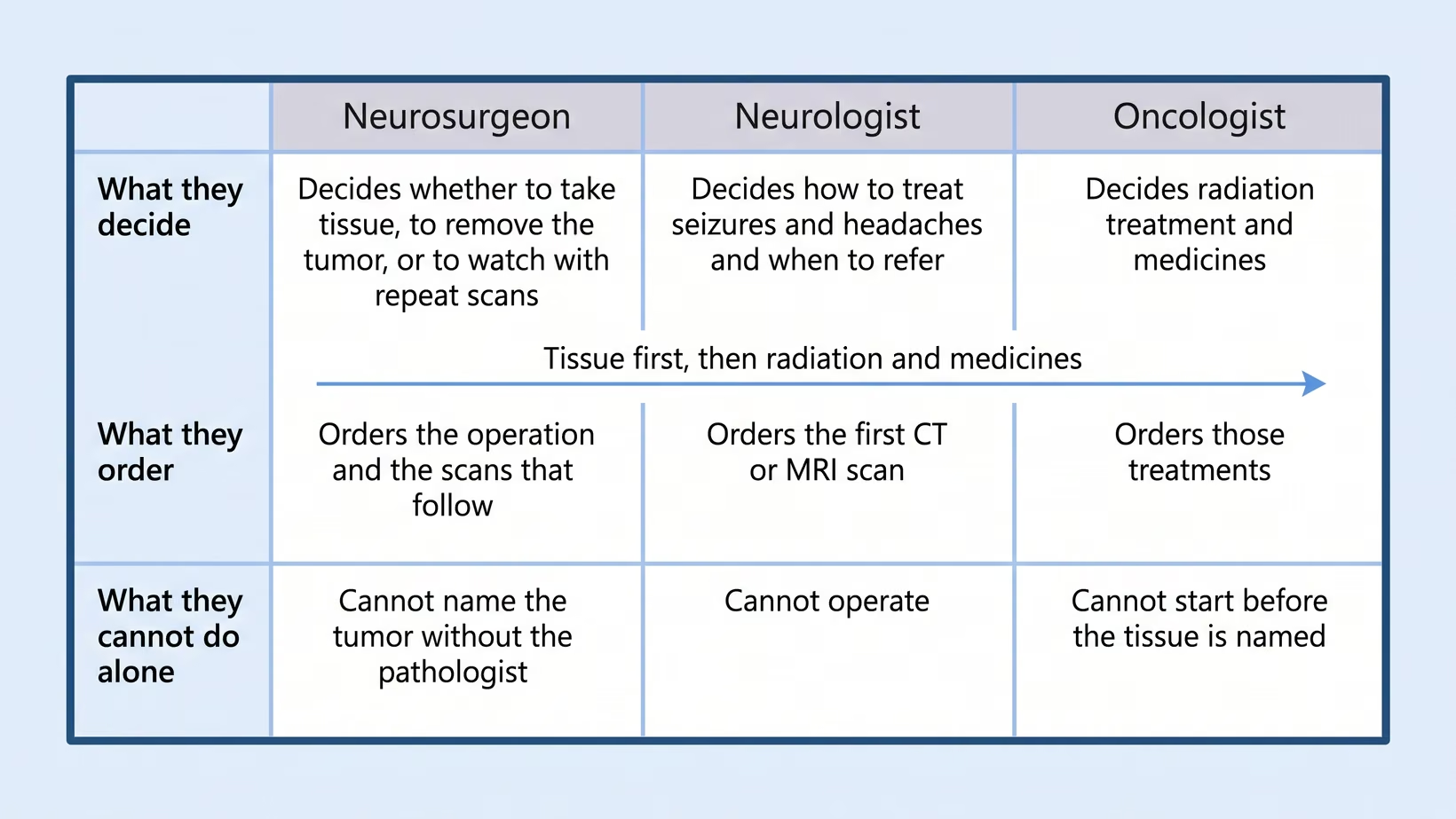
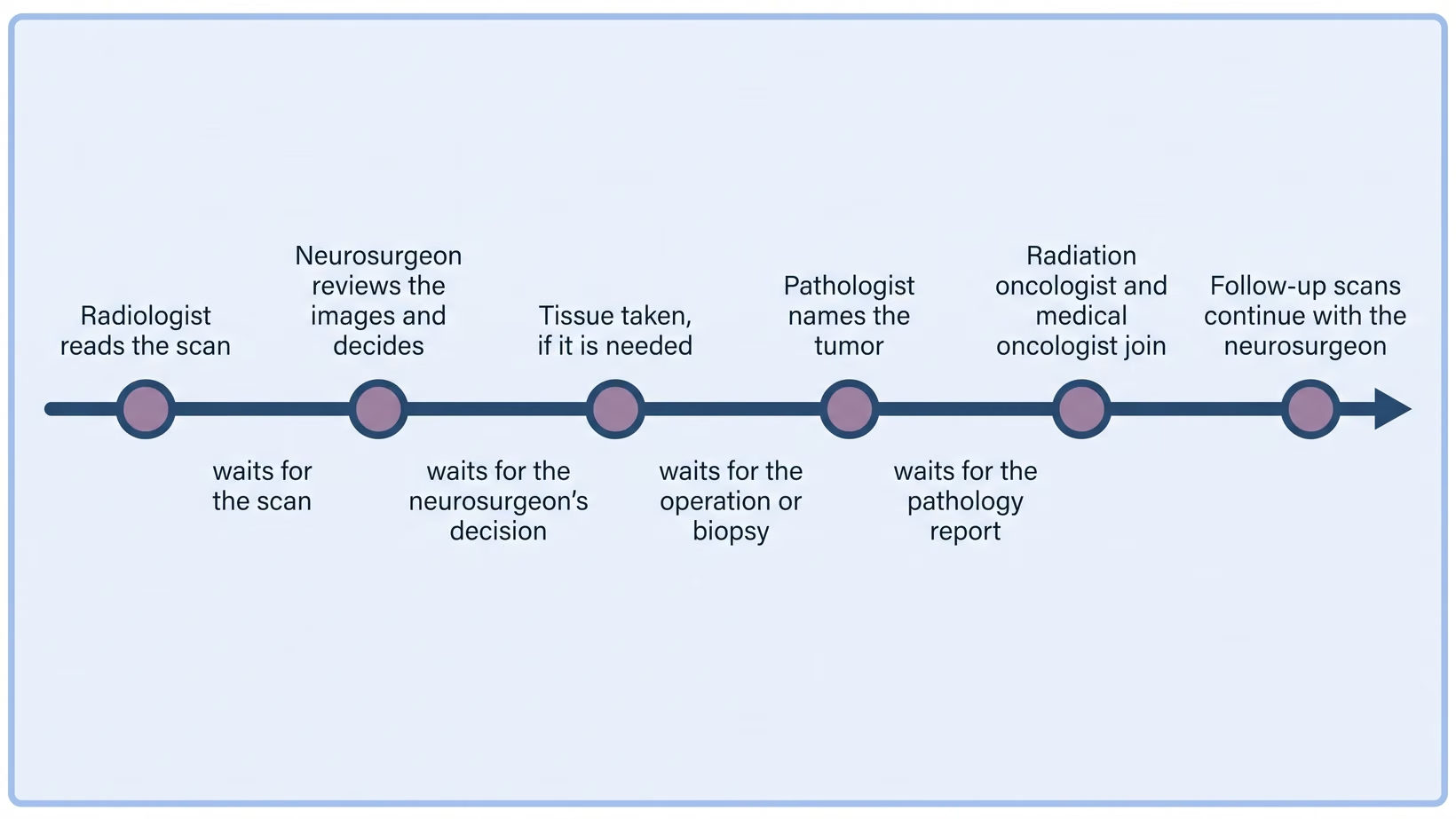
Treating a brain tumor is three separate jobs, and no single doctor does all three. A European guideline for one group of adult brain tumors names them: surgery, radiation treatment and drug treatment. The neurosurgeon does the operation and sets the order of everything else, because the rest of the plan waits on what the tissue shows.
The operation can mean taking a small sample for the laboratory, removing as much of the tumor as is safe, or relieving pressure inside the skull. The radiation oncologist plans and gives radiation treatment. The medical oncologist gives the medicines. A radiologist reads the scans. A pathologist, the doctor who examines tissue under a microscope, is the one who gives the tumor its name.
Seek care now
When to see a doctor about a suspected brain tumor
See a doctor this week, not next month, if any of the signs below is new or is getting worse. Some of them need the emergency room now, as listed at the end.
- A first seizure in an adult, even a brief one
- A headache that is new, is worse in the morning, or wakes you from sleep
- Vomiting that comes with that headache
- Weakness or numbness on one side that is getting worse over days or weeks
- New unsteady walking, or veering to one side
- New blurred vision or double vision
- Speech that comes out wrong, or trouble finding words
- A change in personality or behavior that the family notices
- Any drowsiness that is hard to wake from
Go to the nearest emergency room now for a seizure, for repeated vomiting with a headache, for drowsiness that is hard to wake from, or for weakness, numbness or trouble speaking that comes on suddenly, over minutes or hours. For the slower changes, ask for a clinic appointment this week with a neurosurgeon or a neurologist. Bring the films and the printed report of any scan you already have.
Why not start with a faith healer or herbal seller?
Hilot, acupuncture, faith-healers, prayer and herbal preparations have not been shown to treat a brain tumor. Asking for non medical treatment is not the problem. The problem is time. A tumor is not being treated during the weeks a family waits for something else to work, and the scan that was current a month ago, describes a different situation 3 months from now.
Bring and ask
What to bring to the first brain tumor consult
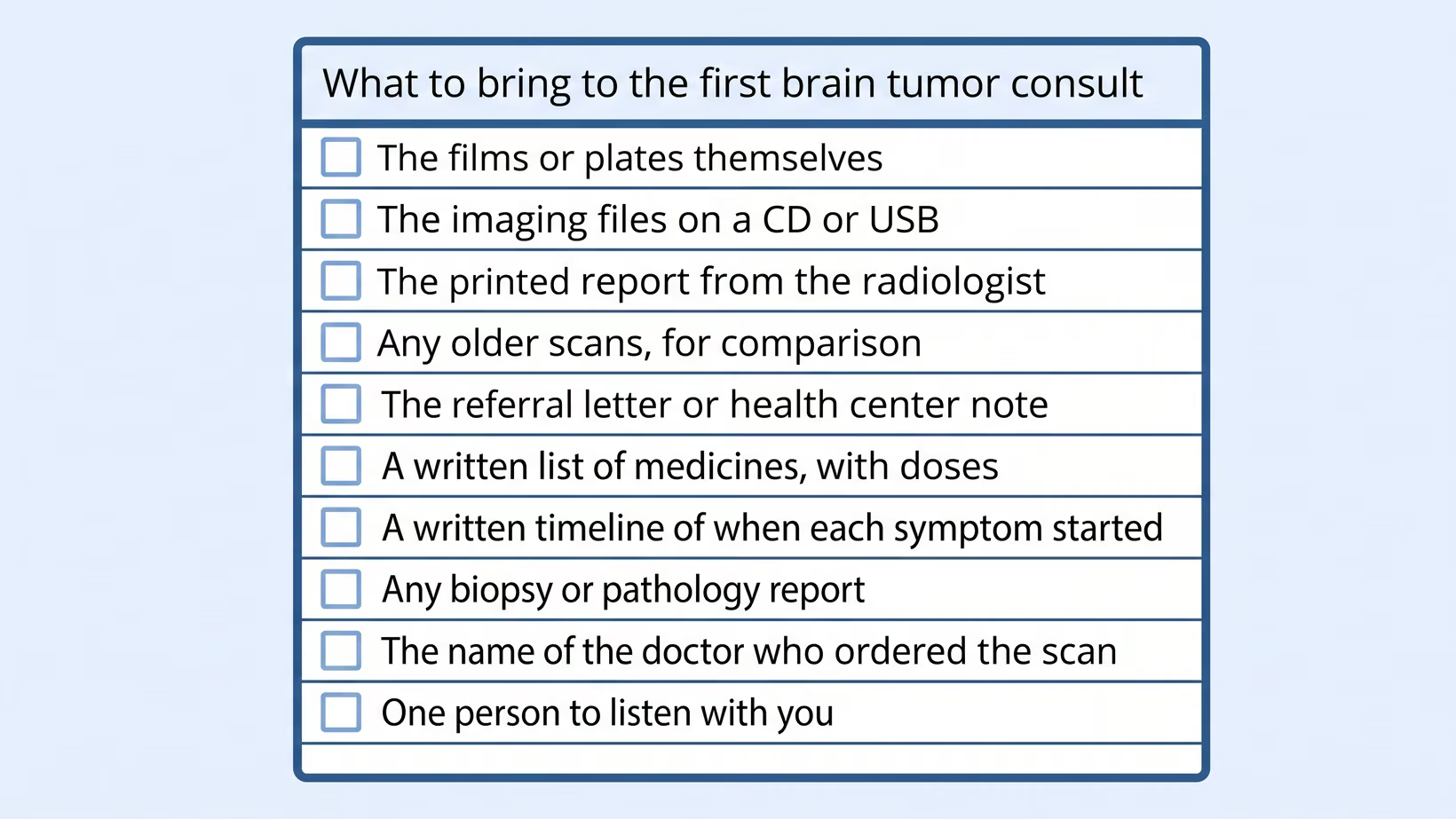
Bring the films, the disc and the printed report, plus every older scan. The visit is mostly talking and examination, and the doctor needs to see the images themselves rather than a description of them. Also bring a written list of your medicines and one person to listen with you.
- The actual films or plates, and the imaging files on a CD or a USB from the radiology section
- The printed report from the radiologist
- Any older scans, even ones from years ago, for comparison
- The referral letter or the health center note
- A written list of your medicines, with the doses
- A written timeline of when each symptom started
- Any biopsy or pathology report you already have
- The name of the doctor who ordered the scan
- One person to listen with you
What to ask at the first consult
Write the questions down before you go, because the visit moves quickly and the answers are hard to hold. Ask these five.
- What do you think this is, and what else could it be?
- Do I need a sample of tissue, and what does that decide?
- What is the next step, and when does it happen?
- Who do we call between visits, and on what number?
- What happens if we wait a month?
What to ask about cost and PhilHealth before you commit
Ask for the figures in writing, and ask on the first visit. The amount depends on the hospital, on which operation is done and on how long you stay.
- Ask the billing section for a written estimate of the hospital bill
- Ask the medical social services office what assistance you can apply for, and which papers it needs
- Ask which parts PhilHealth pays for and which parts you pay yourself
Spending on radiation treatment in the Philippines is largely paid by families themselves, so ask about that part early rather than at the end.
How do you choose a brain tumor doctor?
No ranking or list of brain tumor doctors is worth trusting. What matters for your case is a neurosurgeon who operates on brain tumors as part of regular practice, in a hospital where a pathologist can read the tissue and a radiation oncologist can take over afterwards.
Three things are worth checking instead of a ranking. The surgeon operates on brain tumors often, not once a year. There is a team, so the plan does not stop when one doctor is away. The plan was explained to you twice, in words you can repeat to your family at home.
Getting a second opinion on the plan
Asking for a second opinion is normal, and you do not have to hide it from the first doctor. Bring the same films, the same report and the first plan in writing. An operation that the first doctor called urgent should not wait weeks for a second opinion.
Is there a neuro-oncologist in the Philippines?
A neuro-oncologist is a doctor who specializes in tumors of the brain and nervous system and in the medicines used against them. The work of a neuro-oncologist is shared among the neurosurgeon, the radiation oncologist and the medical oncologist.
What is lost when the role is divided is the person who holds the whole plan. Guidelines for brain tumor care say one named person should be responsible for coordinating a patient’s care, so ask at the first visit who that person is for you.
When does the oncologist join your care?
The oncologist joins once the tumor has a name, and the name comes from tissue rather than from the scan. Under the current World Health Organization system, the name comes from the tissue read together with molecular testing, meaning tests for specific changes inside the tumor cells. The treatment plan waits for that report because the name decides the treatment.
When the brain tumor has spread from a cancer somewhere else in the body, called brain metastases, an American guideline says treatment aimed at the brain itself should not be put off, and that any decision to delay it is made in a discussion between the specialties rather than by one of them.
Which hospitals have a brain tumor team?
The hospitals that can treat a brain tumor from start to finish are the large city and regional ones, because a brain tumor team needs several services in one place. It needs a neurosurgeon who operates on tumors, a laboratory that reports brain tissue, a radiation oncology service and a medical oncologist.
Radiation is usually the part that decides where you travel. A review of radiation oncology services in the Philippines found that radiation staff and facilities are concentrated in the National Capital Region, which limits access for people in rural areas.
Call before you travel, and ask three questions. Does a neurosurgeon here operate on brain tumors? Does this laboratory report brain tissue, or is it sent elsewhere? Where would radiation be given, and is that a second hospital in another city?
Brain tumor care in a province without a neurosurgeon
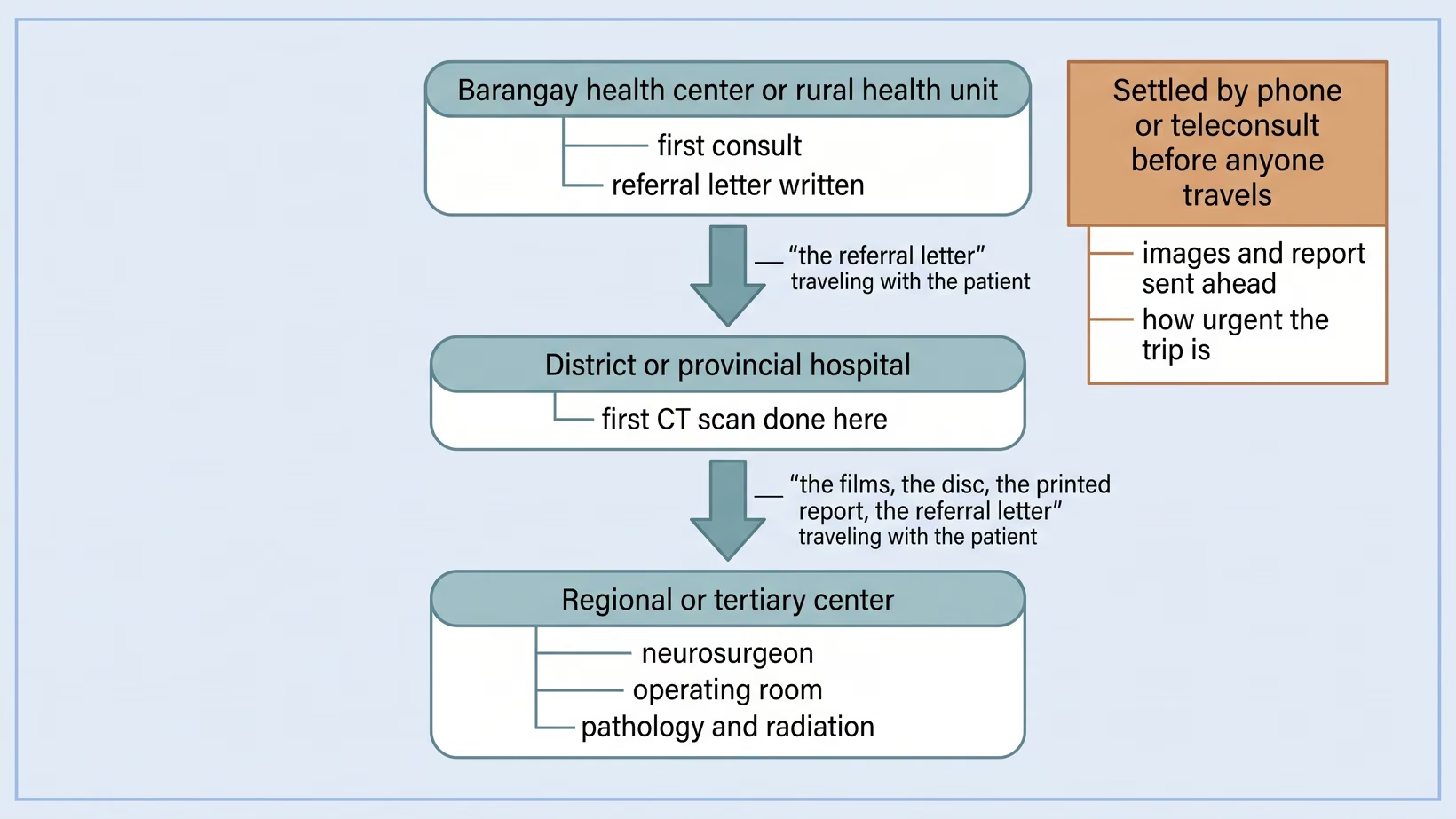
If there is no neurosurgeon in your province, the care still exists, but it is in another city and someone has to arrange the trip. A survey published in 2024 counted about 174 neurosurgeons in the Philippines, roughly one for every 600,000 people, and found 35 provinces with none at all.
Much of this can be settled before anyone travels. Send the images and the report ahead to the neurosurgeon’s clinic, and ask whether a teleconsult, an online consult, can decide how urgent the trip is. Make sure the films, the disc, the printed report and the referral letter travel with the patient, and not in a second trip a week later.
What is a brain tumor board, and does your case need one?
A tumor board is a scheduled meeting where the doctors who would each treat part of your tumor review the case together, from the same images. Guidelines say a suspected glioma, a kind of tumor that starts in the brain itself, goes to such a team as soon as the scan is first reported.
For brain tumors it is often called a neuro-oncology multidisciplinary team, meaning a group drawn from different specialties: the neurosurgeon, the radiologist, the pathologist, the radiation oncologist, the medical oncologist, and often a nurse who coordinates.
Guidelines say a suspected glioma is referred to such a team at the first radiological diagnosis.
For a brain tumor that may have spread from elsewhere, British guidance asks for imaging of the rest of the body, and any biopsy of that disease, to be done before referral, so the search for the original cancer comes first. If your hospital has no formal board, ask whether the other specialists have seen your scan.
A patient who is getting worse should not wait for these tests. That patient goes now to the emergency room of a hospital with a neurosurgeon, and the remaining tests are done afterwards. This is practical advice, not a guideline rule.
What the team needs before it can plan anything
Two things: the scan and the tissue. For a suspected slow-growing glioma, British guidelines say an operation to remove the tumor is considered early, both to get a diagnosis from the tissue and to remove as much as can be removed safely. Where removal is not appropriate, a biopsy, meaning a small sample of tissue, is taken for the diagnosis.
Not every growth needs tissue. The same guideline allows watching with repeat scans, and no sample taken, when the features on the scan are typical of a very slow-growing tumor. Which of the two applies to you is decided by the neurosurgeon with the images in front of them.
How a health center refers a suspected brain tumor
For the doctor in a health center or an outpatient clinic: get the imaging moving and send the patient, rather than completing the picture first. In an adult losing central neurological function over days to weeks, the British referral guideline advises considering an urgent MRI of the brain, or a CT scan where MRI cannot be done.
In a child or young person with newly abnormal balance or other central neurological function, the same guideline advises a referral seen within 48 hours. Direct access to MRI from primary care is a British arrangement.
What the referral note should carry:
- the symptoms, the date each started, and whether each is getting worse
- the neurological examination, including the level of consciousness and any focal deficit, meaning loss of function in one part of the body
- the scan, the disc and the report from the radiologist, or where they can be retrieved
- current medicines, including any blood thinner (anticoagulant) and any steroid already started
- other illnesses, how independent the patient is at home, and whether a cancer is already known elsewhere
- a contact number for the family and one for you
Telephone the neurosurgeon now and arrange emergency transfer, rather than booking the next clinic day, for a falling level of consciousness, for a focal deficit that is worsening over hours, for seizures that do not stop, or for vomiting with headache and a scan showing a mass with the midline pushed across, meaning the middle structures of the brain displaced to one side.
What you should get back is a plan in writing: whether tissue is needed, whether an operation is planned and when, which imaging to repeat and at what interval, and the name of the person coordinating the case.
What to do now
What to do now if a scan has found a brain tumor
- See a neurosurgeon first, in a hospital that does brain surgery
- Ask for a clinic appointment this week; go to the nearest emergency room now for a seizure, repeated vomiting with a headache, drowsiness that is hard to wake from, or weakness, numbness or trouble speaking that comes on suddenly
- Bring the films, the disc, the printed report, every older scan and a written list of your medicines
- Book a consultation with a neurosurgeon directly, or ask your doctor or health center for a referral letter
- You may see me at my clinic at the Lung Center of the Philippines, Room 1101, on Tuesday and Thursday from 2 PM; for a child, at the Philippine Children’s Medical Center, Room 22, on Wednesday from 2 PM
- If you live too far to come, book an online consult with me on the consultation page
Frequently asked questions
Can a neurologist treat a brain tumor without surgery?
A neurologist can treat the seizures, the headaches and the swelling around a brain tumor, and can arrange the scans. Taking a sample of the tumor or removing it is surgical work, and whether an operation is needed is the neurosurgeon’s decision.
Do you need a referral before you can see a neurosurgeon?
A referral letter is still worth getting, because it carries the history, the examination and the reason the scan was ordered.
Is a brain tumor doctor the same as a brain cancer doctor?
A brain tumor doctor and a brain cancer doctor usually describe the same team. The neurosurgeon decides about the operation, and the oncologists treat with radiation and medicines once the tumor has a name.
Can you see a neurosurgeon before the biopsy result comes back?
Yes, you can see a neurosurgeon before any biopsy result, and that is the usual order. The neurosurgeon is the doctor who decides whether a sample is taken at all.
Which doctor treats a brain tumor in a child?
A brain tumor in a child is treated by a pediatric neurosurgeon where one is available, with a pediatric oncologist and a radiation oncologist for the treatment that follows. In a child or young person with newly abnormal balance or other central nervous system function, referral guidelines advise an appointment within 48 hours.
Can any of this be settled by an online consult?
An online consult with a neurosurgeon can review the images and the report, and can tell you how urgent the trip is and what to bring. The examination, the decision about an operation and the consent for it need the patient in the room.
See sources
- National Institute for Health and Care Excellence. Brain tumours (primary) and brain metastases in over 16s. NICE guideline NG99, section 1.1, recommendation 1.1.2. 2021. https://www.nice.org.uk/guidance/ng99/chapter/Recommendations
- National Institute for Health and Care Excellence. Brain tumours (primary) and brain metastases in over 16s. NICE guideline NG99, recommendations 1.1.4, 1.2.2 and 1.2.3. 2021. https://www.nice.org.uk/guidance/ng99/chapter/Recommendations
- National Institute for Health and Care Excellence. Brain tumours (primary) and brain metastases in over 16s. NICE guideline NG99, recommendations 1.6.3 and 1.9.5. 2021. https://www.nice.org.uk/guidance/ng99/chapter/Recommendations
- National Institute for Health and Care Excellence. Suspected cancer: recognition and referral. NICE guideline NG12, section 1.9, recommendations 1.9.1 and 1.9.2. 2026. https://www.nice.org.uk/guidance/ng12/chapter/Recommendations-organised-by-site-of-cancer
- Louis DN, Perry A, Wesseling P, et al. The 2021 WHO Classification of Tumors of the Central Nervous System: a summary. Neuro-Oncology. 2021. PMID 34185076
- Stupp R, Mason WP, van den Bent MJ, et al. Radiotherapy plus concomitant and adjuvant temozolomide for glioblastoma. New England Journal of Medicine. 2005. PMID 15758009
- Weller M, van den Bent M, Preusser M, et al. EANO guidelines on the diagnosis and treatment of diffuse gliomas of adulthood. Nature Reviews Clinical Oncology. 2021. PMID 33293629
- Vogelbaum MA, Brown PD, Messersmith H, et al. Treatment for Brain Metastases: ASCO-SNO-ASTRO Guideline. Journal of Clinical Oncology. 2022. PMID 34932393
- Baticulon RE, Lucena LLN, Gimenez MLA, Sabalza MN, Soriano JA. The Neurosurgical Workforce of the Philippines. Neurosurgery. 2024. PMID 37931081
- Vergara TVT, Chua TMC, Santi KMG, et al. Radiation Oncology in the Philippines: Current State and Future Directions. Advances in Radiation Oncology. 2024. PMID 38405322
- National Institute for Health and Care Excellence. Brain tumours (primary) and brain metastases in over 16s. NICE guideline NG99, section 1.2, recommendation 1.2.35. 2021. https://www.nice.org.uk/guidance/ng99/chapter/Recommendations