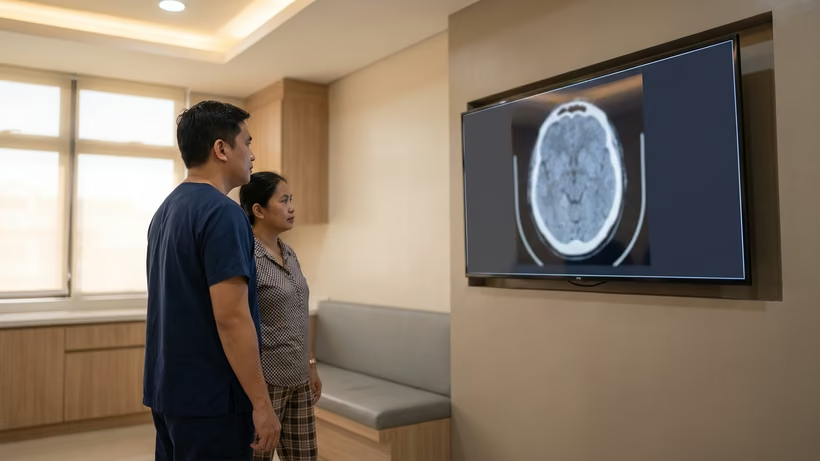

A head injury from a motorcycle accident can cause bleeding and swelling inside the skull, and much of what decides the outcome happens in the first hours. A rider can be awake and still have a bleed that is growing. Drowsiness, repeated vomiting, a worsening headache or weakness on one side of the body means the emergency room now.
Seek care now
Which signs after a crash mean the emergency room now?
Any one of these signs after a crash means the emergency room now, not a check-up later. Go even if the rider was wearing a helmet.
Go the same day even with none of these signs if he blacked out or cannot remember the crash, if he takes a blood thinner such as warfarin, aspirin or clopidogrel, or if he is an older adult. Go even if he stood up and walked away, because a bleed inside the skull takes time to grow.
If he cannot be woken, is having a seizure, or has neck pain, call for an ambulance instead of moving him yourself.
- Hard to wake, or harder to wake than before
- Vomiting again and again
- A headache that keeps getting worse
- A seizure
- Weakness, numbness or clumsiness on one side of the body
- Pupils that are not the same size
- Clear fluid or blood coming from the nose or the ear
- Confusion, agitation, or speech that does not make sense
- Slurred speech or double vision
The rider who walked away and then got worse
Someone can be fully awake at the roadside and still get worse hours later, so a doctor may keep a patient who looks well. When a small epidural hematoma, a bleed between the skull and its covering, is watched without surgery, the surgical guideline for it describes repeat scans and close checks of the brain and nerves in a hospital that has a neurosurgeon.
Bring and ask
What to bring to the hospital, and what to expect when you arrive
Bring identification, any maintenance medicines, and the name of anything that thins the blood. Bring one relative who can stay and answer questions, because the patient may not be able to.
- A list of medicines, especially aspirin, clopidogrel or warfarin
- Known conditions: diabetes, high blood pressure, liver disease, epilepsy
- The time the crash happened, and whether he lost consciousness
- Any scan, CD or result from an earlier hospital
- The helmet he was wearing, if it is still with you
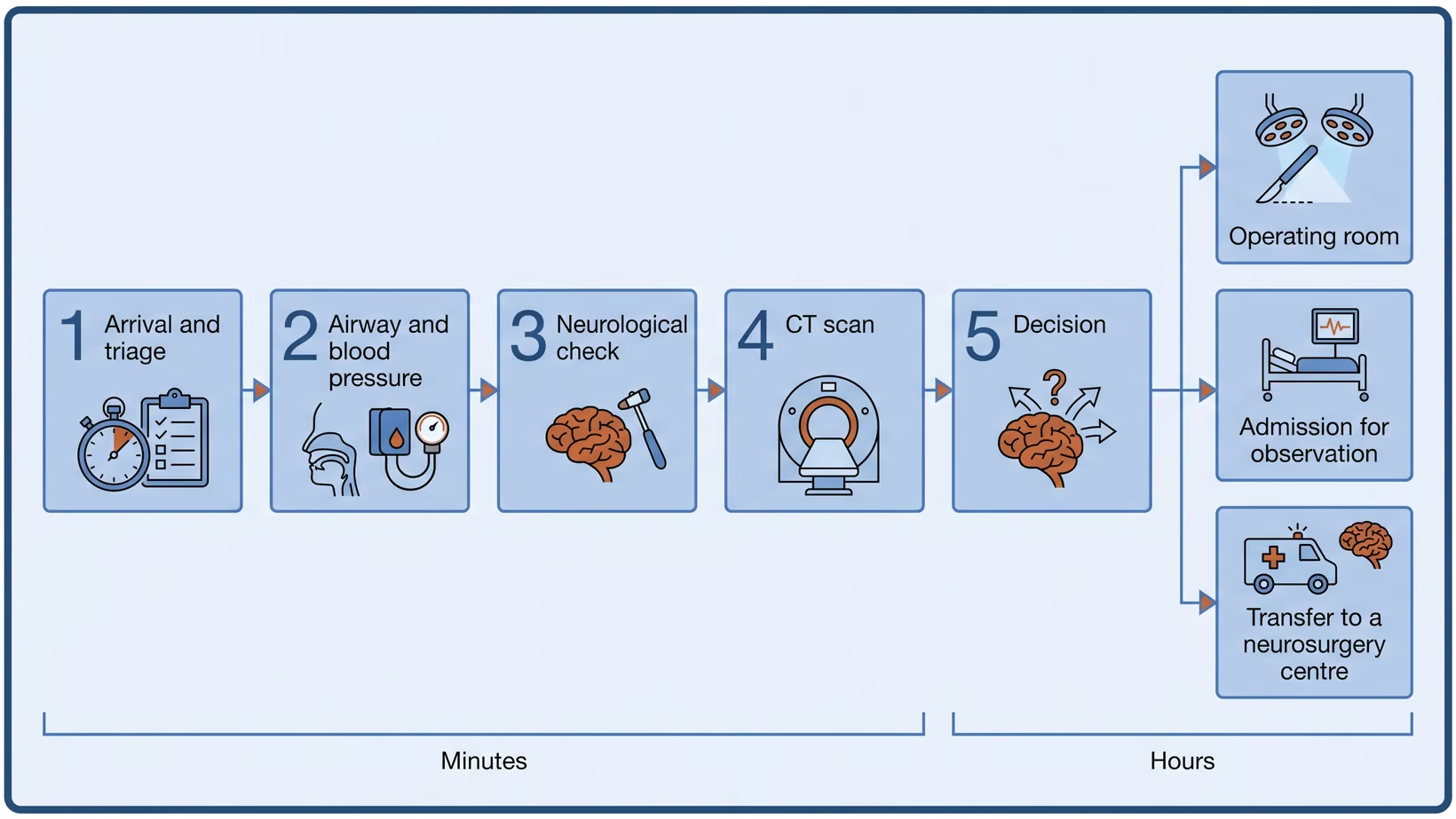
Expect triage first, meaning the staff sort patients by how urgent they are. Then expect checks of breathing and blood pressure, an examination of the brain and nerves, and the CT scan. Different people may ask you the same questions more than once.
What kind of brain bleed happens after a motorcycle accident?
Four main kinds of bleeding are seen on the first scan after a crash: bleeding outside the brain’s tough covering, bleeding under that covering, bleeding over the surface of the brain, and bleeding inside the brain tissue itself. Head injury is a common cause of serious harm and of death after a motorcycle crash. That is why the scan matters.
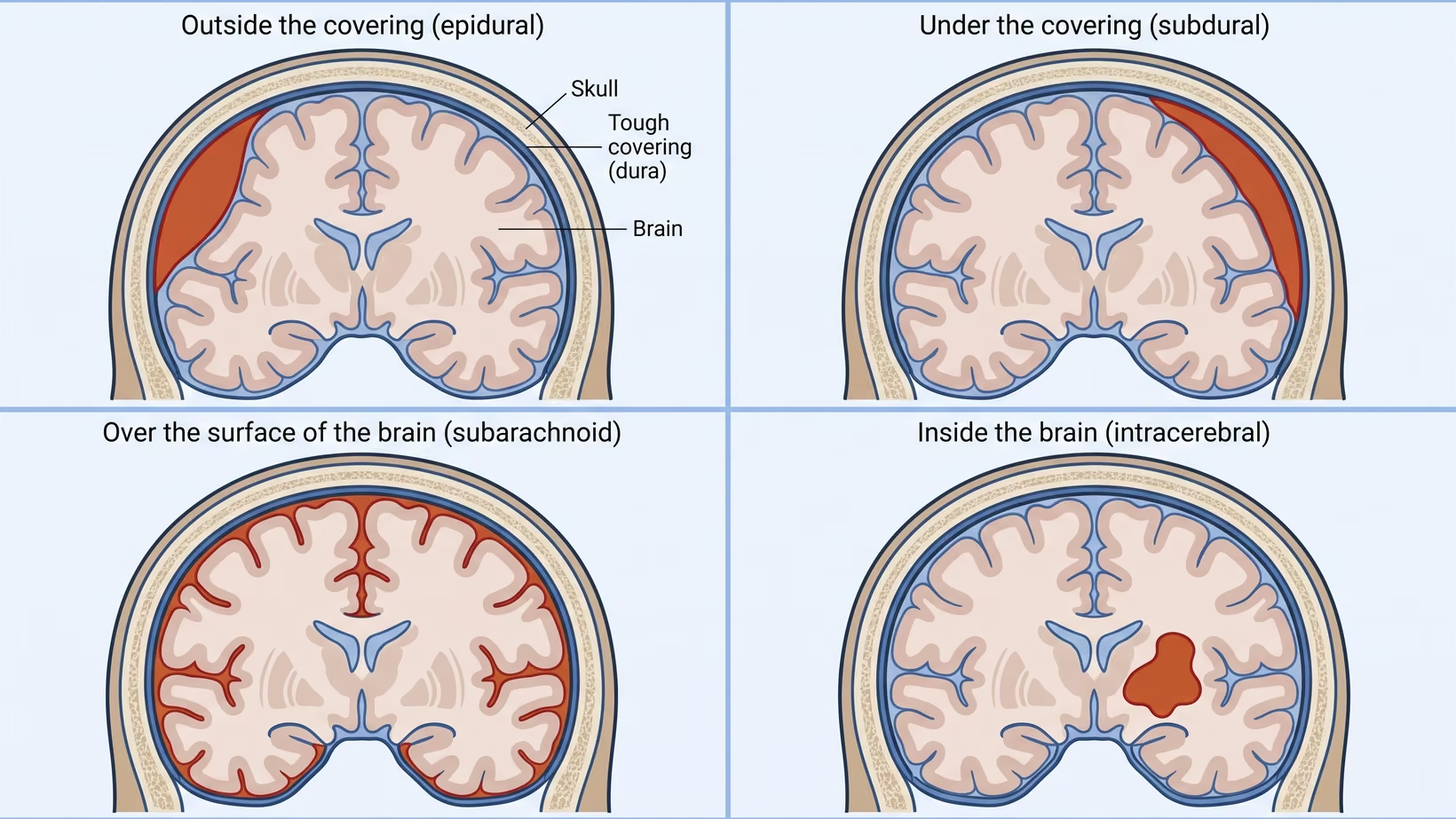
An epidural hematoma is a blood clot between the skull and the covering, and it often comes from a torn artery. An acute subdural hematoma is a clot under the covering, against the brain. Bleeding over the surface of the brain (traumatic subarachnoid hemorrhage) and bleeding inside the brain tissue (intracerebral hemorrhage) are the other two types of brain bleed after a head injury. The brain can also be injured with no collection of blood at all, from the shaking of the tissue during the crash.
Why the brain can be injured when the skull is not broken
The skull stops when it hits the road, but the brain inside keeps moving for a moment longer. That movement stretches brain tissue and the small veins between the brain and its covering. These can tear without a single crack in the bone. So a head that looks normal does not prove the brain is normal. Riders with no fracture and no wound are still scanned when the story of the crash or the examination calls for it.
How a crash injures the neck at the same time
The same sudden movement that throws the brain against the skull can also injure the neck. This is why the rider arrives wearing a hard collar, and nobody takes it off until the neck has been checked. Leave the collar in place, even if the patient is pulling at it.
What happens in the first hours in a Philippine emergency room?
The first hours follow a fixed order: keep him breathing, keep the blood pressure up, examine the brain and nerves, scan, then decide. Low blood pressure and low oxygen both harm an injured brain. So the team corrects them first, even before the scan.
A patient may be given a breathing tube, fluids, or a bed in the resuscitation area while the family waits. Some of what happens in these hours is treatment, not only checking.
In a trial of more than twelve thousand patients with head injury, a medicine that stops blood clots from breaking down (tranexamic acid) was given early. It lowered deaths from head injury in patients with mild and moderate injury, and giving it earlier worked better than giving it later. It is given in the hospital by the treating team, not at home or on the way, and whether it is used at all is their decision.
What the CT scan in the emergency room is looking for
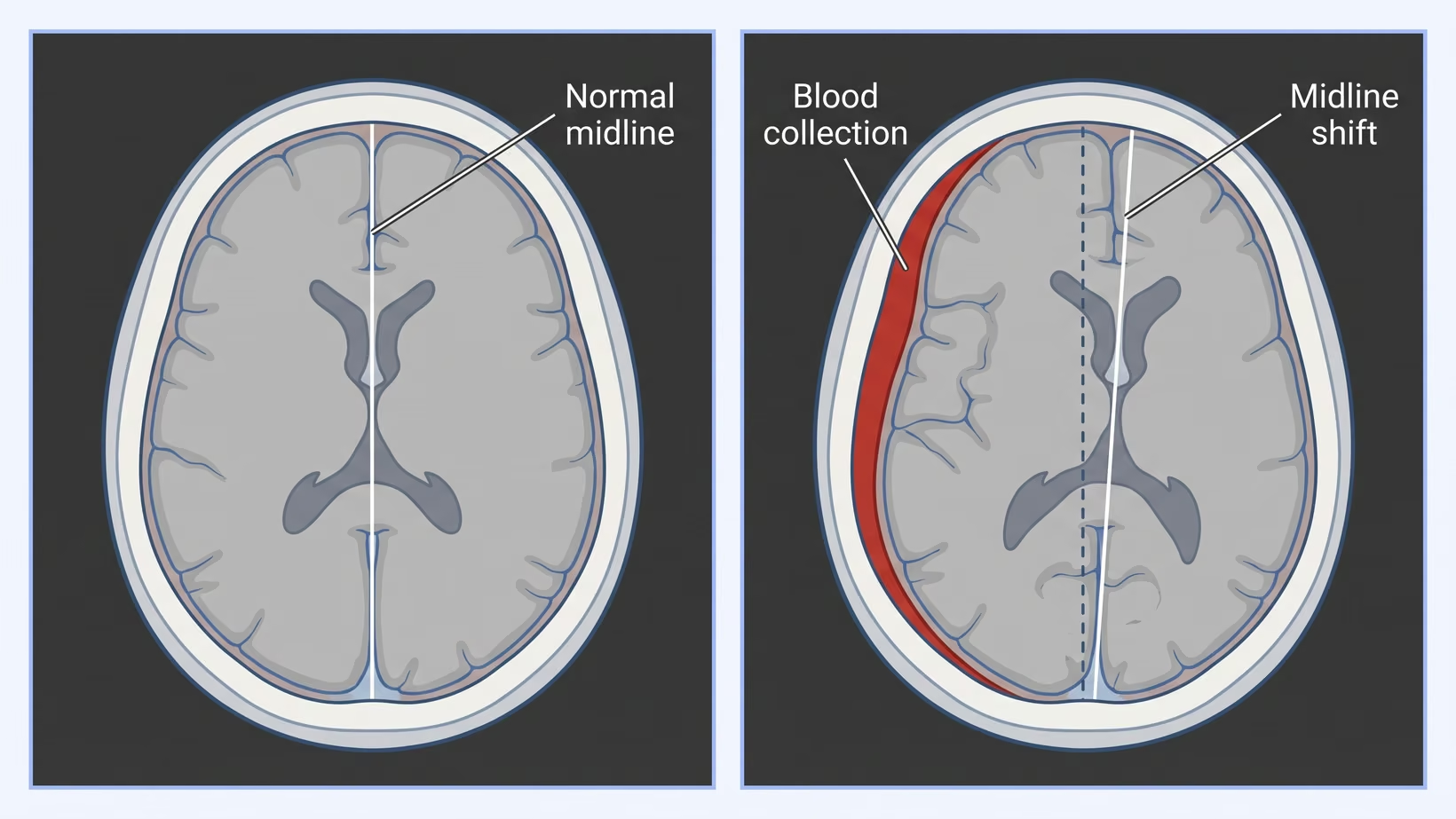
The scan answers three questions: is there blood, how much, and is it pushing the brain out of position. It also shows fractures, swelling, and whether the spaces inside the brain are being squeezed. One of the findings that moves a patient to the operating room is midline shift on a CT scan, meaning the brain is pushed away from the center line. A scan that shows nothing is still useful, because it gives the team a starting picture to compare the next one against. A CT scan shows one moment in time, and a small bleed can be larger on a later scan. A repeat scan does not mean the first one was wrong. It is how the team checks that the decision not to operate is still right.
What will the family be asked to decide?
When the scan shows a bleed that needs an operation, the family is asked to consent to it, and sometimes to accept a transfer, within the first hours. The hardest choice is surgery for a brain that keeps swelling. In the trial that tested it, fewer patients died, but more survivors were left severely disabled. Good recovery was no more likely than with intensive medical treatment.
Why consent is asked for so quickly
The urgency comes from the guideline, not from the hospital’s convenience. When a subdural clot is thicker than about a centimeter, or the midline is pushed across by more than five millimeters, the surgical guideline says to remove it as soon as possible, whatever the patient’s level of consciousness. The blood is taking up space the skull cannot give.
Surgery to remove the clot, and surgery to make room for swelling
These are two different operations, and families often confuse them. The first opens the skull, takes out the blood clot pressing on the brain, and puts the bone back. The second leaves part of the skull off, so a brain that is still swelling has room to expand. The bone is put back in a later operation. Ask the surgeon which one is being proposed and why.
Survival after an acute subdural hematoma depends on the scan, the age and the examination of the brain and nerves together, not on the operation alone.
What happens if the family says no, or cannot decide yet
Refusing or delaying does not end the care. The team keeps treating the pressure, the breathing and the blood pressure. It will keep asking, because the option can close as the hours pass. If the person who can legally consent has not arrived, tell the team, and give a number where that person can be reached. If you did not understand the explanation, ask for it again in plain words. Nobody is annoyed by being asked twice.
What happens when the first hospital has no neurosurgeon?
When the first hospital has no neurosurgeon, the patient is transferred to one that has. This is the normal pathway, and it does not mean something went wrong. There are about 174 neurosurgeons practicing in the Philippines, roughly one for every 600,000 people. Thirty-five provinces, home to some 24 million people, have none at all.
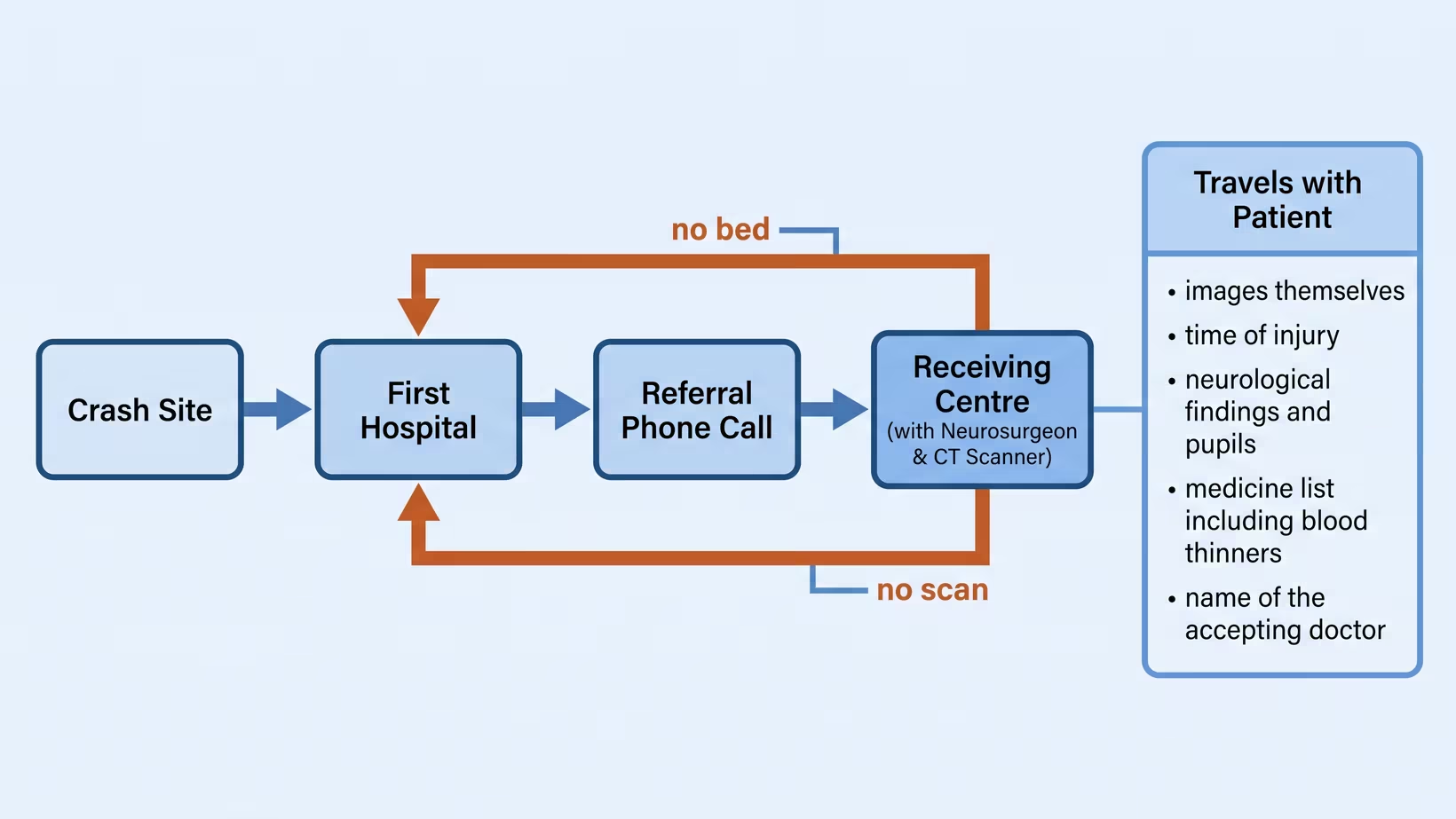
Most hospitals in this country were never expected to operate on a head injury. They are expected to recognize it, keep the patient safe, and transfer him to a hospital with a neurosurgeon.
What the first-line doctor stabilizes before the patient moves
Airway, oxygen and blood pressure come first, in that order, with the neck bones (cervical spine) held still. Treat bleeding elsewhere too. A rider with a broken pelvis and a head injury can die from the bleeding in the pelvis before signs of the head injury appear. Steroids are not part of head injury treatment. The trial of more than ten thousand patients that settled the question found more deaths in the group that received them.
What to send with the patient, and what to say on the phone
Send the images, not just the report, in a form the receiving hospital can open. On the phone, start with what the neurosurgeon needs to decide.
- How the crash happened, and the time of injury
- The Glasgow Coma Scale (GCS), a bedside score of how the patient opens the eyes, speaks and moves: now and on arrival, and the pupils
- The CT findings, including any midline shift
- Blood thinners (anticoagulants such as warfarin), antiplatelets (such as aspirin and clopidogrel, which stop blood cells called platelets from sticking together), and any bleeding elsewhere
- What is already running: airway, lines, blood pressure support
Say what you need, a bed or an opinion, and write down the name of the doctor who accepted.
What the family can ask while the transfer is being arranged
Ask which hospital has accepted, whether a neurosurgeon there has seen the scan, and who goes with him in the ambulance. Ask for a copy of the scan and the records. If you ask why a transfer is needed, the straight answer is that this hospital cannot do the operation the scan may call for.
What to do now
Sent home from the emergency room: what to watch for at home
Many riders who reach the emergency room are sent home the same day, after the examination and the scan. Somebody sober and awake must stay with him for at least the first day, and for as long as the discharging doctor says. Go back to the emergency room at once for any of the warning signs above.
- Wake him gently a few times on the first night and check that he responds normally. If he is hard to wake or does not respond normally, take him to the emergency room now.
- No alcohol, no riding, no driving, and no sport until he is cleared
- Expect a mild headache, tiredness, poor concentration and irritability for days. A headache that keeps getting worse is a warning sign, not part of this: go back to the emergency room.
- Keep the follow-up appointment even if he feels well
A slow bleed can cause symptoms weeks after hitting your head, long after the crash is forgotten. A new or worsening headache in those weeks means the emergency room the same day, not the next follow-up. Confusion, weakness or numbness on one side of the body, a seizure, or being hard to wake means the emergency room now.
For the follow-up, see a neurosurgeon on the date the discharging doctor gives. Bring the scan CD, the scan report and the discharge papers. You can book a consultation, or your doctor can refer you.
What does a helmet change in a crash?
A helmet lowers the chance of dying and the chance of a head injury in a crash, but it does not remove either. A Cochrane review, which pooled the better studies, found both risks lower in riders who wore helmets.
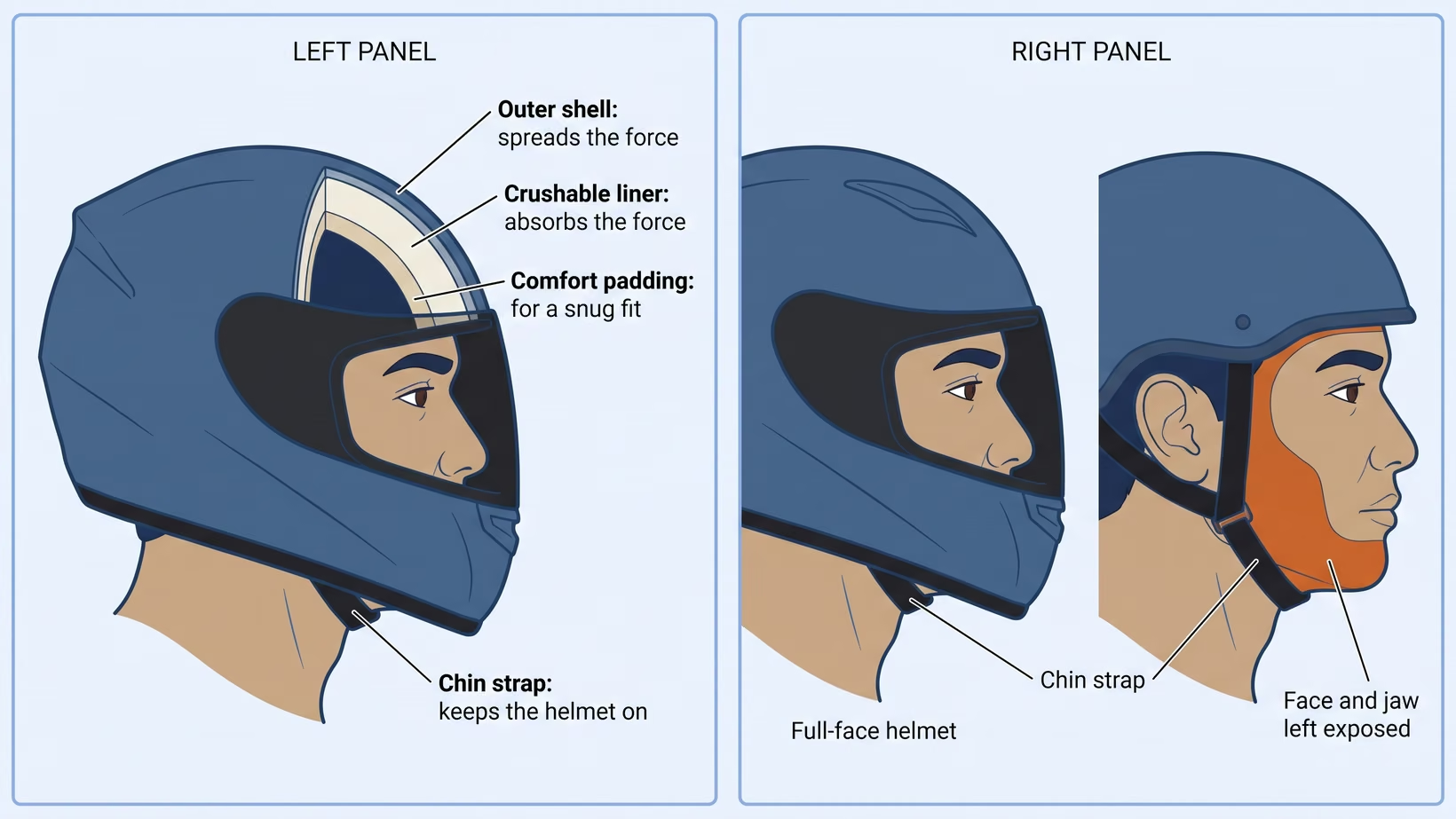
These studies watched riders rather than testing helmets in a trial. They show that helmet use is linked to lower risk, not a guarantee for any one crash.
Why a loose strap or a novelty helmet changes the injury
A helmet only works as designed if it fits and the chin strap is fastened. A helmet that comes off on impact protects nothing. Philippine law, Republic Act 10054, requires a standard helmet with the Philippine Standard (PS) mark or the Import Commodity Clearance (ICC) sticker. The cheap decorative kind is not a legal helmet. The Cochrane review found too little evidence to say whether the type of approved helmet changes the injury.
A helmet lowers the risk. It does not remove it
A helmeted rider can still bleed inside the skull, so check and scan him on the same grounds as anyone else. The evidence does not support the old worry that a helmet causes neck injury. The review found too little evidence to give a figure for face or neck injuries, and the weaker studies pointed toward no added neck risk.
The helmet law and the injury pattern doctors see
Helmets are required for riders and passengers in the Philippines under Republic Act 10054, and the standard mark is part of that law. Laws that require helmets increase how many riders wear one. No Philippine before-and-after figure for head injuries under the law was found at the standard this site uses. Another country’s numbers would describe another country’s roads.
The pattern that reaches a Philippine trauma service
In the national survey of Philippine neurosurgeons, burr holes (small holes drilled into the skull) and craniotomy (an operation that opens the skull) for head injury were the most common operations. They were ahead of surgery for stroke and for brain tumors. The survey does not say how many of these injuries came from a motorcycle.
What to ask about cost and PhilHealth
Ask the billing section and the medical social worker about cost on the first day, before the operation and not after it, but do not let these questions hold up an emergency operation. Ask for an estimate for the operation and the intensive care stay (the unit for the sickest patients). Ask what PhilHealth is expected to cover, and whether the hospital accepts guarantee letters.
Amounts differ between hospitals and change over time, so trust what your own hospital tells you today over any figure on a website.
Frequently asked questions
Can there be a brain bleed if the CT scan was normal?
Yes, a brain bleed can appear on a later scan after a normal first CT scan, because the first scan shows only that moment. This is why patients are watched, scanned again when the picture changes, and told which signs bring them straight back to the emergency room.
He was wearing a helmet, so how did his brain get hurt?
A helmet lowers the risk of head injury but does not remove it. The brain can be hurt by its own movement inside the skull even when the helmet did its job. A helmeted rider with worrying signs is checked and scanned like anyone else.
Is it safe to sleep after a head injury from a crash?
Sleep after a head injury from a crash is not the danger in itself; being unwatched is. Somebody should be able to wake him a few times on the first night and check that he responds normally. Go back to the emergency room at once for any of the warning signs.
How long does the family have to decide about surgery?
The family has less time to decide about surgery than feels fair. Where the guideline calls for removing a blood clot, it says to do it as soon as possible. The operating room, the blood and the anesthesiologist all have to be ready at once, so the team will ask for a decision quickly.
Can the patient be transferred to a hospital we choose?
You can ask for a hospital you choose, and your preference is taken seriously. The transfer depends on a receiving hospital accepting the patient and having a bed, a scanner and a neurosurgeon free. The nearest capable hospital is usually better than a preferred one further away.
When can the rider go back to work, and back to riding?
There is no fixed timetable for going back to work or to riding after a head injury. It depends on the injury, the operation if there was one, and how the recovery goes. The treating team decides. Riding is usually cleared later than work, especially if there were seizures.
See sources
- Liu BC, Ivers R, Norton R, Boufous S, Blows S, Lo SK (Cochrane Injuries Group). Helmets for preventing injury in motorcycle riders. Cochrane Database of Systematic Reviews. 2008. PMID 18254047. doi:10.1002/14651858.CD004333.pub3
- Bullock MR, Chesnut R, Ghajar J, Gordon D, Hartl R, Newell DW, Servadei F, Walters BC, Wilberger JE. Surgical management of acute subdural hematomas. Neurosurgery. 2006. PMID 16710968
- Bullock MR, Chesnut R, Ghajar J, Gordon D, Hartl R, Newell DW, Servadei F, Walters BC, Wilberger JE. Surgical management of acute epidural hematomas. Neurosurgery. 2006. PMID 16710967
- CRASH-3 trial collaborators. Effects of tranexamic acid on death, disability, vascular occlusive events and other morbidities in patients with acute traumatic brain injury (CRASH-3): a randomised, placebo-controlled trial. The Lancet. 2019. PMID 31623894. doi:10.1016/S0140-6736(19)32233-0
- Hutchinson PJ, Kolias AG, Timofeev IS, et al. Trial of Decompressive Craniectomy for Traumatic Intracranial Hypertension (RESCUEicp). New England Journal of Medicine. 2016. PMID 27602507. doi:10.1056/NEJMoa1605215
- Roberts I, Yates D, Sandercock P, et al (MRC CRASH trial collaborators). Effect of intravenous corticosteroids on death within 14 days in 10008 adults with clinically significant head injury. The Lancet. 2004. PMID 15474134. doi:10.1016/S0140-6736(04)17188-2
- Baticulon RE, et al. The Neurosurgical Workforce of the Philippines. Neurosurgery. 2023. PMID 37931081. doi:10.1227/neu.0000000000002630
- Republic of the Philippines. Republic Act No. 10054: Motorcycle Helmet Act of 2009.
- Peng Y, Vaidya N, Finnie R, et al. Universal Motorcycle Helmet Laws to Reduce Injuries: A Community Guide Systematic Review. American Journal of Preventive Medicine. 2017. PMID 28526357. doi:10.1016/j.amepre.2016.11.030