

The first neurosurgery appointment is mostly talking and examination. Bring your referral letter, your actual CT or MRI plates preferably with the imaging files saved on a CD disc or USB. The files are requested from the radiology department and are given together with the printed report. A written list of your medicines, and one person to listen with you. The first visit usually ends with a plan: further tests, a decision to watch and measure again, or an operation booked for a later date.
What will a neurosurgeon do on your first visit?
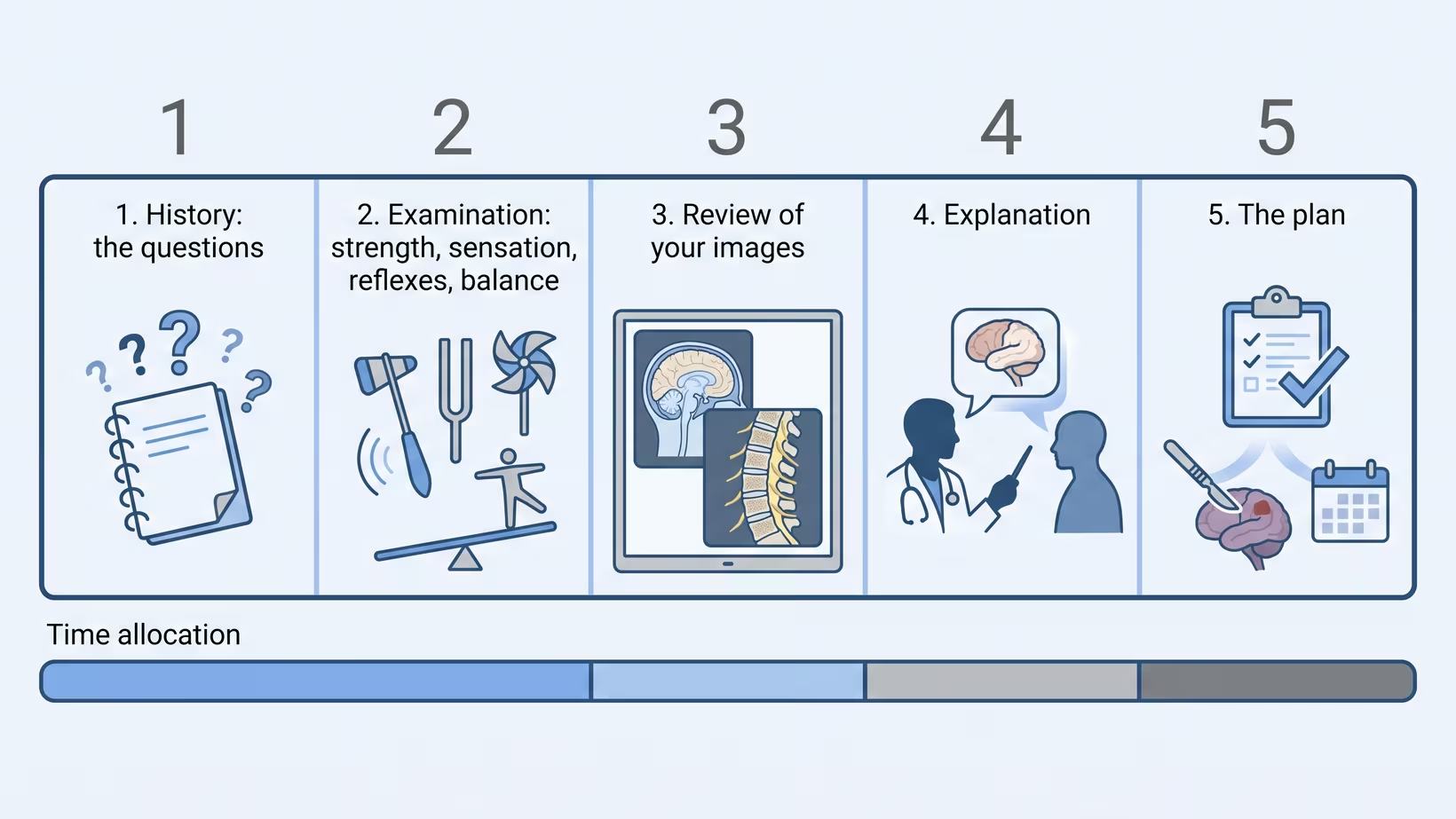
A neurosurgeon usually begins a first visit by asking questions, then examines you, then studies your images, and only then explains what is wrong and what happens next. Very little of the hour is about the operating room.
The questions are not paperwork. They are the diagnostic work. In one classic study of new outpatients, the referral letter and the history together produced the diagnosis that was finally accepted in 66 of 80 patients, while the physical examination added it in only seven.
So the most useful thing you can prepare is a short opening sentence: what the trouble is, when it started, and what has changed since. In recorded consultations, patients who were allowed to finish took a median of six seconds to say what was wrong.
The neurological examination is quick and does not hurt. Expect the surgeon to test the strength of your arms and legs, touch your skin to check sensation, tap your tendons for reflexes, look into your eyes, check your balance, and watch you walk.
A neurosurgeon may also tell you that you do not need a neurosurgeon. That is a good outcome and not a wasted trip, and it helps to know whether your problem belongs to a neurosurgeon or a neurologist before you come.
Seek care now
When you should not wait for your appointment
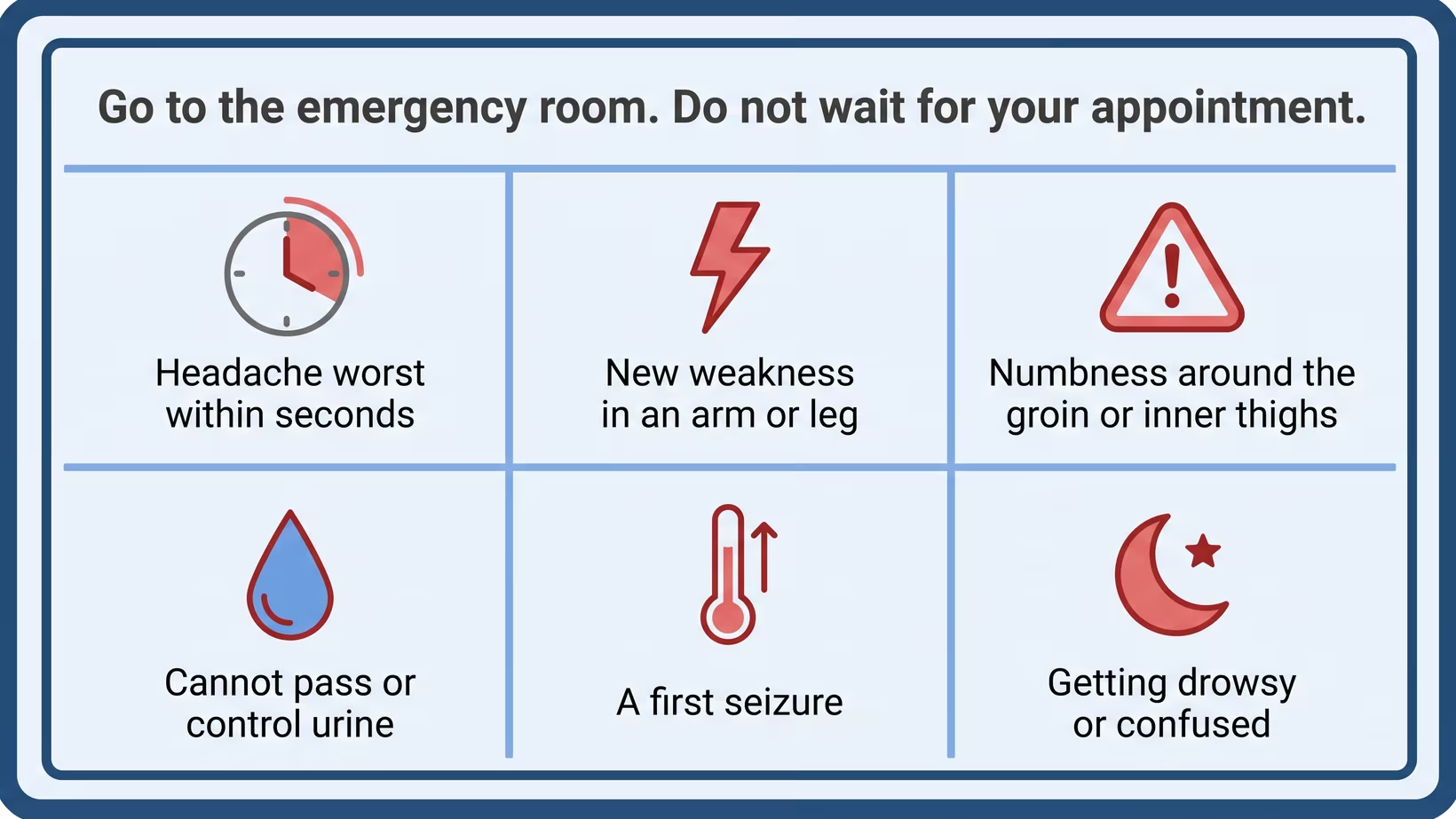
Some symptoms mean the emergency room today, not the clinic in three weeks. Go now if any of these is happening:
- A headache that reaches its worst within seconds, rather than building over hours
- New or worsening weakness in an arm or a leg
- Numbness around the groin, buttocks or inner thighs
- New difficulty passing urine, or loss of control of urine or stool
- A first seizure
- Drowsiness or confusion that is getting worse, especially after a head injury
- Fever with a stiff neck
With headache, how fast it reaches its worst is one of the clearest warning signs. Among 4,536 adults who came to emergency departments with headache, a serious cause was found in 10.9 percent of those whose headache peaked within seconds, against 6.6 percent of the rest. Most such headaches still turn out to be harmless, so this is a reason to be checked rather than a reason to panic.
The groin and bladder symptoms are the two that every guideline agrees on. A 2025 review of nine international guidelines found that all of them call for an urgent scan when those signs appear. Compression of the nerves at the base of the spine is understood to worsen continuously, and an expert review of the literature concludes there is no safe waiting time.
What to do: go to the nearest emergency department, bring the same documents listed below, and tell the triage nurse exactly when the symptom started. If the trouble began after a knock to the head, say so even if the knock was weeks ago, and read about symptoms that appear weeks after hitting your head.
Will I be operated on right away?
Almost never on the day of the first visit. A first consultation exists to decide whether an operation is needed at all, and being sent to a surgeon is not the same as being scheduled for one.
The clearest measured picture comes from spine clinics. In one series of 1,663 new spine patients in the United States, 717 of them, or 43.1 percent, were judged to be surgical candidates within six months of the first visit, which means most were not. Spine surgeons themselves describe a substantial share of referrals to them as non-operative. Those figures cover spine referrals only, not brain tumour or head injury referrals.
A first visit has three honest endings. An operation is offered. More tests are needed before anyone can decide. Or the problem is watched.
Watchful waiting is not being dismissed. It means the surgeon judges the risk of operating now to be higher than the risk of leaving the problem alone, and that the way to settle it is to measure again after a set interval. A condition where surgery is sometimes needed and sometimes not is the usual example.
When surgery is the answer, it is normally booked for a later date, after blood tests and clearance from other specialists. The exceptions are the emergencies listed above.
What to bring: your CT or MRI films and the disc
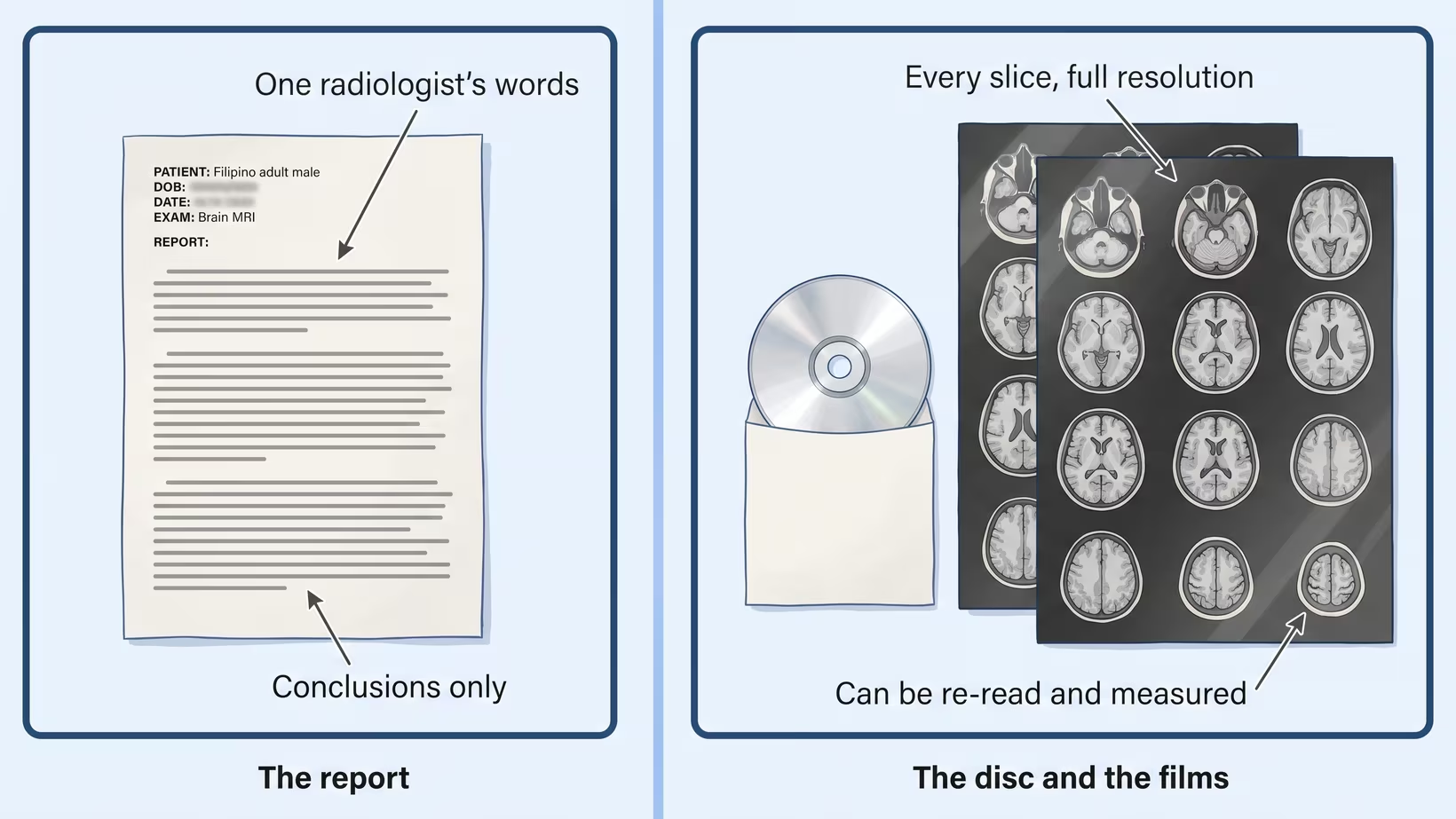
Bring the images themselves, not only the printed report. The report is one radiologist’s written conclusion; the disc carries every slice, which is what a neurosurgeon needs in order to look again.
- The referral letter from the doctor who sent you
- The CT or MRI disc, and the films if you have them
- The printed radiology report
- Your medicine list, or the boxes themselves
- Records of any previous operation, including the operative notes
- Recent blood test results
- Your PhilHealth number and Member Data Record, and your HMO card
- A notebook, a pen, and one companion
When you collect the study, ask the radiology department for the disc as well as the films, and say the images are for a surgeon. A photograph of a film held against a window is better than nothing, but it cannot be measured or re-sliced.
Looking again is not a formality. When neuroimaging done elsewhere was read a second time at a referral hospital, the second reading disagreed importantly with the first in 12.6 percent of 427 studies. Those were children’s scans sent to a specialist children’s hospital, so the figure may not hold for adults.
Having your earlier scans in hand lets the surgeon judge whether a new one is really needed. In an audit of critically ill trauma and neurosurgical patients transferred into an Australian intensive care unit, 42 percent of those already imaged were scanned again, and about one in five of those repeats looked avoidable on review, at a median of 2.74 millisieverts of extra radiation. Most repeats were done for sound clinical reasons, so a new scan may still be ordered, and that is not waste.
Your medicine list, and why blood thinners matter most
Bring the actual boxes, or a list with the exact names spelled out. One group of medicines can change what the surgeon can offer and when, and that group is the blood thinners.
It includes the antiplatelet medicines such as aspirin and clopidogrel, warfarin, and the newer oral anticoagulants. Herbal preparations, supplements and over-the-counter products count too. Name all of them, including the ones you take only occasionally.
Never stop a blood thinner on your own. Whether it is stopped before an operation, and how long before, is a decision made between the neurosurgeon and the doctor who prescribed it. A 2024 appraisal of the guidelines covering brain surgery found the evidence thin and the balance between bleeding and clotting still unsettled, which is exactly why this is not a question to look up and settle yourself.
Bring the name of the prescribing doctor and a way to reach that clinic. It often saves a week.
Should you bring a companion?
Yes, and the reason is memory rather than company. Most people forget a good part of what was said in a consultation, and that is not a personal failing.
Anxiety makes it worse. Among newly diagnosed patients at a fast-track cancer clinic, people recalled about 60 percent of the medical information they had been given, and the more anxious they were, the less they recalled. A first neurosurgery appointment produces exactly that kind of anxiety.
Coming with a family member is ordinary. In a national survey of Americans aged 65 and over, about three in ten were accompanied to routine doctor visits, and three quarters of those were still accompanied a year later, nearly always by the same person.
Bring one person, not five. Agree beforehand who writes things down and what the two of you most need answered. In a small pilot study of older patients, pairs who settled that in advance were more likely to say afterwards that the patient had understood the doctor’s explanations, and the visit did not run longer.
The listener and the decider are two separate roles. They can be the same person or two different people, but both of you should know which one you are.
Bring and ask
Questions to ask a neurosurgeon
Write your questions down before you come, and bring the paper. In a randomised trial of patients seeing a surgeon before an operation, those given a written question list asked 24 percent more questions and recalled nine percent more of the answers, with no increase in anxiety and no lengthening of the consultation.
Your own list on your own paper is enough. A trial that compared a professionally prepared question sheet with patients simply writing their own questions found no difference in how many questions were actually asked.
About the diagnosis
- What is wrong with me, in plain words
- How sure are you, and what would change your mind
- What happens if I do nothing
About the options
- What are my choices, including the ones you are not recommending
- What does the operation involve, and how long does it take
- What are the risks in my case rather than in general
- Who will actually perform the operation, and who assists
- How many of these have you done
About afterwards
- How long in hospital, and how long before I can work
- What will I not be able to do, and for how long
- What follow-up and what repeat scans will I need
What happens after the first visit?
Most first visits end in one of four ways, and you should leave knowing which one applies to you:
- A follow-up appointment, usually with a repeat scan, at a stated interval
- A referral onward, to another specialist or to a centre that does a particular operation
- A surgical booking, with a pre-operative workup of blood tests, clearance from other specialists, and a date
- Discharge back to the doctor who referred you, with a written explanation
Before you leave, you should have something in writing: the plan, a prescription if one is needed, and the date or interval for coming back. The clinic normally also sends a letter to whoever referred you, and you can ask for a copy.
Ask what change in your symptoms should bring you back sooner, and write the answer down. Ask what number to call, and whether a phone call is enough or whether they need to see you. Some problems are watched rather than operated on, and a condition that is often watched with repeat scans before any decision to operate shows why the follow-up matters as much as the first visit.
Clinic slots here are scarce. In 2023 there were 174 neurosurgeons in the Philippines, roughly one for every 600,000 people, and 35 provinces had none at all. If you need to move your date, call early so that the slot can go to someone else.
Cost and PhilHealth: what to ask, and who to ask
No honest figure can be printed here. What you pay depends on the hospital, on whether the admission is service or private, on the case rate that applies, and on your own insurance, and any number written on a website goes stale.
Ask the hospital, not only the surgeon’s secretary. The billing section and the PhilHealth desk are the two places that can give you real figures.
Ask for a written estimate that separates the professional fees of the surgeon and the anaesthesiologist, the hospital and operating room charges, implants or devices if any are needed, and what the PhilHealth case rate is expected to absorb.
Ask whether your surgeon and the hospital are accredited with your HMO, and ask before the date is set rather than after. Bring your PhilHealth number and your Member Data Record to the first visit, with your HMO card and any approval letter you already have.
If money is the reason you are hesitating, say so out loud in the room. It changes which options are worth discussing.
Frequently asked questions
How long does a first neurosurgery appointment take?
Plan for the whole morning or the whole afternoon rather than for the appointment time alone. The consultation itself is usually shorter than the registration, the records and the waiting around it.
Do I need a referral to see a neurosurgeon?
Not always, but bring one if you have it, because the letter carries information no form replaces. If you have no referral, bring whatever records and scans you already have.
What if I do not have a CT or MRI yet?
Come anyway. The surgeon decides which scan you actually need, and coming first can save you paying for the wrong one.
Can I bring my scan on a phone instead of the disc?
A photograph of a film is better than nothing, but bring the disc as well. A phone picture loses resolution and cannot be measured or re-sliced.
Will I need surgery because I was referred to a surgeon?
Not necessarily. Surgeons describe a substantial share of referrals to spine surgeons as non-operative, and the first visit exists to decide the question.
Can I ask for a second opinion?
Yes, and you do not need permission. Bring the same disc and reports to the second doctor, and say that you have already had an opinion.
What should I wear to the appointment?
Loose clothing you can move in, and shoes you can remove easily. The examination involves walking, bending, and testing the strength of your arms and legs.
See sources
- Hampton JR, Harrison MJ, Mitchell JR, Prichard JS, Seymour C. Relative contributions of history-taking, physical examination, and laboratory investigation to diagnosis and management of medical outpatients. British Medical Journal, 1975. PMID 1148666
- Singh Ospina N, Phillips KA, Rodriguez-Gutierrez R, et al. Eliciting the Patient’s Agenda: Secondary Analysis of Recorded Clinical Encounters. Journal of General Internal Medicine, 2019. PMID 29968051
- Roberts T, Horner DE, Chu K, et al. Thunderclap headache syndrome presenting to the emergency department: an international multicentre observational cohort study. Emergency Medicine Journal, 2022. PMID 35144978
- Hennessy O, Devitt AT, Synnott K, Timlin M. Assessment and early investigation of cauda equina syndrome: a systematic review of existing international guidelines and summary of the current evidence. European Spine Journal, 2025. PMID 40000448
- Todd NV. Cauda equina syndrome: is the current management of patients presenting to district general hospitals fit for purpose? The Bone and Joint Journal, 2015. PMID 26430015
- Broida SE, Schrum ML, Yoon E, et al. Improving Surgical Triage in Spine Clinic: Predicting Likelihood of Surgery Using Machine Learning. World Neurosurgery, 2022. PMID 35351645
- Wilson B, Gaonkar B, Yoo B, et al. Predicting Spinal Surgery Candidacy From Imaging Data Using Machine Learning. Neurosurgery, 2021. PMID 33826737
- Baticulon RE, Lucena LLN, Gimenez MLA, Sabalza MN, Soriano JA. The Neurosurgical Workforce of the Philippines. Neurosurgery, 2023. PMID 37931081
- Eakins C, Ellis WD, Pruthi S, et al. Second opinion interpretations by specialty radiologists at a pediatric hospital: rate of disagreement and clinical implications. AJR American Journal of Roentgenology, 2012. PMID 22997387
- Blazak P, Hacking C, Presneill J, Reade M. Early repeat computed tomographic imaging in transferred trauma and neurosurgical patients: incidence, indications and impact. Journal of Medical Imaging and Radiation Oncology, 2018. PMID 29399974
- Ntalouka MP, Brotis A, Karagianni MD, et al. Perioperative management of antithrombotics in elective intracranial procedures: systematic review, critical appraisal. Acta Neurochirurgica, 2024. PMID 38383680
- Wolff JL, Roter DL, Barron J, et al. A tool to strengthen the older patient-companion partnership in primary care: results from a pilot study. Journal of the American Geriatrics Society, 2014. PMID 24417565
- Wolff JL, Boyd CM, Gitlin LN, Bruce ML, Roter DL. Going it together: persistence of older adults’ accompaniment to physician visits by a family companion. Journal of the American Geriatrics Society, 2012. PMID 22211465
- Ey JD, Herath MB, Reid JL, et al. Improving communication and patient information recall via a question prompt list: randomized clinical trial. British Journal of Surgery, 2023. PMID 37768034
- Bottacini A, Goss C, Mazzi MA, et al. The involvement of early stage breast cancer patients during oncology consultations in Italy: a multi-centred, randomized controlled trial of a question prompt sheet versus question listing. BMJ Open, 2017. PMID 28801395
- Nguyen MH, Smets EMA, Bol N, et al. Fear and forget: how anxiety impacts information recall in newly diagnosed cancer patients visiting a fast-track clinic. Acta Oncologica, 2018. PMID 30264632