
A stroke is caused by loss of blood flow to part of the brain, when a clot blocks a blood vessel or a vessel bursts. Most strokes follow years of high blood pressure, smoking, diabetes, high cholesterol or an irregular heartbeat (a heart that beats unevenly). Sudden face drooping, weakness or trouble speaking needs a hospital right away.
What causes a stroke?
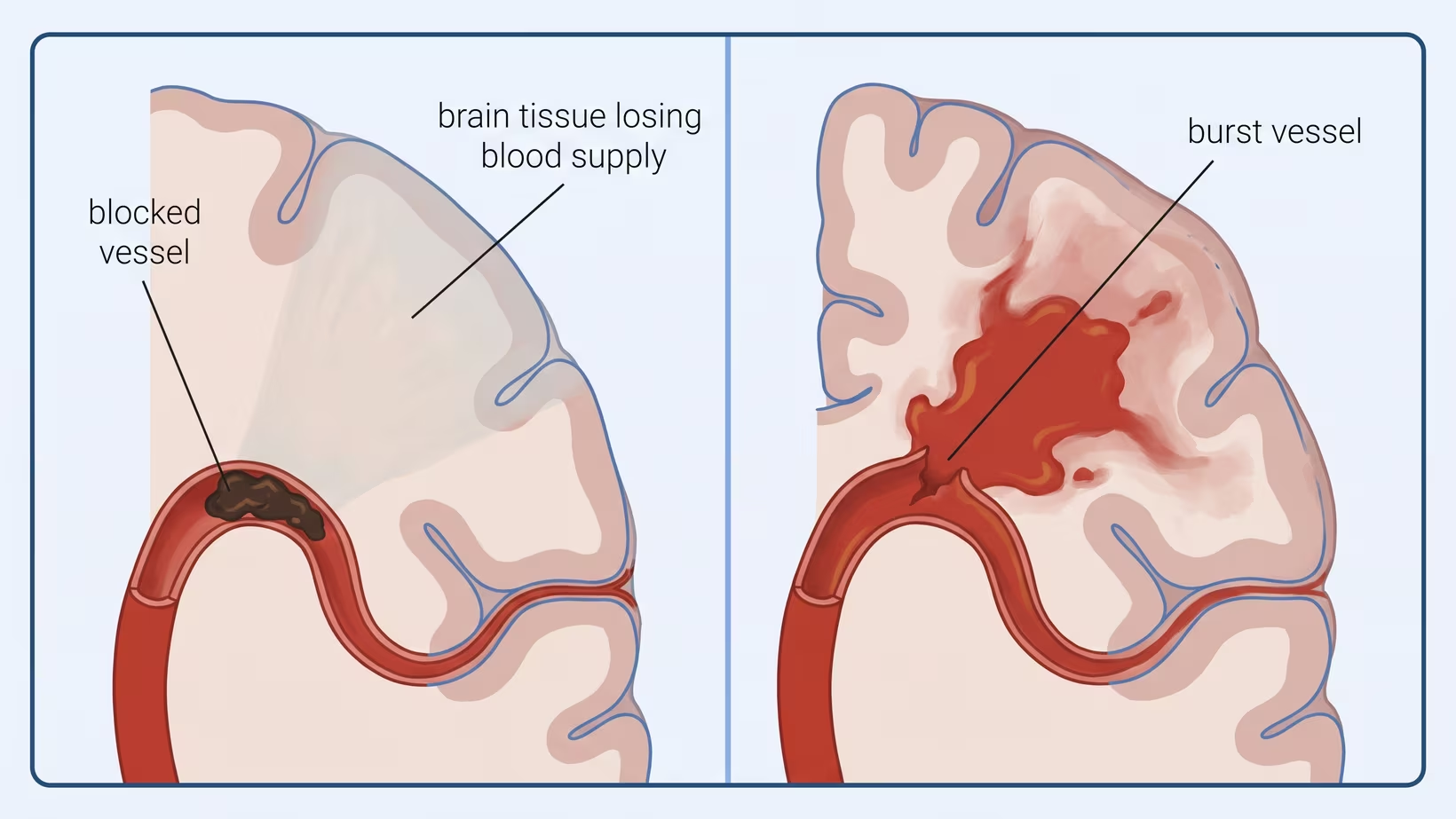
A stroke is caused by the loss of blood supply to part of the brain. Either a vessel carrying blood into the brain is blocked, usually by a clot, or a vessel bursts and blood escapes into the brain tissue. Brain tissue starts to die within minutes, so a stroke is an emergency and never something to watch overnight.
In a typical large stroke from a blocked vessel, close to two million nerve cells are lost for every minute that treatment is delayed.
Most strokes follow years of damage inside the blood vessels from high blood pressure, smoking, diabetes, high cholesterol and an irregular heartbeat, often with no symptoms along the way. Worldwide, stroke is the second-leading cause of death, so it is a common problem.
Ischemic and hemorrhagic: the two brain stroke causes
There are two types of stroke, and each has its own causes. An ischemic stroke is a blocked vessel, so the part of the brain beyond the blockage gets no blood. A hemorrhagic stroke is a burst vessel, and the blood that escapes presses on the brain around it. Worldwide, about six in ten new strokes are the blocked kind.
The clot in a blocked stroke comes from one of two places. It either builds in the vessel wall over years until it closes the vessel, or it forms elsewhere, often in the heart, and travels until it lodges in a brain vessel.
Bleeding that happens on its own, with no injury, usually comes from disease of the brain’s small vessels. That is either damage from years of high blood pressure, or cerebral amyloid angiopathy, where a protein called amyloid collects in the brain’s vessel walls in older people and makes them fragile.
Bleeding into the brain tissue makes up under three in ten new strokes, and bleeding around the brain about one in ten.
The risk factors split too. High blood pressure is tied more tightly to the bleeding kind. Smoking, diabetes, cholesterol and heart problems are tied more tightly to the blocked kind. Neither list is exclusive, and either kind of stroke can follow any of them.
A neurosurgeon is called more often for the bleeding kind, because blood inside the skull takes up space the brain does not have. A blocked stroke is just as urgent.
Seek care now
When to get to a hospital right away
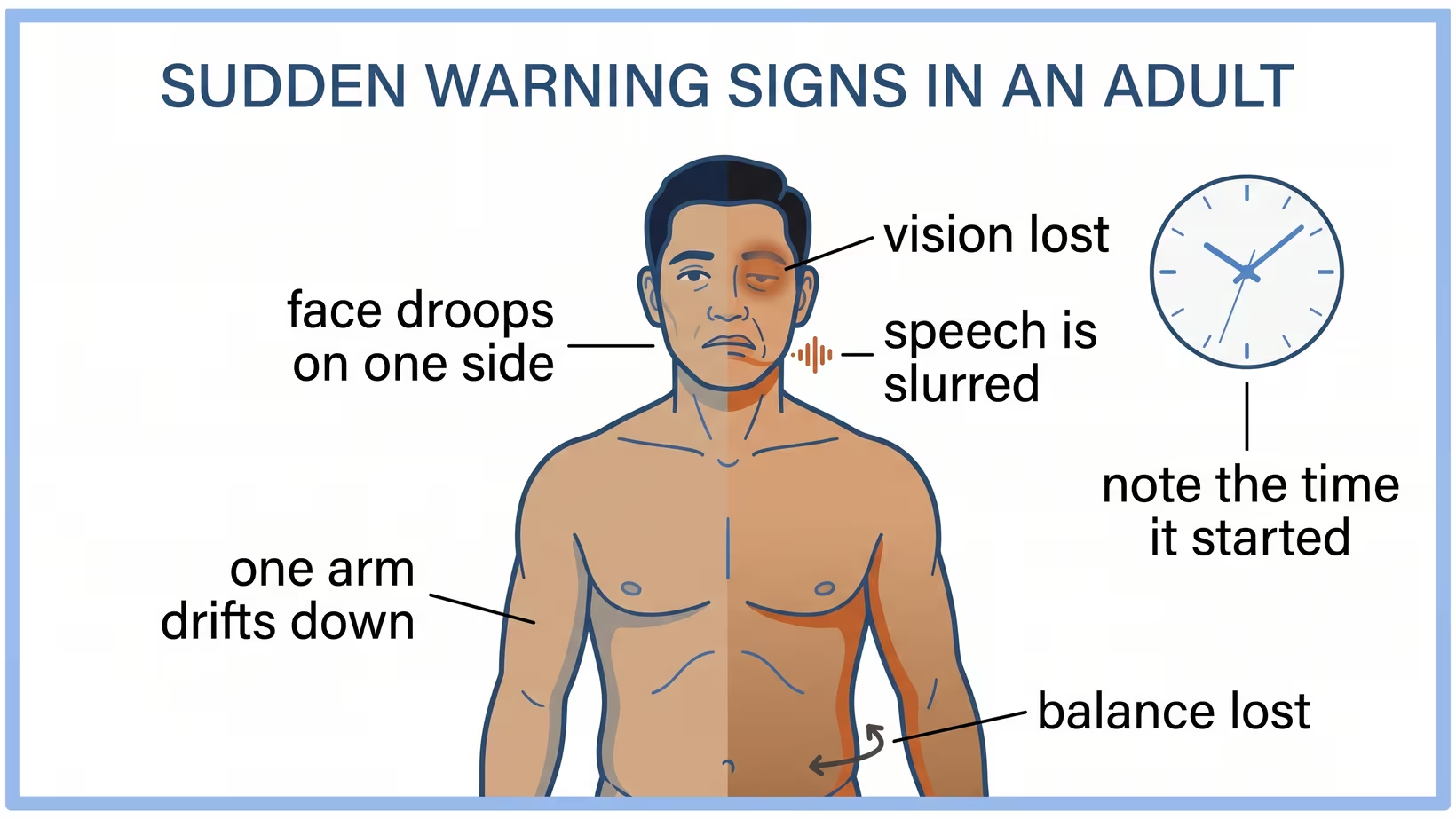
Go to a hospital right away if any of the signs below comes on suddenly. This means the emergency room now, not a clinic appointment and not later in the day. What matters most is that the sign is sudden. Go to the nearest hospital that has a CT scanner, and do not drive yourself.
- Sudden drooping of one side of the face
- Sudden weakness or numbness in one arm or one leg
- Sudden trouble speaking, or trouble understanding what is said
- Sudden loss of vision in one or both eyes
- Sudden loss of balance, or a fall with no warning
- A sudden severe headache unlike any headache before
Balance and vision are on this list for a reason. In one hospital review, checking only the face, the arms and speech would have missed a large share of strokes at the back of the brain. Adding balance and eye signs causes more false alarms. That is better than missing a stroke.
Note the time the symptoms started, or the time the person was last seen well, because that time decides which treatments are still possible. Bring the list of medicines you take every day, any home blood pressure readings and any previous scans.
There is one exception. Weakness or confusion in an older adult that came on over days or weeks can be a different emergency. Bring the person to an emergency room the same day. If the weakness or confusion suddenly gets worse, go now.
What are the main risk factors for stroke?
The main risk factors for stroke are high blood pressure first, then excess weight, raised blood sugar, air pollution and smoking. A risk factor is not the cause of any one person’s stroke. It is something that raises the odds of stroke across a whole population.
A small number of factors carry most of the risk. In a study across 32 countries, ten treatable risk factors together were linked to about 90 in every 100 of the risk of stroke across the whole population. That does not mean nine in ten people have a stroke. The figure for southeast Asia was higher still, and the Philippines was one of the countries in the study.
Which stroke risk factors can you change?
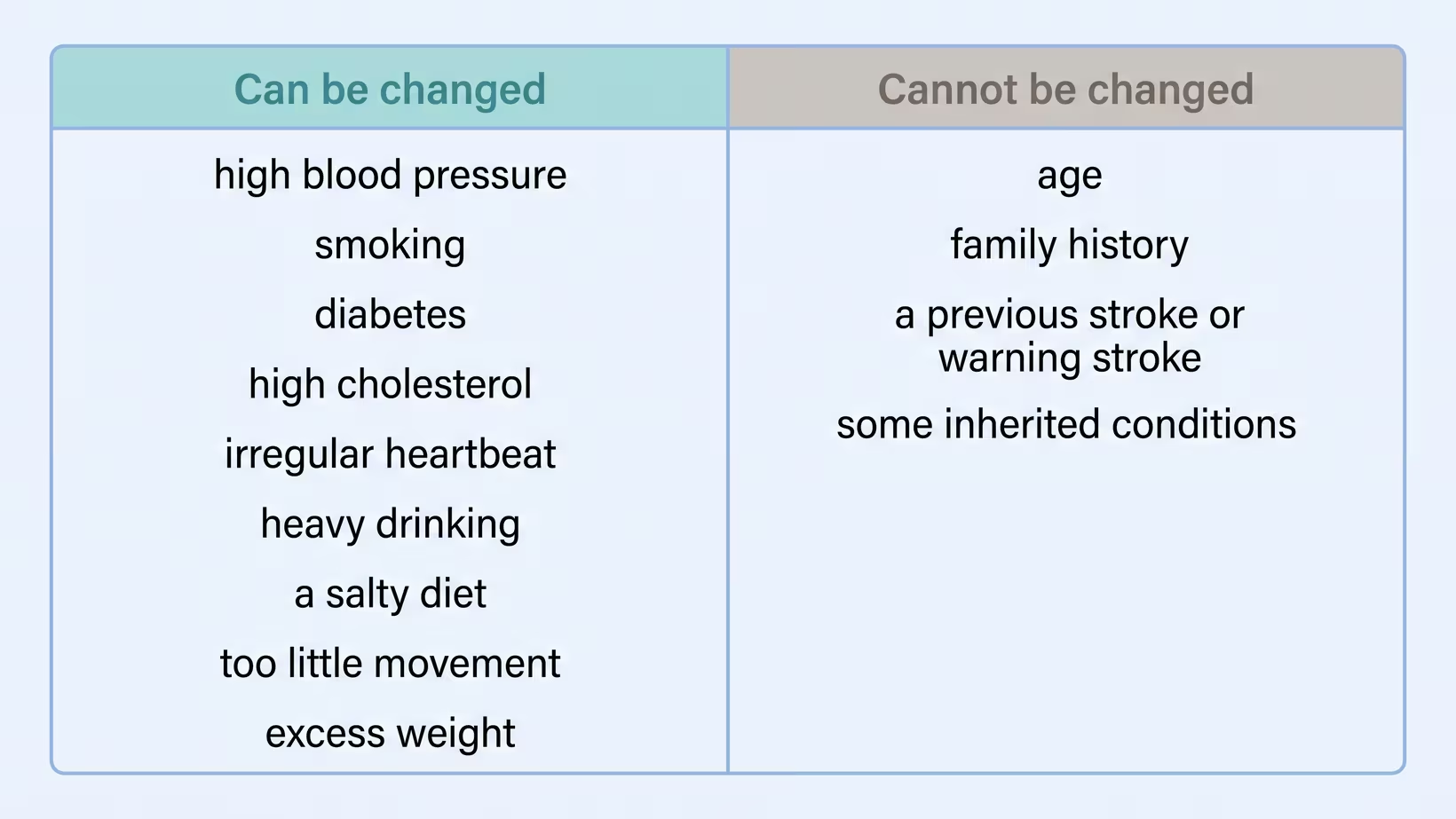
The stroke risk factors you can change are high blood pressure, smoking, diabetes, cholesterol, an irregular heartbeat, heavy drinking, a salty diet, too little physical activity and a large waist. High blood pressure is the most important. It accounts for the largest share of stroke in the population.
In the 32-country study, a history of high blood pressure, or a reading at or above the 140/90 level the study used, carried about three times the odds of a stroke. Bleeding into the brain usually comes from damage to the small vessels of this kind. So high blood pressure causes both the blocked and the burst stroke.
Estimates for diabetes vary widely. A pooled analysis of 102 studies found about twice the risk of ischemic stroke, while the 32-country study found a much smaller effect. Diabetes raises the bleeding kind by less.
Cholesterol is a balance rather than a single number. In the same study, an unfavorable ratio between the proteins that carry cholesterol into and out of the vessel wall went with higher odds of stroke.
Atrial fibrillation is an irregular heartbeat in which the upper chambers of the heart quiver instead of beating cleanly. Blood pools, a clot can form there, and the clot can travel to the brain. Heart causes carried about three times the odds of stroke in the 32-country study.
High intake or heavy episodes of drinking carried about twice the odds of stroke compared with people who never drank or had stopped. That study did not measure whether a smaller amount is safe.
A salty diet is linked to about a quarter higher risk of stroke across pooled studies. Regular physical activity and a better-quality diet went with lower odds of stroke. A larger waist relative to the hips went with higher odds.
Can a stroke be caused by smoking?
Yes, a stroke can be caused by smoking. Smoking raises the odds of a stroke by roughly two thirds. Across a whole population, it accounts for about 12 in every 100 strokes. It is still among the five leading risk factors for stroke worldwide by the amount of illness and early death it causes.
Its measured effect is larger on the blocked kind than on the bleeding kind, but it does not spare either.
In a review of people with diabetes, those who had stopped smoking had a risk close to people who had never smoked. Current smokers had a clearly higher risk. That is a comparison between groups, not a promise to one person, and no source here measures how long the change takes.
Which stroke risk factors can you not change?
The stroke risk factors you cannot change are age, family history, and having already had a stroke or a warning stroke. This list is shorter than the list you can change. None of these is a reason to give up on the longer list. They are a reason to work harder on it.
Stroke becomes more common as people get older. The sources behind this post do not measure how much the risk rises per decade. They do show that the share of strokes explained by an irregular heartbeat rises with age instead of falling.
In the 32-country study, the same few treatable risk factors carried most of the risk in men and women and in every region examined.
A stroke in a parent, a brother or a sister raises your own risk a little. The better-quality studies put it at about 1.3 times, and the studies disagree with each other. It does not mean a stroke is inherited the way eye color is.
A transient ischemic attack is a warning stroke whose symptoms clear completely. In a large registry of patients seen urgently by stroke specialists, most of the early risk of a full stroke came in the first days. The raised risk continued for years afterwards.
Why do younger adults have strokes?
Younger adults have strokes for the same reasons older adults do, plus a few causes of their own. Stroke is not only a disease of the elderly. Worldwide, the number of people under 70 living with stroke and the rate of new strokes in that age group both rose over three decades.
In a registry of 26 hospitals in Argentina, adults aged 18 to 50 made up about 8 in every 100 ischemic strokes. Their most common risk factors were high blood pressure, smoking and obesity. In about half of them no cause was found at first, and a tear in an artery wall was the most frequent of the less usual causes. Doctors also check a younger patient for the less common causes of stroke in a young adult, such as an aneurysm, a weak bulge in a vessel wall.
What raises stroke risk in the Philippines?
High blood pressure is the largest single risk factor for stroke in the 32-country study, and in the Philippines it is common and often not found or not controlled. A review of Philippine data found about 1 in 4 Filipino adults living with high blood pressure. Almost half of them did not know it, and only 27 in every 100 had it under control.
In that same review, stroke was the most common complication recorded among Filipino patients with high blood pressure.
Everyday diet also matters. A Philippine modeling study estimated that a tax on packaged foods high in salt or sugar would prevent thousands of blocked strokes over 20 years. That is a projection for a policy that is not yet in place.
In modeled estimates, the stroke burden linked to smoke from solid cooking fuel indoors fell in most countries over three decades but rose in the Philippines.
No dependable national figure was found for how many Filipinos have a stroke each year, or where stroke ranks among causes of death here. A global number is not a substitute for one.
What to do now
How do you lower your risk of a stroke?
Lower your risk of a stroke by starting with your blood pressure, because that is where the evidence is strongest. Across 123 randomized trials, every 10 mmHg (millimeters of mercury, the unit blood pressure is read in) fall in the upper blood pressure number went with about a quarter lower risk of stroke. That is an average across trial populations, not a promise to any one person.
- Know your own blood pressure number, not only that it was called a little high.
- Take maintenance medicine the way it was prescribed, not only on the days your head aches.
- Keep the follow-up, and bring your home readings to it.
- Ask whether your heart rhythm has ever been checked for an irregular beat.
- Ask what your blood sugar and cholesterol were, and what the plan is if a reading is high.
For almost all of this, the first doctor is not a surgeon. Start with the physician who already handles your blood pressure, and let them decide what needs a specialist, including whether to see a neurologist or a neurosurgeon. Do this now rather than waiting for symptoms, because high blood pressure usually gives no warning.
Bring your home readings, your list of medicines you take every day and any previous scans. If your doctor finds a problem that needs a neurosurgeon, you are welcome to see me. I see adults at the Lung Center of the Philippines, Room 1101, Quezon Avenue, Quezon City, on Tuesday and Thursday from 2 PM. If you live too far to visit, you can book an online consult on the consultation page. You can book a consultation, or your doctor can refer you.
What a referring physician should work up
A referring physician should start with the clock and the scan, not the cause. Establish the time of onset or the time last seen well. Then separate ischemic from hemorrhagic stroke on non-contrast CT before anything else, because the two are treated in opposite directions and only imaging tells them apart. Blood pressure, capillary glucose and cardiac rhythm follow immediately.
Intracerebral hemorrhage, meaning bleeding into the brain tissue, accounts for more than its share of stroke deaths and disability. Cases that usually need a neurosurgeon include blood occupying space, and a bleed or a large infarct (an area of brain that has died from lost blood flow) in the cerebellum (the part of the brain that controls balance). They also include a large infarct with swelling, and other bleeds that need a call to the neurosurgeon. When in doubt, discuss the scan.
A transient ischemic attack is not an outpatient slot for next month, because the risk is highest in the first days. A young or otherwise unexplained stroke prompts a search for arterial dissection (a tear in an artery wall), a clotting disorder and a cardiac source, including a patent foramen ovale, a small flap between the two sides of the heart that never closed. On the bleeding side, secondary prevention rests on sustained blood pressure control and on getting antithrombotic therapy right, which are decisions for the treating team.
If you would like me to see the patient, I take referrals at the Lung Center of the Philippines. Send the time of onset, the medicine list including any blood thinner, the blood pressure readings, and the images themselves rather than only a report. It also helps the family to know what to bring to a first appointment.
Frequently asked questions
Can stress cause a stroke?
Stress is linked to stroke, but it has not been shown to cause it. In the 32-country study, stress and low mood went with about twice the odds of stroke. People recalled their stress after the stroke, so that design cannot show stress caused it. Treating stress as the whole explanation hides the treatable causes.
Can a stroke happen while you sleep?
Yes, a stroke can happen while you sleep, and people do wake with the symptoms already present. Even when nobody knows when it began, imaging can sometimes still show that emergency clot-dissolving treatment is possible. So waking with stroke symptoms is a reason to go in at once.
Does high blood pressure always cause symptoms first?
No, high blood pressure usually gives no warning. In a review of Philippine data, almost half of Filipinos with high blood pressure did not know they had it. The only way to know your number is to have it measured, at a clinic or at home.
Is a mini-stroke serious if the symptoms went away?
Yes, a mini-stroke is serious even when the symptoms went away. Go to an emergency room now, even if you feel normal again, because it still carries a real risk of a full stroke in the days that follow. In a registry of urgently checked patients, most of the early risk fell inside the first week, so a mini-stroke is an emergency even after it has passed.
Can a stroke be inherited?
A stroke is not inherited the way eye color is, but a stroke in the family raises your risk a little. It is a reason to have your own blood pressure, sugar and cholesterol checked. It is not a verdict about your future.
Can a fall or a blow to the head cause a stroke?
A fall or a blow to the head can cause bleeding around or inside the brain, which is a different problem from what is usually meant by a stroke. Weakness or confusion appearing days or weeks after a head injury after a fall in an older adult needs an emergency room visit the same day for a scan.
See sources
- GBD 2019 Stroke Collaborators. Global, regional, and national burden of stroke and its risk factors, 1990-2019: a systematic analysis for the Global Burden of Disease Study 2019. The Lancet Neurology, 2021. PMID 34487721.
- Saver JL. Time is brain, quantified. Stroke, 2006. PMID 16339467.
- Hostettler IC, Seiffge DJ, Werring DJ. Intracerebral hemorrhage: an update on diagnosis and treatment. Expert Review of Neurotherapeutics, 2019. PMID 31188036.
- O’Donnell MJ, Chin SL, Rangarajan S, et al. Global and regional effects of potentially modifiable risk factors associated with acute stroke in 32 countries (INTERSTROKE): a case-control study. The Lancet, 2016. PMID 27431356.
- Tanglay O, et al. Enhancing stroke recognition: a comparative analysis of BE-FAST and FAST in identifying posterior circulation strokes. Journal of Clinical Medicine, 2024. PMID 39407971.
- Wolf PA, Abbott RD, Kannel WB. Atrial fibrillation as an independent risk factor for stroke: the Framingham Study. Stroke, 1991. PMID 1866765.
- Emerging Risk Factors Collaboration (Sarwar N, et al). Diabetes mellitus, fasting blood glucose concentration, and risk of vascular disease: a collaborative meta-analysis of 102 prospective studies. The Lancet, 2010. PMID 20609967.
- Strazzullo P, D’Elia L, Kandala NB, Cappuccio FP. Salt intake, stroke, and cardiovascular disease: meta-analysis of prospective studies. BMJ, 2009. PMID 19934192.
- Pan A, Wang Y, Talaei M, Hu FB. Relation of smoking with total mortality and cardiovascular events among patients with diabetes mellitus: a meta-analysis and systematic review. Circulation, 2015. PMID 26311724.
- Flossmann E, Schulz UG, Rothwell PM. Systematic review of methods and results of studies of the genetic epidemiology of ischemic stroke. Stroke, 2004. PMID 14684773.
- Amarenco P, et al, TIAregistry.org investigators. One-year risk of stroke after transient ischemic attack or minor stroke. New England Journal of Medicine, 2016. PMID 27096581.
- Amarenco P, et al. Five-year risk of stroke after TIA or minor ischemic stroke. New England Journal of Medicine, 2018. PMID 29766771.
- Gonzalez F, et al. Young adults with ischemic stroke in Argentina: a national multicenter retrospective registry analysis (JACARANDA). International Journal of Stroke, 2026. PMID 40905624.
- Dela Rosa JGL, et al. Current status of hypertension care and management in the Philippines. Diabetes and Metabolic Syndrome: Clinical Research and Reviews, 2024. PMID 38640838.
- Goh RSJ, et al. The burden of cardiovascular disease in Asia from 2025 to 2050: a forecast analysis. The Lancet Regional Health Western Pacific, 2024. PMID 39100533.
- Saxena A, et al. Estimated health impact, cost, and cost-effectiveness of taxation on unhealthy packaged foods in the Philippines: a modelling study. The Lancet Public Health, 2025. PMID 40876471.
- Lu H, et al. Spatiotemporal trends in stroke burden and mortality attributable to household air pollution from solid fuels in 204 countries and territories from 1990 to 2019. Science of the Total Environment, 2021. PMID 33631580.
- Ettehad D, et al. Blood pressure lowering for prevention of cardiovascular disease and death: a systematic review and meta-analysis. The Lancet, 2016. PMID 26724178.
- Thomalla G, et al. MRI-guided thrombolysis for stroke with unknown time of onset. New England Journal of Medicine, 2018. PMID 29766770.
- O’Donnell MJ, Xavier D, Liu L, et al. Risk factors for ischaemic and intracerebral haemorrhagic stroke in 22 countries (the INTERSTROKE study): a case-control study. The Lancet, 2010. PMID 20561675.